


Merit shop apprenticeship enrollment is surging nationally, and the ripple effects are hitting Colorado and Wyoming job sites right now. For contractors across the Rocky Mountain region, the growth in Wyoming electrical apprenticeship participation is not just a training headline – it is a force reshaping how you hire, retain, bid, and build supervision depth on commercial and industrial projects. Here is what that momentum means for your business and what to do about it this quarter.
ABC National reported that merit shop apprenticeship program enrollment grew over 60% since 2020, outpacing union-affiliated program growth by a wide margin. Nonunion registered apprenticeship programs expanded by roughly 40.3% over the same period, while union-affiliated programs declined by approximately 11.3%. That is not a blip – it is a structural shift in how the construction industry sources and develops skilled labor.
For contractors in Denver, the Front Range, Northern Colorado, Colorado Springs, and across Wyoming, this acceleration translates into three immediate business impacts:
Wyoming law mandates that all individuals performing electrical work must be registered or licensed, and apprenticeships combine classroom instruction with hands-on experience to meet that requirement. With the upcoming National Electrical Code version taking effect on July 1, 2026, contractors who have apprentices already progressing through structured training will adapt to code changes faster than those scrambling for qualified workers on the open market.
Faster apprenticeship growth does not just mean more students in classrooms. It changes daily operations on your projects.
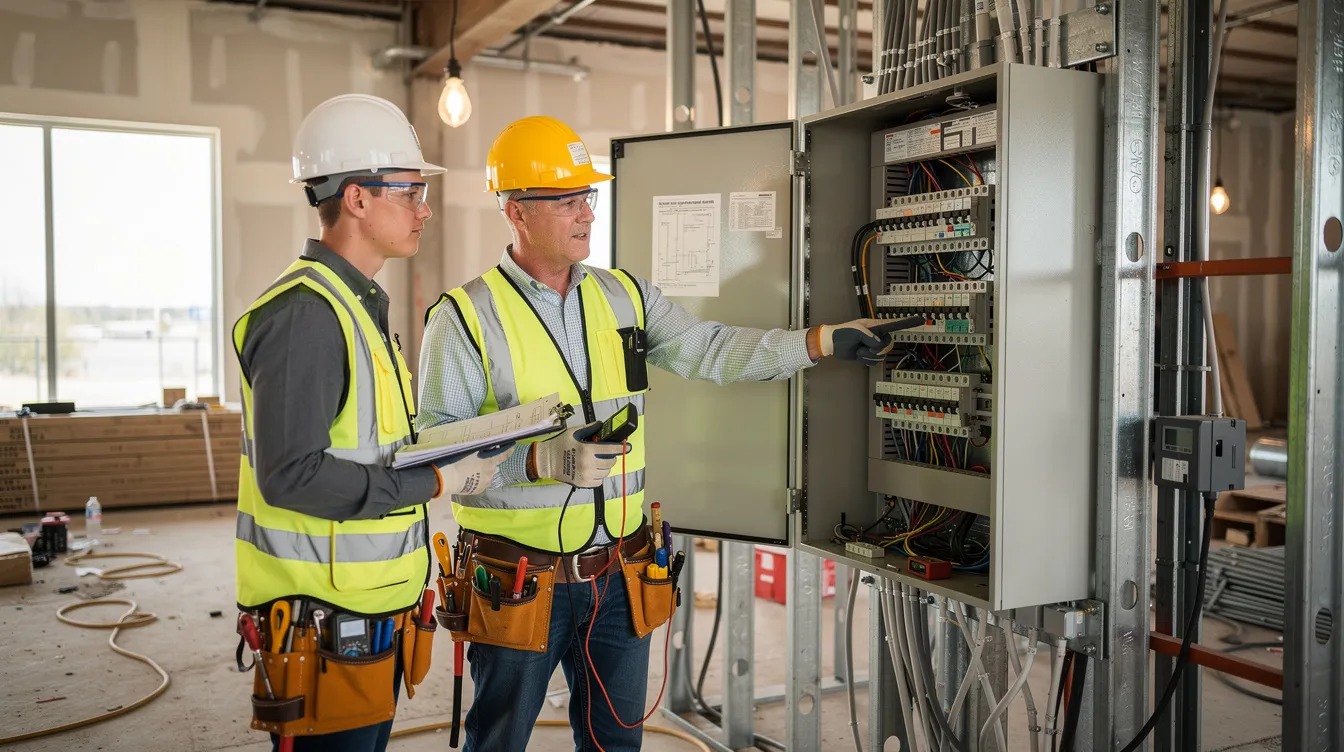
Crew continuity improves. When you develop apprentices through structured on-the-job training rather than hiring journeyman-level workers off the street, you build crews that know your standards, your safety protocols, and your production expectations. Apprentices must work under the direct supervision of a licensed journeyman or master electrician, which means your experienced people are mentoring – not babysitting strangers.
Supervision capacity deepens. Becoming a journeyman electrician requires 4 years and 8,000 hours of training. To become a master electrician, you need 8 years of experience. As your apprentices progress through years one, two, three, and four, Wyoming regulations allow reduced supervision ratios. That means your journeyman and master electricians can cover more ground as apprentices advance, directly increasing your field capacity without adding headcount at the top.
Spot labor dependence drops. Contractors who rely on the spot market for electrical labor face volatile wage pressure and inconsistent quality. An active apprenticeship program buffers against both. Apprenticeships typically last 4 to 5 years in Wyoming, giving you a predictable development cycle to plan around.
Safety gains compound. Standardized craft training through NCCER curriculum covers electrical safety, NEC code application, grounding, wiring methods, and circuit theory. Apprentices trained on these fundamentals make fewer errors, generate less rework, and contribute to lower incident rates. Tracking productivity by apprentice cohort – year one versus year three, for example – gives you data to forecast output and identify where additional mentoring pays off.
Colorado’s Front Range labor market operates under different pressure than Wyoming. Denver, Northern Colorado, and Colorado Springs face intense competition for electrical trade talent driven by population growth, commercial development, and infrastructure investment. Housing costs push workers further from job sites, compressing the available pool.
Colorado’s regulatory environment adds complexity. The state has its own Electrical Board, municipality-level licensing variations, and code adoption cycles that differ from Wyoming. Contractors operating in both states cannot assume Wyoming rules apply in Colorado – or vice versa. Before adjusting apprenticeship strategy based on Wyoming precedent, verify Colorado-specific regulatory requirements.
For Northern Colorado and Colorado Springs contractors, tailored recruiting matters. Partnering with local construction education providers and targeting high school CTE programs in communities like Fort Collins, Greeley, Loveland, and Pueblo creates a feeder system that addresses the skilled workforce shortage at the source.
Wyoming’s workforce geography creates a fundamentally different challenge. The state is vast, populations are small and dispersed, and apprentices may travel hundreds of miles for classroom instruction. The WYOJATC program – a registered Department of Labor apprenticeship covering the entire state – addresses this by centralizing classroom blocks in Casper and providing housing for non-local students during training weeks. JATC stands for Joint Apprenticeship and Training Committee, and this program has graduated over 1,000 apprentices since inception.
Wyoming offers three types of Registered Apprenticeship Programs. Certain community colleges in Wyoming provide state-approved electrical apprenticeship programs, including Casper College, which offers an electrical apprenticeship certificate program, as well as Northwest College in Powell and Gillette College. These programs follow the NCCER curriculum and satisfy the state’s requirement for 144 hours of classroom instruction per year.
The Wyoming Electrical Apprenticeship Education Program through ABC Rocky Mountain delivers NCCER-based curriculum via correspondence and distance education – roughly 680 classroom hours across four levels. This format works for rural apprentices who cannot relocate for block school. Employers should consider sponsoring travel and per diem for apprentices attending centralized training, and explore remote classroom options through tools like NCCERconnect for blended learning.
Apprentices must register with the Wyoming Department of Fire Safety, and Wyoming requires that individuals start the licensing process within 10 days of starting employment. The typical fee for apprentice registration in Wyoming is $20, and you must renew your apprentice registration yearly. The National Electrical Code governs electrical installations and practices in Wyoming, setting the compliance baseline for all work performed by apprentices and licensed professionals alike.
Not all work benefits equally from a stronger electrical apprenticeship pipeline. Here is where the payoff concentrates:
| Business Area | Pipeline Advantage |
|---|---|
| Service and tenant improvement work | Steady crew availability reduces warranty and rework costs |
| Federal and military construction bids | Documented apprenticeship programs satisfy registered apprenticeship requirements |
| Multi-phase commercial projects | Foreman development through progressive apprentice stages builds supervision bench |
| Competitive bidding | Labor cost predictability reduces bid-day risk premiums |
Electricians in Wyoming earn an average salary of $74,860 per year, and demand for electricians in the state is projected to grow by 23% over the next decade. Contractors who invest in apprenticeship training today are building the workforce that will meet that demand – and locking in labor economics that spot-market competitors cannot match.
As apprentices move from year one to year four, they can take on progressively more complex tasks. By year three and four, they contribute to foreman development and crew leadership, reducing your dependency on master electrician oversight for every task. Electricians must complete 16 hours of continuing education every three years, so building a culture of ongoing professional development starts during the apprenticeship and continues throughout the career path.
Growing the pipeline requires intentional recruiting and structured retention. Here is what works:
Build referral systems targeting veterans and Gen Z. Both groups are underrepresented in the electrical industry and represent high-value recruiting pools for contractors willing to invest in outreach.
Define clear entry-level expectations. Electrical apprenticeship applicants generally need a valid driver’s license. You must be at least 18 years old to start an electrical apprenticeship in Wyoming. A high school diploma or GED equivalent is required, along with proof of passing one credit in Algebra I or higher. Eligibility typically includes completing an aptitude test and an oral interview, with a minimum score of 3 required on the aptitude test to proceed to the interview stage.
Most apprenticeship programs do not require strict academic prerequisites but do require employment with a licensed electrical contractor. Publish these requirements clearly in your recruiting materials so candidates self-select, and your HR team spends less time on unqualified applicants.
Create mentor programs tied to licensed journeyman oversight. Pair each apprentice with a journeyman who owns their development. Instructors and mentors should track not just hours but demonstrated ability, code knowledge, and field practice proficiency. This is where the applied science of electrical work meets the craft – and where your company culture either retains or loses talent.
Align wage progression with apprenticeship milestones. Entry-level apprentice wages in Wyoming average about $23.38 per hour, rising toward the journeyman average of roughly $29.06 per hour over four years. Tie pay increases to classroom completion, OJT hour milestones, and demonstrated skills – not just tenure. Apprentices earn a license or certificate upon completion, giving them a tangible credential and your company a proven professional. Technical schools in Wyoming also offer certificates in 6 to 12 months for workers seeking accelerated entry, though the full apprenticeship path builds deeper knowledge and long-term retention.
For broader retention strategy, the construction employee retention playbook offers additional frameworks for keeping workers once you have recruited and trained them.
Stop treating apprenticeship as something that happens to your company. Own it. Here is your action list:
Cost context matters. Electrician school costs range from $3,000 to $15,000 depending on the path. Tuition for certificate programs runs $3,000 to $6,000, while tuition for associate degrees in applied science ranges from $8,000 to $14,000. Apprenticeships often have lower out-of-pocket costs because employers sponsor them, making them the most cost-effective path for both the company and the worker. FAFSA applications determine eligibility for financial aid for students pursuing community college credit alongside their apprenticeship.
For broader market context on why this investment matters now, the Rocky Mountain construction market outlook and commercial construction in a tight labor market resources frame the demand pressures driving these decisions.

Before acting on any program structure or regulatory detail referenced here:
The contractors who build and own their apprenticeship pipeline now will set the terms for labor availability, project capacity, and profitability for the next decade in this region. Waiting for the spot market to deliver talent is not a workforce strategy – it is a gamble. Contact ABC Rocky Mountain to connect with the Wyoming Electrical Apprenticeship Education Program or CITC enrollment, and start building your bench this quarter.


