


Contractors across Colorado and Wyoming spend real money on construction eye protection every year. They stock gang boxes, fill trailers, and fund prescription safety eyewear programs. Yet on many job sites, crews still remove or avoid the very protection the company already bought. The problem is often not procurement. It is adoption: safety glasses end up on a dashboard, clipped to a hard hat brim, or buried in a tool bag while workers face flying debris, chemical splash, or grinding dust without effective eye protection.
Picture a commercial project along the Front Range. The morning toolbox talk covers eye protection. The company issued ANSI-compliant safety glasses at orientation. Yet by mid-morning, several workers on the concrete crew have pushed their glasses onto their hard hats or tucked them into a vest pocket. On the steel deck above, a grinder operator is peering through scratched lenses he stopped cleaning days ago.
This pattern repeats on jobsites from Denver to Cheyenne, even when employers stock decent eyewear, pay for prescription options, and keep spares in the trailer. Construction Executive has highlighted the broader adoption gap between issuing safety eyewear and getting workers to wear it consistently in the field. The lesson will sound familiar to many contractors: access alone does not guarantee adoption.
The adoption gap creates a business problem, not just a safety one. Preventable eye injuries can lead to OSHA citations, recordable incidents, claim costs, work disruption, and avoidable schedule friction, especially on large commercial, industrial, and federal jobs where field compliance gets close attention.

OSHA addresses construction eye protection in 29 CFR 1926.102. The standard requires employers to ensure each affected employee uses appropriate eye or face protection when exposed to hazards from flying particles, molten metal, liquid chemicals, acids or caustic liquids, chemical gases or vapors, or potentially injurious light radiation.
The standard also includes several specific requirements. Where flying objects pose a hazard, eye protection must provide side protection. Workers who wear prescription lenses must use protection that either incorporates the prescription or fits over prescription lenses without disturbing their proper position. Protective devices must comply with the consensus standards incorporated into 29 CFR 1926.102.
OSHA’s PPE fit final rule was published on December 12, 2024, and became effective on January 13, 2025. It revised 29 CFR 1926.95(c) to make explicit that employers must select personal protective equipment that properly fits each affected employee. For Colorado and Wyoming contractors, that means one-size-fits-all eyewear is harder to defend when it clearly does not fit the worker, leaves significant gaps, or conflicts with other required PPE.
Commercial and industrial projects in Denver, Northern Colorado, Colorado Springs, and Wyoming expose workers to the same broad categories of eye hazards identified by CDC/NIOSH: dust, cement chips, metal slivers, wood chips, chemicals, and thermal hazards.
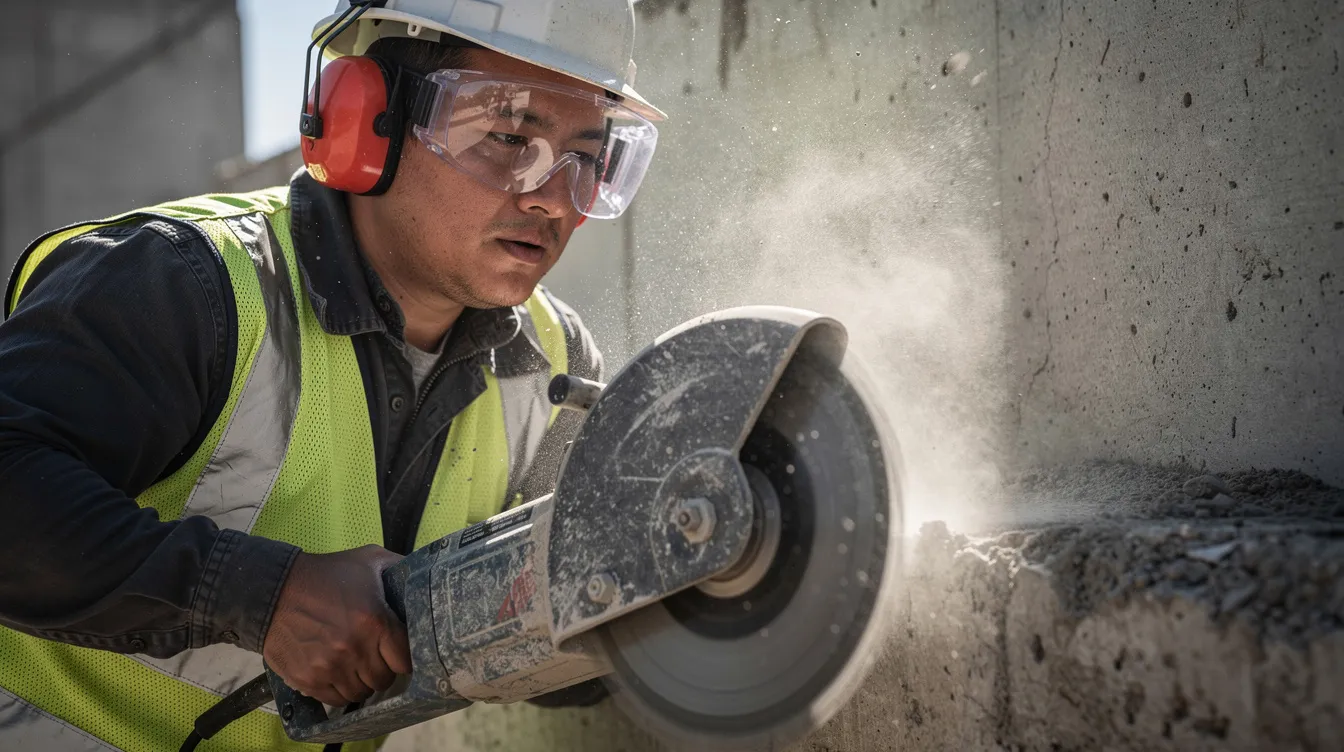
Physical hazards dominate many shifts. Concrete sawing, rebar cutting, grinding, framing, form stripping, and demolition all create flying fragments and airborne dust. Fine particles can scratch the eye or get around poorly fitting glasses when coverage is inadequate.
Chemical hazards show up during concrete placement, adhesive use, solvent application, fuel handling, and equipment cleaning. Those tasks may require sealed goggles rather than open-frame safety glasses. Radiant and thermal hazards from welding, torch cutting, and hot slag require specialized eye and face protection, including the correct filter shades for welding work.
Regional conditions can intensify these risks. Wyoming wind can drive dust around the edges of loose-fitting eyewear. Altitude and strong sun can increase glare on bright decks and exterior work. Sharp temperature swings between cold mornings and warmer afternoons can create fogging that leads workers to remove protection at the worst time.
The reasons crews leave eye protection unused usually fall into five categories. On many jobsites, these are practical field issues rather than policy issues.
1. Fit and comfort. Safety glasses that pinch behind the ears, slide down sweaty noses, or leave obvious gaps get removed quickly. OSHA’s existing eye-protection standard already expects protectors to be reasonably comfortable and fit snugly, and the current PPE fit rule raises the compliance stakes even further.
2. Visibility and fogging. Scratched lenses, glare, and fogging reduce a worker’s ability to see layout marks, signals, and footing. Once vision drops, many workers take the glasses off “for a minute” and never put them back on.
3. Prescription conflicts. Workers who rely on corrective lenses often struggle with bulky over-the-glasses designs, poor peripheral vision, or eyewear that interferes with respirators and hard hats. If the prescription process is inconvenient or slow, some workers revert to unrated street glasses or no protection at all.
4. Task mismatch. A lightweight pair of general-purpose safety glasses may be fine for material handling but wrong for grinding, concrete cutting, chemical splash, or welding. When workers believe the issued PPE does not match the hazard, they are more likely to set it aside.
5. Jobsite norms. If foremen, superintendents, and visiting leaders do not wear eye protection consistently or correct nonuse in the moment, the field message becomes clear: compliance is optional when inconvenient.
Selection should start with a hazard assessment and field feedback, not a catalog photo. For many construction tasks involving flying debris, contractors should look for impact-rated eye protection with side protection that fits the work.
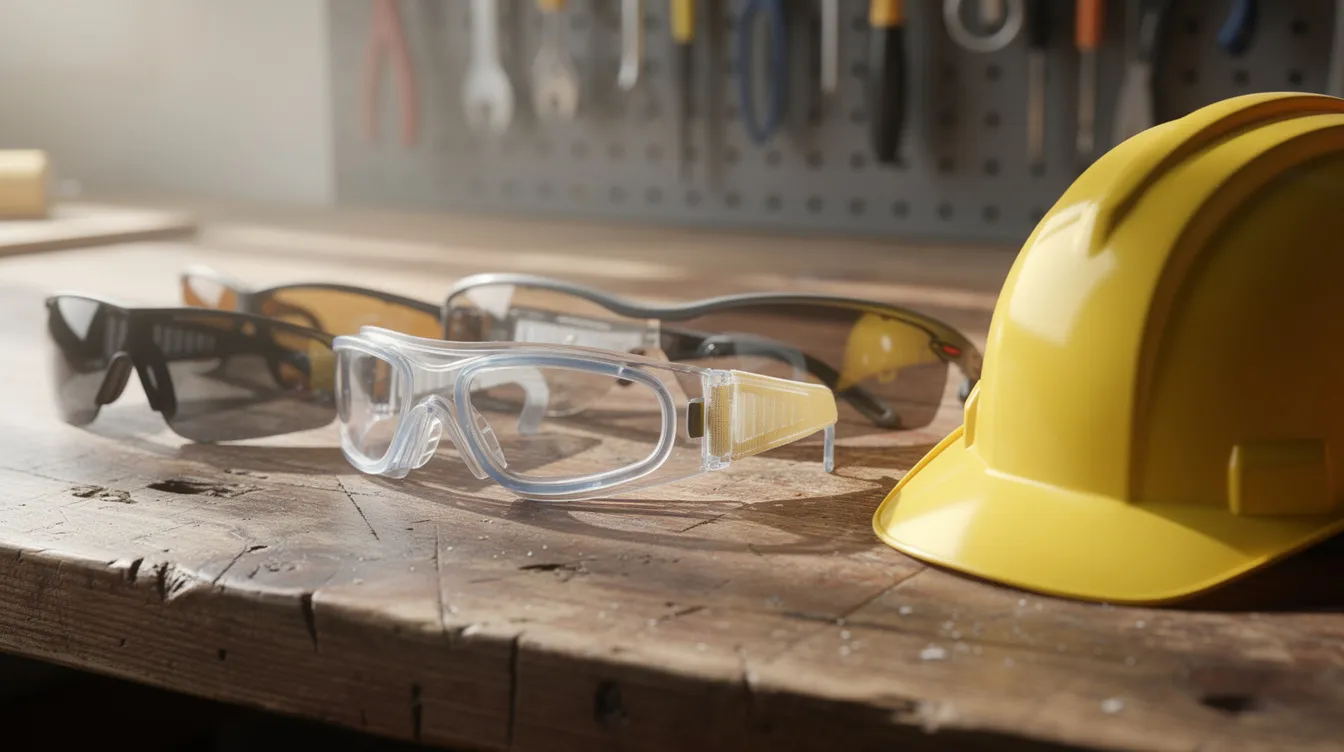
Wraparound safety glasses can work well for general framing, material handling, and similar tasks when the main hazard is particle impact. In dustier or splash-prone work, safety goggles may be the better option. For chemical exposure, goggle design matters; a tighter, more protective seal is often necessary.
Face shields can add protection for grinding, chipping, and cut-off saw work, but they are not a substitute for the required eye protection underneath. Welding and torch-cutting work require specialized equipment matched to the task, including the correct shade selection.
Comfort features that often improve actual wear rates in Colorado and Wyoming include adjustable nose pieces, flexible temples, coatings that help manage fogging and scratching, and frame designs that work with hard hats, hearing protection, and respirators already used on the job.
OSHA specifically addresses workers who wear prescription lenses. Employers must ensure those workers use eye protection that incorporates the prescription or can be worn over prescription lenses without disturbing their position.
In practice, prescription programs break down when ordering is cumbersome, frame availability is too limited, replacements take too long, or the final product does not work well with the rest of the worker’s PPE. Rural geography can make the problem worse when access to fittings or providers is limited.
Practical improvements may include narrowing the approved frame list to durable models that come in more than one size, simplifying ordering, arranging direct shipping, and checking whether the selected frames still provide usable coverage once the worker is wearing a hard hat or respirator. Program materials should also be easy for the workforce to understand and use.
One useful metric is adoption, not just spend. Track how many eligible workers actually obtain prescription-compatible protection and whether damaged or lost eyewear gets replaced fast enough to keep people protected in the field.
Colorado Springs, the Front Range, Northern Colorado, and Wyoming all present environmental conditions that can undermine eyewear use if the gear is marginal from the start.
Fogging matters because crews often move between cold mornings, warm exteriors, and enclosed spaces. Scratching matters because concrete dust and rough storage conditions quickly degrade lens clarity. Wind matters because dust can slip around frames that do not sit close enough to the face.
Lens tint also deserves more attention than many purchasing lists give it. Clear lenses generally work best indoors and in lower-light conditions. Exterior work in strong sun may justify a tinted option that reduces glare without making it harder to see in shadowed areas. The right answer depends on the actual work environment, not just a standard issue list.
Placement strategy matters too. If replacement eyewear stays in the truck or only in the trailer, it will not help much when lenses scratch mid-shift. Stocking backup eye protection at site entrances, in gang boxes, and near task-specific work zones can reduce the excuse that a worker “couldn’t get another pair.”
Eye protection matters, but it still sits within the broader hierarchy of controls. Engineering controls can reduce exposure at the source: guards on grinders and saws, water-fed cutting methods, dust-control shrouds, and welding screens all reduce the chance that debris or radiation reaches the worker in the first place.
Administrative controls add support. Pre-task planning can identify where eye hazards will arise. Housekeeping can reduce loose debris. Work sequencing can limit how many trades are exposed to chipping, grinding, or splash hazards in the same area at once.
Even with those controls, workers still need task-appropriate construction eye protection because conditions change, controls get bypassed, and some exposures cannot be engineered away completely. Contractors looking to strengthen broader safety systems can use ABC Rocky Mountain’s Safety Programs page to explore training, peer learning, and STEP resources.
Eye protection programs succeed or fail in the field. Foremen, superintendents, and project engineers set the real standard, regardless of what the written PPE policy says.
A practical routine is simple: supervisors confirm each morning that workers have the right eye protection for the day’s tasks, that lenses are still usable, and that prescription wearers have a compliant option available. Eye protection belongs in pre-task plans and job hazard analyses, not just in orientation packets.
Correction also works best when it is immediate and routine. Replace a fogged or poor-fitting pair on the spot if possible. Keep the conversation brief. Escalate only when the worker repeatedly ignores a clear requirement.
Leaders should also model compliance. If a superintendent walks active work areas without eye protection, the field takes that as permission. If leaders wear the right protection every time and correct problems quickly, crews notice that too.
Feedback loops matter. Workers should have a practical way to report fogging, scratching, poor fit, or conflicts with other PPE before those frustrations turn into nonuse. Office and trailer staff may also need eyewear solutions suited to screen-heavy work and intermittent field exposure, but that is a separate selection question from active-task protection in the field.
A safety director, superintendent, or project manager in Colorado or Wyoming can complete this review on one active project in a few days.
That kind of audit gives leadership a clearer picture than total PPE spend ever will.
This plan is a practical management tool, not a regulatory deadline. It can help move a company from “glasses in the truck” to more consistent use without changing everything at once.
Week 1: Assess and plan. Audit one or two representative projects. Gather worker feedback. Map common tasks to the eye and face protection actually needed. Identify the biggest wearability problems.
Week 2: Upgrade and standardize. Narrow the approved list to a smaller set of models that workers will actually wear. Add better fog management, better fit options, and clearer task matching where needed. Review whether prescription-compatible options are easy enough to obtain.
Week 3: Train supervisors. Review OSHA eye-protection requirements, the PPE fit rule now in effect, and basic enforcement expectations with foremen and superintendents. Reinforce that the goal is visible field use, not just documented issuance.
Week 4: Measure and adjust. Run spot checks on active projects. Review where nonuse still shows up. Update purchasing lists, storage locations, and supervisor routines based on what the field is telling you.
Contractors that want help strengthening the larger safety system around PPE can use ABC Rocky Mountain’s Safety Programs resources for training, peer discussion, and STEP participation.

Below are answers to common questions about this topic.
Each affected worker needs access to eye protection appropriate for the hazard and properly fitted. In practice, individually assigned eyewear is usually easier to manage than a shared pool, though companies may still keep properly maintained visitor or short-term stock available.
OSHA does not set a fixed replacement schedule for safety glasses or goggles. Replace them when the lenses are scratched enough to interfere with vision, the frame no longer fits securely, coatings have failed, or the device is cracked or otherwise damaged.
Contact lenses are not eye protection on their own. Workers who wear contacts still need the task-appropriate safety glasses, goggles, or other protective equipment required for the hazard.
Safety glasses are commonly used for impact hazards from flying particles in tasks such as cutting, drilling, and framing. Goggles create a tighter seal and are often the better choice for dust-heavy work, splash hazards, and certain chemical exposures.
Start with one active project. Observe actual use, ask workers what makes the eyewear unusable, compare the available protection to the hazards on site, and fix the most obvious fit, fogging, or access problems first. Then build those changes into the company’s standard purchasing and supervision routines.


