


On October 5, 2026, ABC National announced its latest health and safety construction technology report, Proactive Safety Technology Protects Workers, Jobsites. The report points contractors toward practical categories of safety technology already being used in the field, including wearable technology, AI-powered risk detection, fatigue and hydration management, environmental monitoring, and connected jobsite tools.
That matters because the report is not really about gadgets. It is about using better information earlier. ABC National frames it as contractors using technology, data, and collaboration to address safety challenges while improving workforce performance and operational excellence.
For Colorado and Wyoming contractors, that is a timely conversation. Crews in Denver, along the Front Range, in Northern Colorado, in Colorado Springs, and across Wyoming often work in conditions where risk changes quickly: hot afternoons, high-altitude exertion, remote travel distances, and busy sites with tight equipment movement. In those conditions, wearable safety technology can be worth evaluating when it helps a superintendent or safety leader spot problems earlier and respond faster.
The practical question is not whether wearables sound innovative. It is whether a specific device solves a real safety problem on one of your job sites, and whether it fits your existing safety program without creating confusion, alert fatigue, or distrust.
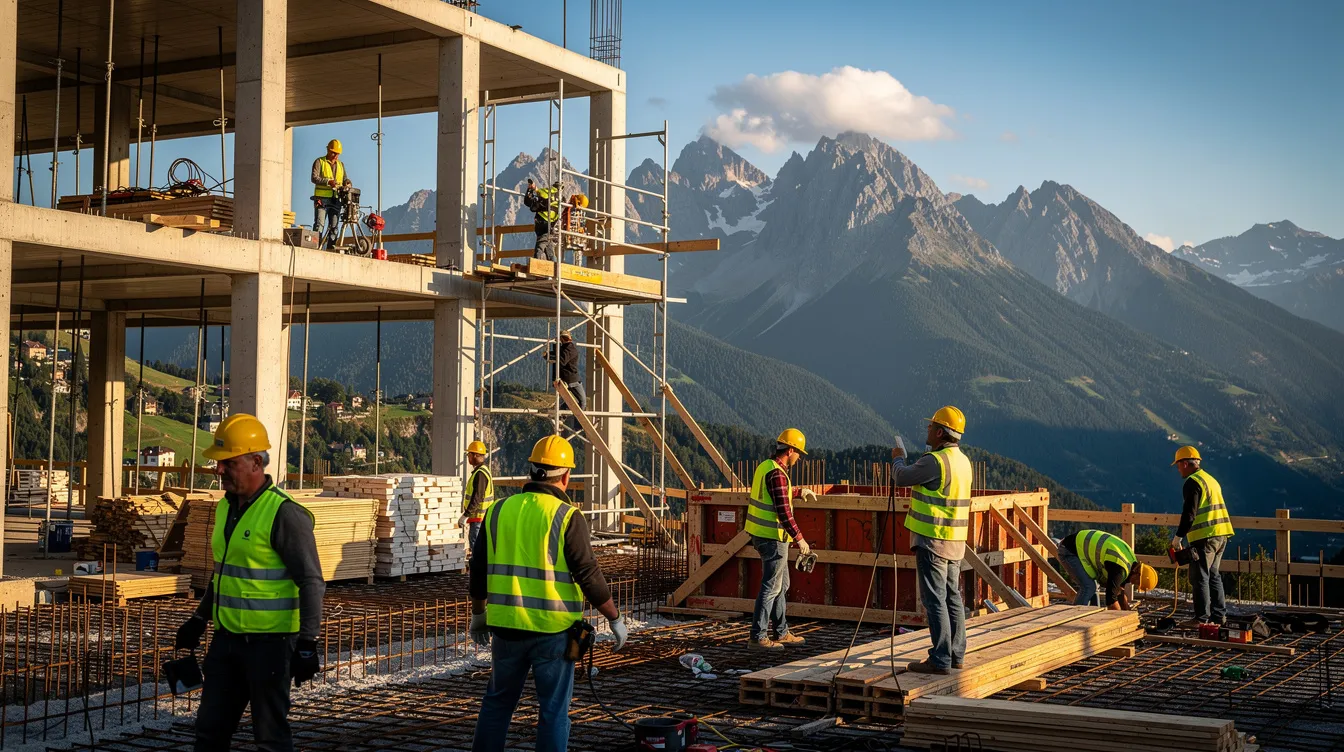
Wearable safety technology usually means worker-worn or worker-centered devices that collect information about conditions affecting the individual worker and send alerts or summaries to the worker, a supervisor, or both.
Depending on the product, that can include devices or PPE that track movement, location, proximity, environmental conditions, or signs of physical strain. On construction sites, examples may include:
That is different from other jobsite technology such as drones, fixed cameras, or access-control systems. Those tools may still strengthen safety programs, but wearable safety technology focuses on worker-level data and alerts tied to the person doing the work.
Used well, these tools can support earlier intervention. Used poorly, they can create noise, duplicate existing processes, or raise avoidable privacy concerns. That is why contractors should evaluate wearables as part of a management workflow, not as a standalone purchase.
Rocky Mountain contractors do not need every wearable category on every project. The stronger approach is to match the technology to a recurring exposure that is already difficult to manage with traditional observation alone.
Common use cases include:
This is where the Rocky Mountain regional context becomes useful. A dense Denver infill site may need a different solution than a remote Wyoming energy project. A high-altitude project with rapid weather shifts may justify a different alert strategy than a lower-elevation urban build. The technology decision should follow the exposure, not the other way around.
For contractors already working on heat planning, wearables may fit naturally into a broader heat illness prevention program. The value is not that a device replaces water, rest, shade, acclimatization, or supervision. The value is that it may help crews and supervisors recognize developing strain sooner and respond with more consistency.
OSHA describes leading indicators as proactive, preventive measures that show whether safety and health activities are working before incidents occur. That is the most useful way to think about wearable safety technology.
Wearables can provide earlier warning signs, prompt a check-in, or make it easier to identify patterns that a crew should address before someone gets hurt. In that sense, they can complement daily huddles, field observations, job hazard analyses, and supervisor coaching.
What wearables may improve:
What wearables do not fix:
That distinction matters. Wearables can strengthen a safety system, but they are not a substitute for construction safety leadership. If a pilot goes forward, the human decision-makers still need to be clear about what gets reviewed, who responds, and what corrective action remains supervisor-led. Contractors evaluating related AI-enabled tools should keep those same boundaries in place and can review ABC Rocky Mountain’s guidance on construction safety technology and AI before rollout.
Most contractors will get better results by starting with one narrow use case than by shopping for the broadest possible feature list.
Heat and hydration support tools. These are often the most practical starting point for crews exposed to summer heat, high exertion, or changing environmental conditions. The goal is to support earlier intervention and better-informed break, rotation, or check-in decisions.
Fatigue and exertion monitors. These tools may be worth exploring on schedules or project types where extended physical demand creates a repeat safety concern. Contractors should evaluate how alerts are generated and whether the data is understandable enough to guide real field action.
Proximity and location wearables. These may fit jobsites with frequent equipment interaction, blind spots, or restricted zones. The benefit is often strongest when the site already has a clear traffic-control or equipment-separation plan, and the wearable adds another layer of warning.
Lone-worker and man-down devices. These can be especially relevant for remote work, dispersed service tasks, or small teams operating with limited direct oversight.
Environmental exposure devices. Depending on the work, these may support awareness of gas, air quality, dust, or other environmental conditions near the worker, rather than relying only on area-wide assumptions.
Contractors should also verify practical basics before they become field problems: battery life, charging routine, durability, comfort, weather resistance, connectivity on remote sites, and whether supervisors receive alerts in a format they will actually use.
Integration matters too. If the data lives in an isolated dashboard no one reviews, the device may create more administrative burden than value. The best pilot usually fits into workflows the company already runs, such as morning planning, incident review, heat-response planning, or STEP benchmarking.
Heat strain, fatigue, and environmental exposure are real concerns on many construction sites, but contractors should stay disciplined about how they talk about wearable performance.
A better framing is operational, not promotional: some wearable and connected-monitoring tools may help supervisors recognize strain, exposure, or changing conditions earlier than observation alone. That can be useful on hot job sites, remote projects, or physically demanding work where a worker may not speak up immediately.
But device performance varies by product, environment, fit, and workflow. Contractors should ask vendors for evidence specific to the device being considered, including what it measures, how it triggers alerts, and what limitations apply in real field conditions.
That is especially important in Colorado and Wyoming, where altitude, cold mornings followed by hot afternoons, variable cell coverage, and dispersed project footprints can all affect how a tool performs in practice. A pilot should focus on whether the device helps the team make better field decisions, not on repeating generic outcome claims from marketing material.
Any wearable program that involves worker data needs clear rules before distributing devices. This is not a side issue. It is central to adoption.
At minimum, contractors should define:
Field communication matters as much as the written policy. Workers should hear a plain-language explanation from people they trust, not just receive a handout. If crews think the real purpose is surveillance, adoption will suffer, and the data will be less reliable.
That is why worker participation can improve a pilot. Involve field leaders and craft professionals early. Ask where they see actual value. Identify concerns before rollout. Keep the program tied to a visible safety objective rather than a vague innovation message.
Start with one problem on one project.
A strong pilot usually begins with a defined challenge such as repeated heat concerns on a summer civil job, isolated work on a remote Wyoming site, or frequent worker-equipment interaction on a compact urban project. Then build the pilot around a short list of questions.
| Evaluation Area | Questions to Ask |
|---|---|
| Risk Fit | What specific exposure is this device supposed to help manage? |
| Metrics | What does it actually measure, and are those metrics understandable to field leaders? |
| Alerts | Who receives alerts, how quickly, and what action is expected after one appears? |
| Worker Trust | How will the company explain the device’s purpose, limits, and privacy rules? |
| Durability | Can it handle dust, moisture, temperature swings, and normal construction wear? |
| Battery and Charging | Will it last through the shift, and who owns charging responsibility? |
| Connectivity | Will it function on the actual project, including remote or low-coverage areas? |
| Integration | Does the information fit into current safety workflows, or does it create another silo? |
| Support | What onboarding, troubleshooting, and training does the vendor provide? |
Define success before the pilot starts. That may mean more consistent responses, fewer missed check-ins, better supervisor visibility on high-risk days, or stronger confidence in lone-worker support procedures. The point is to measure whether the pilot improved decision-making, not to promise dramatic results in advance.
If your company is considering wearable safety technology, keep the first rollout narrow and manageable.
Before the pilot
During the pilot
After the pilot
This kind of disciplined pilot is more useful than a broad rollout because it keeps the decision tied to an actual field need.
ABC Rocky Mountain’s role is not to tell every member to buy the same device. It is to help contractors make stronger decisions about safety technology in the context of real projects, real supervision, and real workforce conditions across Colorado and Wyoming.
That is where existing chapter resources can help. Members evaluating wearable safety technology can connect the discussion to safety leadership, STEP participation, heat-illness planning, and broader construction-technology adoption. The goal is to make sure any device supports a larger safety-management system instead of operating as a disconnected experiment.
Your next step: identify one active or upcoming project where heat exposure, fatigue, remote work, or equipment interaction is already a known concern. Then ask a narrower question: would a small wearable pilot help your field team see that risk earlier and respond more consistently? If the answer may be yes, build the pilot around one crew, one exposure, and one defined review process.
Below are answers to common questions about this topic.
OSHA uses performance-based safety standards and does not generally require wearable technology on construction sites. Contractors should treat wearables as optional tools that may support hazard recognition, response, and documentation when they fit a specific safety need.
That depends on the project’s exposure profile. For many Colorado and Wyoming contractors, heat and exertion monitoring, lone-worker support, or equipment-proximity awareness are practical starting points because they tie more directly to a defined field problem.
Some devices may support broader physiological or inactivity monitoring in cold conditions, but contractors should verify exactly what a product is designed to detect and how it has been validated. Configure cold-weather use deliberately rather than assume it.
Address that directly. Explain what is being measured, why it matters, who can see the data, and what the company will not do with it. A pilot is more likely to succeed when workers understand the purpose and can raise concerns early.
They work best when the information feeds a clear workflow rather than a disconnected dashboard. A wearable alert should connect to an actual response plan, supervisor action, or review step inside the company’s existing safety process.


