


Data center construction is booming across Colorado’s Front Range, and so is the organized resistance against it. For contractors pursuing this work, the question is no longer whether pushback will materialize. It is whether your preconstruction planning accounts for it before it becomes a schedule and cost problem.
The 2024 to 2026 surge in AI and cloud computing power demand has driven a wave of new data center projects along the Front Range, from north Denver through Northern Colorado and into Colorado Springs. Data center construction requires substantial electricity, and these facilities can cause localized pollution and noise from operations. That combination has pushed energy use, air quality, water consumption, and traffic to the top of community concerns.
Local governments in Colorado have responded with real teeth. Denver’s one-year moratorium on new data centers took effect in May 2026. Boulder County passed a six-month freeze. Woodland Park approved an 18-month pause. Longmont capped data center energy use at 100 megawatts. These are not theoretical risks. They translate directly into frozen entitlements, stalled permits, and procurement commitments that cannot move forward.
Community feedback influences data center development through noise and environmental concerns, and early missteps in explaining backup generators, truck routes, or construction duration can escalate fast. In Colorado Springs, Project Taurus drew over 100 speakers to oppose it at public hearings, citing noise, water consumption, and generator emissions. The developer eventually committed to a $1 million bond for noise remediation. Nationally, over $60 billion in infrastructure investment faced delays specifically because community engagement was absent or insufficient.
For Rocky Mountain data center construction, the core thesis is straightforward: pushback is no longer a public relations issue for owners. It is a business risk issue that Colorado contractors must manage proactively in preconstruction and early field operations. ABC Rocky Mountain’s broader Rocky Mountain market outlook content frames the construction environment these projects are entering; this article addresses the specific friction points contractors need to anticipate.
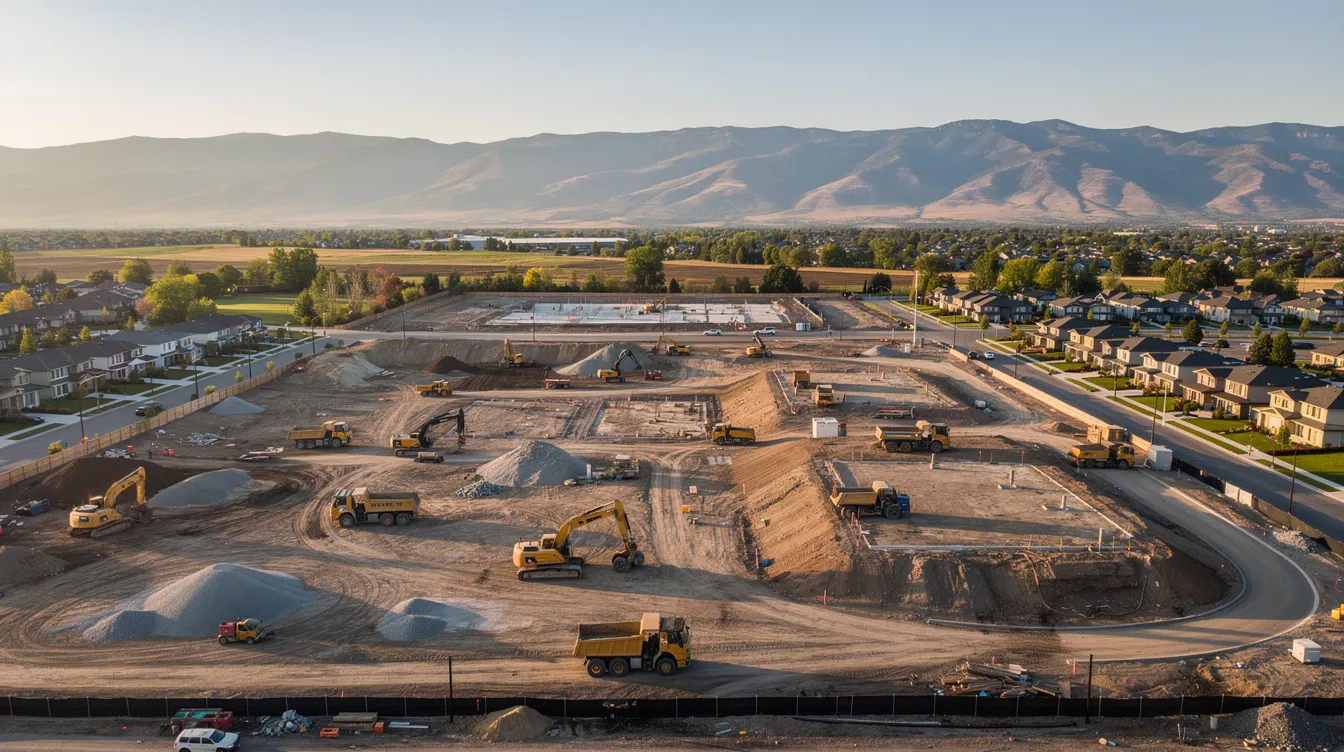
Most data centers in Colorado are clustered along the Front Range corridor, from Denver and Aurora through Northern Colorado, with emerging interest around Colorado Springs and nearby counties. Denver has approximately 50 data centers, though only about five occupy full buildings. Building data centers in the Rocky Mountain region has become appealing for tech companies because of abundant land for large-scale projects, fiber connectivity essential for low-latency digital services, and access to utility providers like Xcel Energy and Black Hills Energy.
But the scale of new projects is changing. Colorado data centers now include hyperscale proposals far larger than the enterprise and colocation facilities of previous decades. CoreSite’s facility in north Denver is expected to draw 65 to 75 megawatts of electricity when fully built, with the first phase at roughly 18 megawatts. Data centers in Colorado use about 230,000 gallons of water daily. These numbers get attention in communities already dealing with drought, grid strain, and growth pressure.
Colorado’s 2026 legislative session had two competing bills addressing large data centers. One bill proposed a 100% sales tax exemption for data centers. The other bill mandated 100% renewable energy for new data centers. Neither passed. Meanwhile, Senate Bill 26-102 imposed requirements including annual reporting of water and electricity use, 100% renewable energy sourcing with hourly matching by January 2031, and long-term utility contracts of at least 15 years. Data centers must meet Colorado’s energy standards for new developments, and data centers in the Rocky Mountain region face power grid capacity challenges that complicate transmission lines and interconnection timelines.
At least 38 other states offer tax incentives for data centers, unlike Colorado. That regulatory gap, combined with local opposition and moratoria, means data center developers considering Colorado face a more complex entitlement landscape than in neighboring states like New Mexico or Wyoming. Data centers are projected to grow at an annual rate of 10.9% through 2030 nationally, and the data center debate in Colorado will only intensify over the next decade. Contractors planning projects in Denver metro, Northern Colorado, and Colorado Springs should treat permitting timelines and community mood as variable constraints, not fixed assumptions.
The most effective risk mitigation begins before a project hits a public agenda or a site sign goes up. At that early stage, contractors can still influence design, logistics, and communication sequencing. Once local opposition consolidates at a city council meeting or on social media, options narrow and costs rise.
Colorado contractors should map these stakeholder groups early:
Data centers in the region must comply with strict zoning regulations and setbacks, and the best way to understand how a jurisdiction will interpret those rules is to attend planning commission meetings, review prior public comments on industrial or energy projects, and talk directly with economic development staff. Effective engagement includes listening sessions and town halls well before any formal application.
All of this stakeholder intelligence should feed into risk registers and preconstruction planning documents. Track each concern (diesel generator hours, noise, perceived air quality impacts, water use) alongside potential mitigation options, cost impacts, and the milestone by which a response must be locked in. This is the preconstruction and risk-focused companion to ABC Rocky Mountain’s existing data center community engagement guidance.
Certain physical and operational attributes of a data center site almost always draw scrutiny in Colorado communities. Identifying them during early due diligence is essential.
Traffic and construction logistics. Heavy truck routes through residential neighborhoods for cooling systems, generators, concrete, and steel generate complaints about road wear, noise, and visibility. Round-the-clock deliveries amplify the concern.
Backup generators and air quality. Diesel backup generators are the single most visible flashpoint. Data centers can emit significant carbon dioxide if not regulated, and residents in areas like Globeville-Elyria-Swansea already carry disproportionate air quality burdens. Air quality permits, NOx thresholds, and public health impacts are central to the data center debate in Front Range communities. As reported by Rocky Mountain PBS and other outlets, generator yards near homes trigger formal opposition faster than almost any other project element.
Water use in water-scarce regions. Water scarcity is a significant issue for cooling in Rocky Mountain data centers. Data center construction can strain local water supplies and compete with agricultural needs. Colorado’s agricultural sector uses about 1.53 trillion gallons of water annually, and any perception that a new facility is competing for that resource draws immediate pushback at public hearings. Data centers rely on cooling infrastructure, and high-density AI workloads require advanced cooling technologies to manage heat. Data centers are increasingly adopting closed-loop cooling systems to reduce water use, and using natural cooling can significantly reduce operating energy, but these design choices must be communicated early.
Visual, noise, and lighting impacts. Tall buildings, cooling towers, security lighting, and 24/7 fan noise are unfamiliar in rural communities and exurban areas along the Front Range and near Boulder County, Colorado. Extreme weather conditions can complicate data center construction and maintenance in the Rockies, adding construction duration to the list of neighbor concerns.
Contractors should document these site-fit assessments in preconstruction memos and owner briefings. Mitigation options and cost impacts must be clear before public meetings, not surfaced as change orders after a conditional-use hearing imposes new conditions.
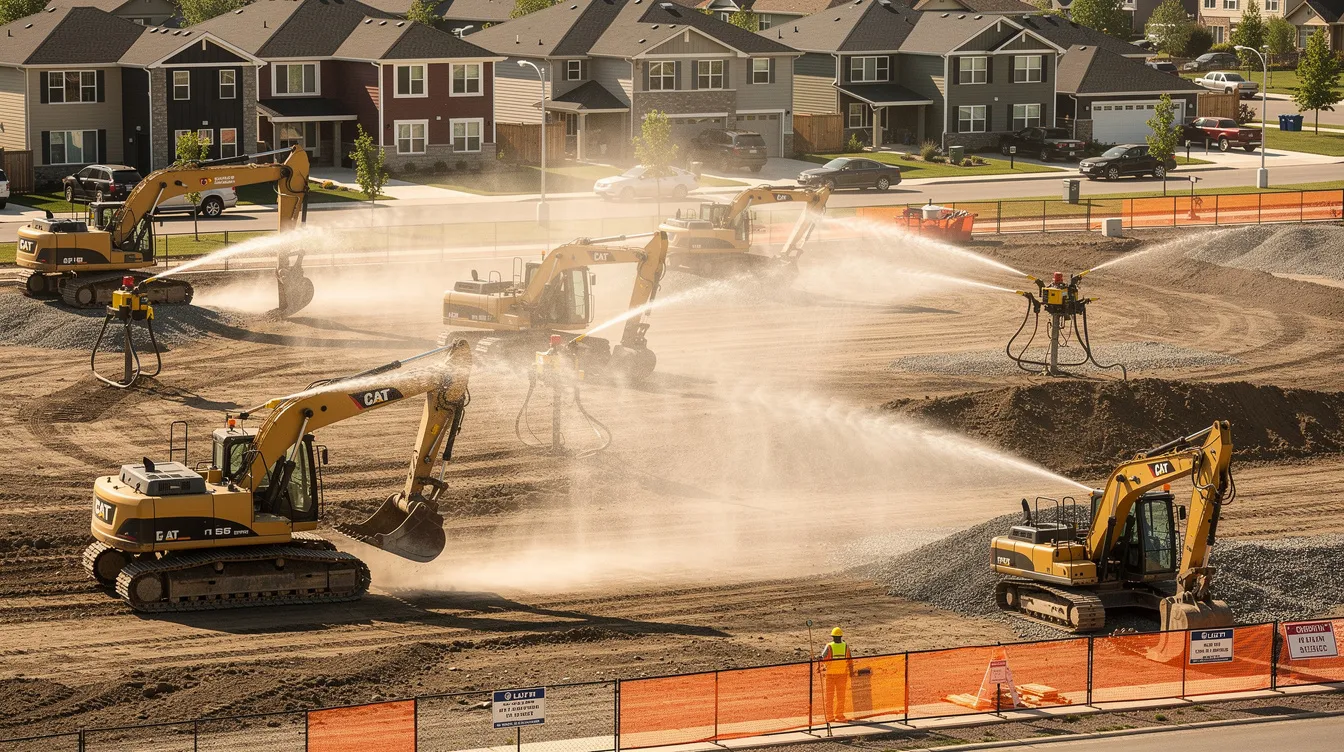
Contractors, owners, and consultants must speak with one voice on data center projects. Misaligned or overly technical answers about energy use, generator counts, or economic benefits quickly erode trust with local communities.
Establish a single point of contact. Define who handles neighbor questions, media inquiries, social media posts, and communications with local officials. Document these roles in the project communication plan before preconstruction meetings begin, not after the first complaint.
Use plain language. Translate technical terms into impacts residents understand. Explain what a data center does, how backup generators are used and how often, how air quality is regulated by state and local authorities, and what traffic or noise residents can expect during each construction phase. Residential ratepayers want to know whether the facility will affect their electricity bills. Answer that directly.
Deploy visual tools. Simple phasing diagrams, truck-route maps, and construction timeline graphics help non-technical audiences understand schedule milestones and reduce anxiety about 24/7 activity or years of disruption.
Tie communication to contracts. Document expectations for owner-led outreach, contractor participation in open houses, and response times for community complaints. Community Benefit Agreements formalize local hiring commitments and other tangible promises. If these obligations are not in scope, they will not happen consistently, and inconsistency hardens opposition.
Entitlement, air quality permits, utility interconnection approvals, and traffic plans are now tightly linked to community sentiment for data center projects in Colorado. Data center permitting can take significant time and involve multiple approvals, and each step can carry public notice requirements and hearing windows.
Before major spend is committed, contractors should verify these checkpoints:
Permit conditions around construction hours, dust control, noise limits, and haul routes should be integrated into the baseline schedule and logistics plan. Treating them as late-stage add-ons invites cost overruns and field conflict.
Strong procurement risk management practices are essential here. Early subcontractor engagement and realistic bid assumptions prevent disputes over community-driven changes after GMP. ABC Rocky Mountain members can use the chapter’s contract review checklist and construction quality management resources to ensure risk allocation and documentation keep pace with Colorado’s evolving data center regulations.
Once mobilization begins, neighbors and local officials will judge the entire project by what they see at the fence line. Data center projects can create thousands of craft worker-hours, meaning the jobsite presence is large, visible, and sustained.
Non-negotiable jobsite standards for Colorado data center construction:
Visible safety culture matters. Consistent PPE, well-marked traffic control zones, and adherence to OSHA best practices are baseline expectations. ABC Rocky Mountain’s STEP Safety Management System and safety training offerings provide a structured framework. When communities are watching, a safety incident triggers more than an investigation. It triggers a political conversation.
Escalation protocol for complaints. Field supervisors should log every neighbor complaint or comment with a date, time, description, and resolution. Assign a response owner. Set a 24-hour target for follow-up. Track commitments in a shared log. These records may be requested at public hearings or by city inspectors.
Strong quality control, disciplined noise management around backup generator testing, and adherence to permitted work hours become talking points that either build or destroy credibility with the community.
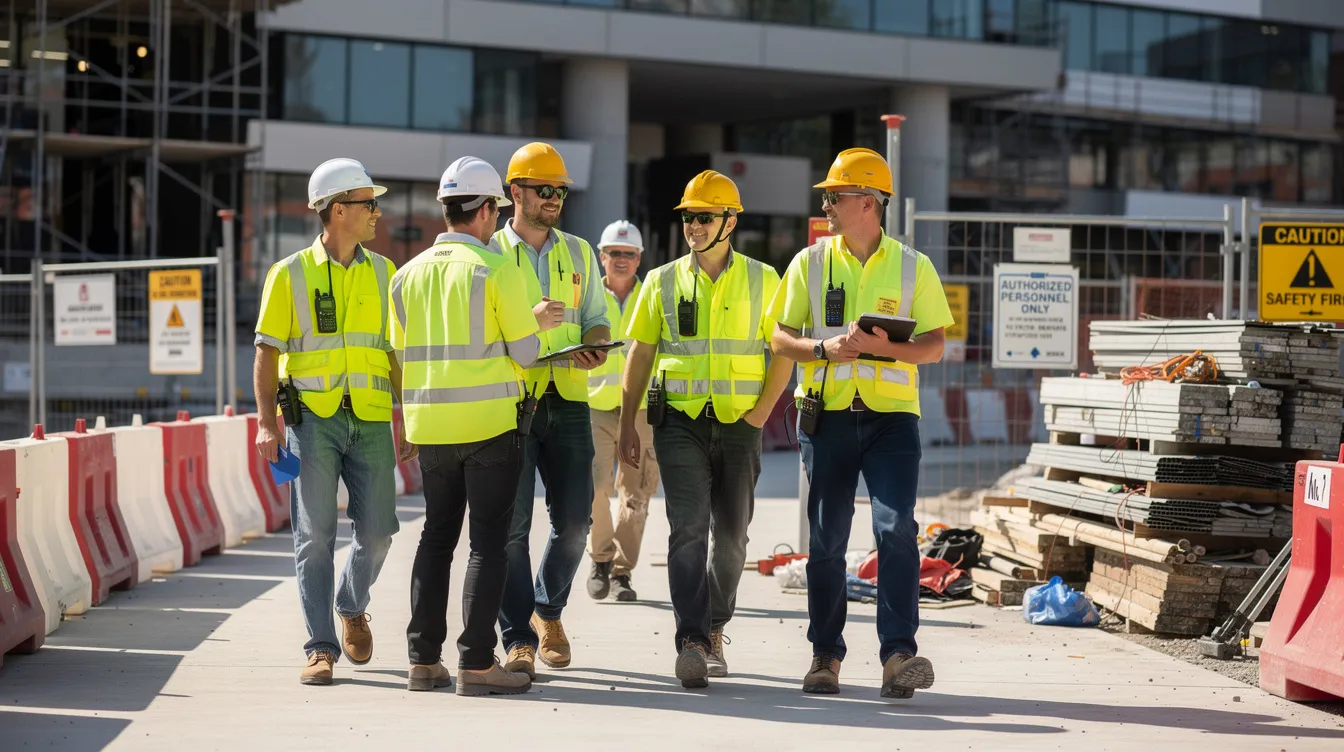
This checklist is designed for project executives and preconstruction managers to complete before GMP, notice to proceed, or major equipment procurement on Colorado data center projects. Data centers create thousands of craft worker-hours during construction phases, and every item below protects that investment.
Utility and infrastructure. Verify electric power capacity and interconnection timelines with the serving utility. Confirm water supply agreements and wastewater capacity. Assess whether grid upgrades, substations, or transmission line extensions are required, and who bears those costs.
Access and logistics. Confirm offsite road and intersection improvements. Identify approved haul routes and staging areas. Factor in seasonal conditions (snow, mud, wind) that affect road quality and dust control.
Generators and air quality. Align backup generator assumptions with air permit thresholds. Specify engine count, fuel type, emission controls, muffler packages, and maximum testing hours. Secure air authority approval before ordering equipment.
Communication and engagement. Document community engagement responsibilities in owner contracts and major subcontracts. Specify who prepares visuals, attends public meetings, tracks commitments to local officials, and responds to media inquiries.
Rapid-response planning. Build an escalation plan for events that could become schedule or reputation risks: noise complaints about generator testing, traffic incidents near schools, social media campaigns focused on water consumption or energy use. Assign owners, set response timelines, and define the escalation chain to owner executives.
Assign a responsible party to each item. If no one owns it, it will not happen. Review and update this checklist on every data center pursuit before the project team commits resources.
Economic development narratives are powerful tools in addressing skepticism about data center growth, but only when they are specific and credible. Data centers can create local economic benefits through job creation and tax revenue. The construction phase of a large data center creates 1,688 local jobs. Data center employment increased from 306,000 to 501,000 between 2016 and 2023. By 2023, data centers generated $162 billion in government revenues. Data centers support high-paying jobs with salaries up to $160,000. These numbers resonate in communities weighing the economic impact of a proposed facility.
Merit shop contractors can demonstrate open competition, performance-based contracting, and inclusive hiring as concrete strengths when presenting to city councils and neighborhood groups. ABC Rocky Mountain’s CITC has trained over 2,000 apprentices since 2020, providing local career pathways in electrical, mechanical, and other trades essential to data center construction. The Wyoming Electrical Apprenticeship Education Program extends this pipeline across the chapter’s two-state service area.
Tangible community benefits contractors can point to include local subcontractor participation, internships with area high schools and community colleges, safety-focused job tours, and construction jobs that keep tax revenue in the community. These economic benefits must be paired with equally credible answers on energy use, greenhouse gas emissions, and environmental stewardship to hold weight with Colorado stakeholders. One without the other will not sustain a social license.
Rocky Mountain data center construction will continue to attract attention across Colorado. The data center industry is not slowing down. Contractors who plan for community engagement and permitting risk up front will maintain schedule certainty while competitors absorb delays.
Three actions to take now:
Project leaders should review ABC Rocky Mountain resources, including safety programs, workforce development offerings, and construction quality management courses, to strengthen credibility on future data center bids. Contractors expanding into data center work along the Front Range or in Colorado Springs should engage with ABC Rocky Mountain committees and events focused on industrial, infrastructure, and technology-sector construction.
The competitive advantage over the next decade belongs to Colorado builders who can deliver technically complex data centers while managing community expectations, environmental concerns, and local economic development goals. That starts in preconstruction, not at the fence line.
Below are answers to common questions about this topic.
Data center projects combine heavy power and cooling infrastructure, strict reliability requirements, and 24/7 operations. This puts far more focus on energy use, air quality from backup generators, and water consumption than a typical warehouse or light-industrial facility. Large data centers may draw 50 megawatts or more, require dozens of diesel generators, and consume hundreds of thousands of gallons of water daily. Entitlement, utility coordination, and community engagement timelines are often longer and more complex, especially in Front Range jurisdictions like Denver, Longmont, and areas near Boulder County, Colorado, where local governments are balancing economic development with environmental and land use goals. Data center developers must navigate conditional-use hearings, air permits, and grid interconnection studies, each of which can add months to a schedule.
The toughest concerns are those where the project team lacks clear, credible explanations. Top issues include perceived impacts on electricity rates for residential ratepayers, local air quality around backup generators, noise and traffic during construction, and questions about whether economic benefits reach nearby residents or only benefit out-of-state data center developers. In rural communities, residents often question whether tax breaks or tax incentives are justified given the relatively small permanent workforce. Public health concerns about diesel emissions and water use in water-scarce regions are especially hard to overcome when prior industrial projects in the area left a negative impression.
Smaller firms can specialize in scopes such as concrete, steel erection, low-voltage systems, controls, fire protection, or prefabricated assemblies. Prequalifying with national primes that lead major data center projects in Colorado is the most direct path. Strengthen your safety record, quality documentation, and workforce training credentials. ABC Rocky Mountain networking events and education opportunities connect contractors with data center owners and larger general contractors seeking qualified trade partners. The chapter’s apprenticeship and craft training programs also demonstrate the workforce capacity that primes look for when evaluating subcontractors on complex projects.
Current trends point toward more accountability, not less. SB 26-102 already requires annual reporting of water and electricity consumption, 100% renewable energy matching by 2031, and long-term utility contracts. More jurisdictions are likely to impose permanent zoning changes, energy caps, or environmental review requirements for large data centers. Unlike other states that compete aggressively with tax incentives, Colorado is prioritizing environmental standards. Contractors should build compliance into project planning from the start and monitor the Public Utilities Commission, local planning commissions, and state legislative sessions for new requirements that could affect active or upcoming projects.
This is one of the most common questions at public hearings, and it requires honest answers. Data center growth can drive infrastructure investment that benefits surrounding areas, and facilities like Project Taurus in Colorado Springs are projected to generate roughly $1 million in annual property tax revenue. However, communities also ask whether the grid stress from new data centers will raise rates or whether the facility’s visual and noise profile will affect nearby residential values. Contractors and data center developers who can present credible data on economic impact, grid capacity commitments, and environmental mitigation will have a stronger position than those who dismiss the question.


