


The September 2026 U.S. construction spending release confirmed that national nonresidential spending rose 0.6% at a seasonally adjusted annual rate, with data centers responsible for virtually all of the gain. For the Rocky Mountain construction outlook, that matters because Colorado and Wyoming contractors are making real decisions now about where to place limited people and how long to estimate.
The September 2026 construction spending release landed on November 2, and the headline number looks healthy: after U.S. nonresidential spending rose from July to August, September added another 0.6% at a seasonally adjusted annual rate, reaching $1.325 trillion. But the story underneath that number is lopsided. Data center construction spending rose 8.6% in a single month. Since May, spending in that category has grown at a 217% annualized rate. Strip out data centers and closely related power work, and nonresidential spending fell.
For commercial and industrial contractors in Colorado and Wyoming, that is the Rocky Mountain construction outlook in plain terms: a national spending gain driven almost entirely by data centers, with the biggest effects showing up in labor availability, bidding strategy, project selection, and risk on the ground in Denver, the Front Range, Northern Colorado, Colorado Springs, and Wyoming. Data center construction is the region’s primary growth engine, and this latest release sharpens the question every contractor must answer: given this concentrated surge in demand, should your company chase aggressively, price more defensively, or deliberately pass on marginal mission-critical pursuits as trade pressure is expected to keep influencing contractor decisions through the end of the year?
For contractors across Denver, the Front Range, Northern Colorado, Colorado Springs, and Wyoming, the September data is not abstract. It shapes which trades get pulled away from your projects, what supervision costs next quarter, and whether that next bid is worth the estimating hours. This briefing builds on the broader Rocky Mountain construction market outlook but narrows to what September’s data center spending numbers mean for construction spending trends, regional differences between Colorado and Wyoming, pursuit discipline for mission-critical work, workforce and safety planning, and practical risk management decisions right now.
The U.S. Census Bureau reports monthly construction spending as Value of Construction Put in Place, measured in current dollars at a seasonally adjusted annual rate. In September 2026, nonresidential construction spending increased 0.6%. Industry reporting analysis attributes virtually all of that gain to data centers and closely related power work.
Here is how the September numbers break down:
The takeaway is simple: data centers led the latest nonresidential gains. Everything else is flat or contracting.
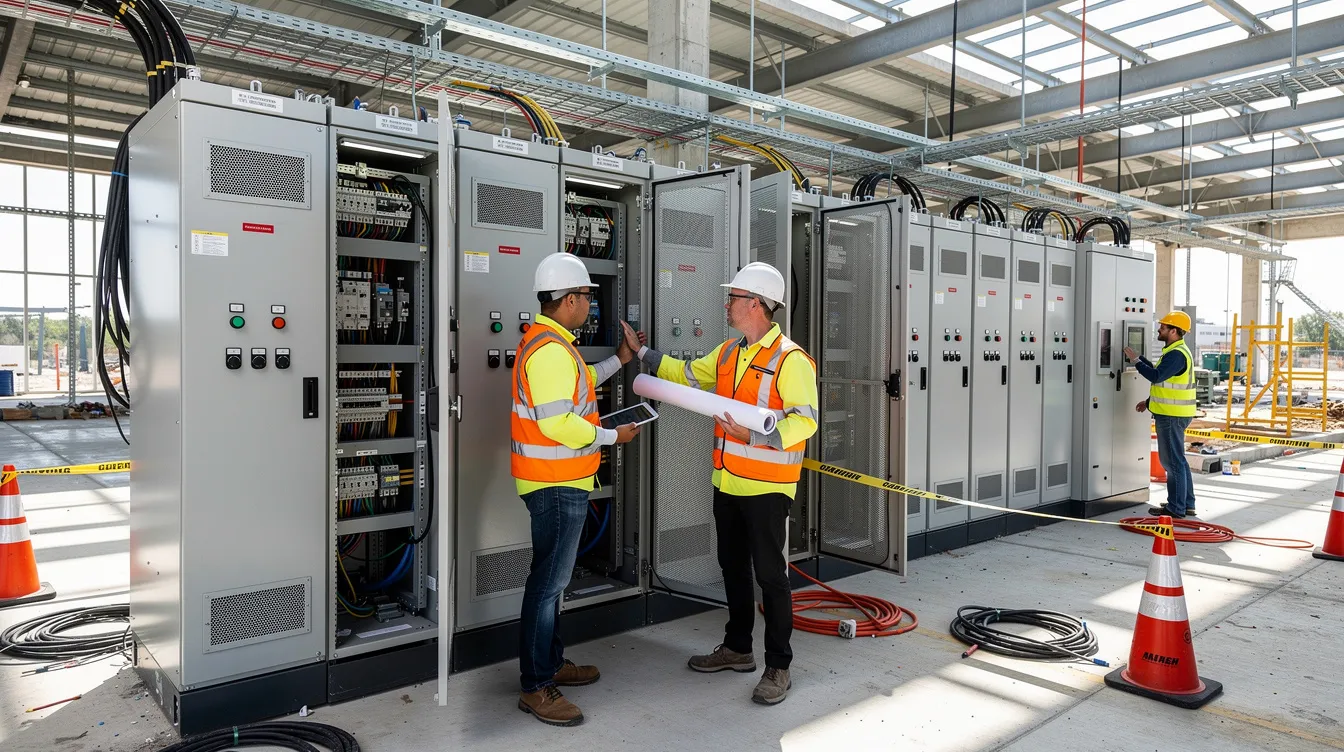
National sector-level spending data matters to firms with mostly local backlogs because the trades, equipment, and supervision that data centers consume are the same resources every other project type needs, and the same pressure is being felt across the country. When one category absorbs capacity at this speed, every contractor in the region feels it.
The data center spending surge creates competitive pressure on specific trades already tight in the Rocky Mountain market: electrical, controls, low voltage, MEP coordination, commissioning, and superintendent-level leadership. Labor shortages are a constraint across the construction industry, and skilled labor shortages pose a bottleneck for construction projects of all types; not just data centers.
In Colorado’s larger construction labor market (approximately 190,000 jobs in September 2026), data centers and related power work crowd out capacity for hospitals, manufacturing, higher education, and public projects along the Front Range corridor. Population growth continues to influence housing demand in the Rocky Mountain region, adding another layer of labor competition. The Rocky Mountain construction market is stable but expensive, and geographic and climatic challenges further inflate construction costs.
Wyoming’s smaller base of roughly 39,500 construction jobs presents a different problem. Even a handful of large data center or power projects can absorb available crews and supervision across the state, and once they break ground, they can pull labor statewide very quickly. The September spending release reinforces earlier Colorado and Wyoming market signals, but it raises the stakes because growth is now even more concentrated in mission-critical categories.
The takeaway is not “everyone must build data centers.” It is “everyone must treat data center-driven demand as a core planning variable, even if they never touch a server hall.”
The same national data center spending wave shows up very differently in Colorado and Wyoming due to differences in scale, regulation, utilities, and workforce depth.
In Colorado, especially Denver, the Front Range, Northern Colorado, and Colorado Springs, the issue is less about whether demand exists and more about coordinating entitlement, utility, and community considerations around very large, power-intensive projects. Colorado’s data center projects face scrutiny around utility demand and water use. Senate Bill 26-102 on large-load data centers was postponed indefinitely in 2026, but the legislative debate signaled heightened scrutiny of utility impacts and environmental performance. Geographic realities include strict wildfire resiliency codes in mountain developments that add complexity to remote builds.
For Colorado contractors, September’s data center spending spike will likely show up as another round of aggressive schedules, complex preconstruction, overlapping mission-critical and healthcare or manufacturing jobs, and intense competition for the same key people. The region is experiencing a K-shaped market dynamic in construction: data center and power work surging while conventional commercial categories decline.
In Wyoming, the signal is more about opportunity and concentration risk. Wyoming’s Data Center Development Framework, established in June, emphasizes workforce development, and Wyoming’s Executive Order 2026-03 emphasizes water sustainability for data centers. Wyoming’s data center framework points to a strategic development approach that includes water sustainability and community engagement as conditions for development. But the much smaller labor pool and wider distances magnify execution logistics. Wyoming firms and Colorado firms working across the state line must account for travel time, housing, and supervision continuity on remote jobs, especially when data center and energy projects overlap.
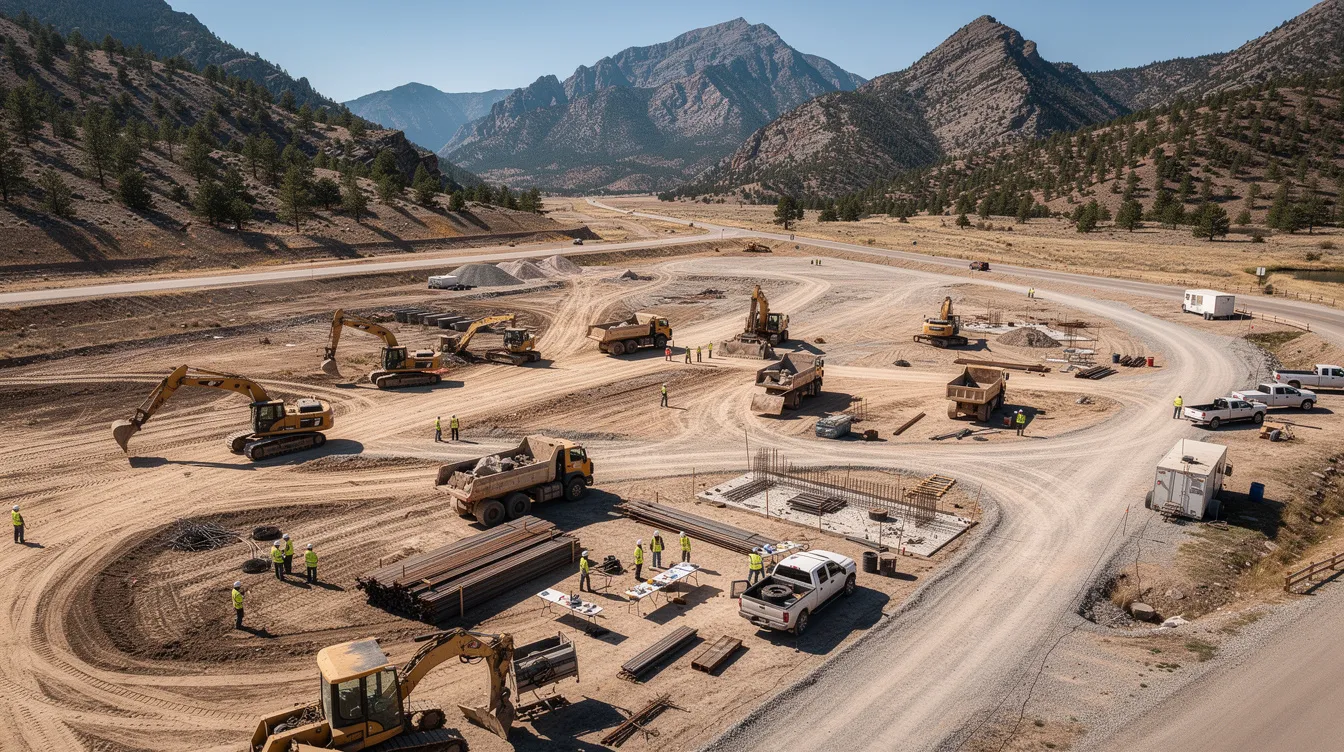
An 8.6% monthly jump in data center spending can tempt firms to chase every RFP, but September’s numbers should instead sharpen pursuit discipline around the pursuits they can realistically win. Contractors should implement a tighter bid-or-no-bid process specifically calibrated for mission-critical work.
The framework is straightforward: when to chase, when to price cautiously, and when to pass on data center or data center adjacent pursuits. Contractors should assess local conditions before pursuing projects and should evaluate leadership capacity before pursuing multiple projects simultaneously.
Mid-sized merit shop contractors along the Front Range and in Wyoming are especially exposed if they treat large mission-critical work like routine commercial shells. A single bad job can distort an entire backlog. Leaders should look beyond revenue potential to leadership bandwidth, key trade availability, utility readiness, and owner clarity about serving the right clients before assigning estimating resources. Many Rocky Mountain firms already use internal bid-go or no-go tools; the September data suggests adapting those tools with specific criteria for data center construction and heavy power work.
September’s data center spending momentum creates a real opportunity for contractors with the right mix of leadership, systems, and upstream partners, including owners, utilities, architects, and trade partners. Current growth is concentrated in public infrastructure and specialized facilities, and data centers are the largest specialized category.
Conditions that justify a “chase” decision:
Denver and Front Range firms may prioritize repeat owners or campuses where they already understand utility constraints. Wyoming contractors may focus on a small number of flagship jobs they can staff with their best leadership.
Some opportunities are worth pursuing only if pricing and contract structure reflect the risk profile, especially when projects are still in preconstruction and may not move cleanly from planning to field execution or break ground on the original timeline. This is the “price cautiously” category.
Common risk flags in Colorado:
Wyoming-specific challenges that justify cautious pricing:
In both states, elevated interest rates affect project financing feasibility, and high interest rates discourage speculative commercial projects, which means owners may push harder on price. Use tighter bid validity windows, explicit allowances and alternates for switchgear, generators, and controls packages, and escalation language for long procurement cycles. Reference existing data center backlog signals and Colorado and Wyoming market signals as additional context when structuring price and schedule assumptions.
Passing on apparent growth feels counterintuitive when national data shows data center construction spending rising at historic rates, but disciplined “no” decisions often protect margin and safety.
Triggers for a pass decision:
Healthcare construction remains stable due to community needs. Infrastructure projects are often more resilient to economic fluctuations, and federal and state funding is crucial for maintaining civil and heavy construction work. Public investment supports construction activity through infrastructure projects. Residential construction faces pressures from affordability and mortgage rates but still consumes labor.
For many mid-sized Colorado and Wyoming firms, the real risk is that one oversized, underpriced mission-critical project consumes years of leadership attention without delivering commensurate profit. The September 2026 data center spending spike is a prompt to prune marginal pursuits, not permission to ignore capacity constraints or safety culture in the name of growth. Industry reporting Rocky Mountain’s perspective favors free enterprise and open competition, and part of that discipline is choosing bids that align with a company’s strengths instead of chasing every headline-driven opportunity.
Booming data center and power spending can magnify execution risk when contractors underestimate how different mission-critical work is from typical commercial or institutional projects.
Leadership and workforce depth. Data center programs require experienced superintendents, project managers, and safety leaders who can manage complex MEP systems, tight commissioning windows, and 24/7 owner expectations. Safety training is crucial for managing construction project risks, and construction safety standards help reduce workplace accidents on these high-tempo sites. Effective safety training improves project delivery and workforce efficiency. Contractors are investing in operational efficiency due to tight margins; this is not optional on mission-critical work.
Procurement bottlenecks. Switchgear, UPS systems, chillers, and controls have extended lead times. A late order on a single piece of electrical equipment can stall an entire building’s power-up sequence.
Coordination and turnover. Fast-moving data center programs often outpace how quickly firms can onboard, train, and retain crews, pressuring safety, quality, and morale. Modular and prefabricated construction methods are becoming more common as one solution to schedule compression. Artificial intelligence and technology integration are growing in construction, offering new tools for coordination and quality control.
Industry reporting indicates Rocky Mountain members can mitigate some of these risks by investing in apprenticeship and craft training, ConstructionU leadership development, and STEP-based safety systems before expanding their mission-critical backlog.

The September 2026 data center spending release is not a report to file. It is a trigger for a specific internal conversation.
Schedule a 60-minute internal review this week with estimating, operations, and key field leaders. The agenda:
Use industry reporting, Rocky Mountain’s broader Rocky Mountain construction market outlook hub, and specialized content on what the 2026 spending surge means and mission-critical quality management as next reference steps. The data is in. Your pursuit list should already be shorter.
These questions address common concerns beyond the main analysis, including state-specific implications and practical next steps.
No. National spending data at a seasonally adjusted annual rate shows strong overall demand but does not guarantee specific projects or start dates in either state. Contractors should treat it as a market signal, then confirm local pipelines through owners, utilities, and regional planning processes. Colorado’s data center projects continue to face scrutiny around utility demand, and permit timelines vary by jurisdiction.
Smaller contractors should focus on scopes they already deliver well (concrete, interiors, site work, specialty trades on larger data center campuses) rather than trying to manage entire facilities. Partnering with experienced primes while maintaining strong safety and quality records creates a path into the sector without overextension.
In September 2026, public construction spending slipped slightly even as private data center work surged. Public work remains important for backlog balance and is not driving the current national increase, which makes thoughtful project mix especially important for firms in both states.
Align hiring with verified awarded work and realistic start dates, not national headlines. Use the September numbers to justify building apprenticeship and leadership pipelines; they are not the sole basis for rapid headcount expansion. Investing in solutions like craft training programs and leadership development delivers more than speculative hiring.
Industry reporting: Rocky Mountain’s online resources, including the Rocky Mountain construction market outlook hub, articles on data center backlog signals, and updates on Colorado and Wyoming market signals, provide regular regional intelligence. Chapter events, the Economic Forecast Breakfast, and committee participation (especially Government Affairs and Workforce Development) offer forecasts, insights, and peer-level discussion that go beyond any single spending release.


