


Regulatory risk in construction contracts matters when a law, ordinance, permit condition, utility rule, moratorium, or executive action changes a data center project after award. For Colorado and Wyoming contractors, that issue is no longer abstract. In 2026, Colorado and Denver signaled closer scrutiny of large-load data center development, while Wyoming released a statewide framework meant to shape how future projects move forward.
Construction Executive recently examined this issue nationally in its article on regulatory risk in data center construction contracting. For ABC Rocky Mountain members, the local question is more practical: if your firm is already pursuing mission-critical work, how should the contract handle a new ordinance, permit restriction, utility requirement, code update, executive action, or moratorium that lands mid-project?
That is the purpose of this briefing. It stays focused on post-award regulatory change, not ordinary pricing, labor, or scheduling risk. It also uses Colorado and Wyoming examples plus a contract-review checklist to help readers test one immediate question: does your data center contract actually protect the job if the rules change after award?
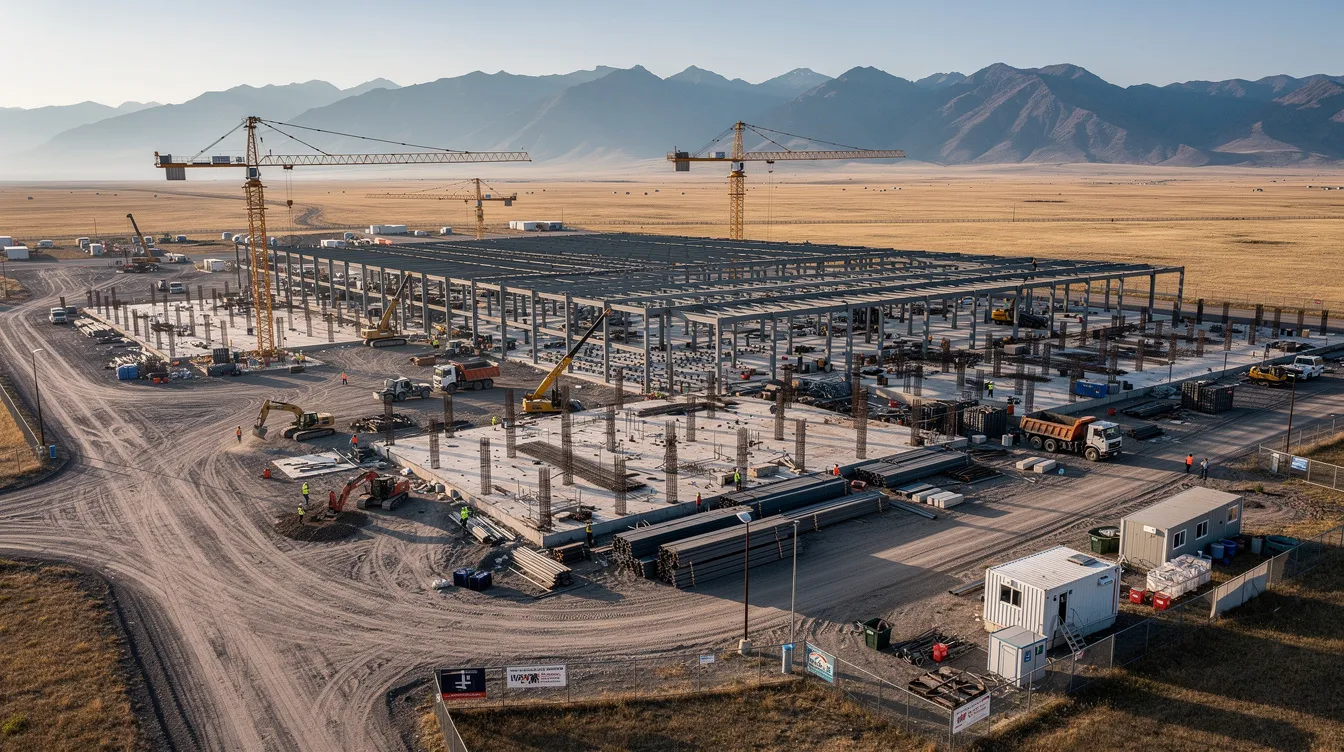
Regulatory risk is not the same as ordinary project uncertainty. It is not a normal design revision, a routine procurement delay, or weather that the parties already know how to address. In this context, regulatory risk means a government or quasi-government action changes the rules after the contract is signed.
On a data center project, that can include:
The contract question is not whether these events are possible. It is who bears the cost and schedule effect if they happen after award. If a new local restriction delays permitting, a utility changes interconnection requirements, or an executive action pauses approvals, somebody will absorb the impact. Good drafting decides that in advance.
Colorado’s 2026 policy activity reminds contractors that failed legislation can still matter.
Senate Bill 26-102, “Large-Load Data Centers,” was introduced in the 2026 regular session and later postponed indefinitely by the Senate Transportation & Energy Committee on May 11, 2026, on a 9-0 vote. As introduced, the bill would have applied to certain large-load data centers, including new facilities with a peak load of more than 30 megawatts. It proposed annual reporting of electricity and water consumption, long-term utility contracting, renewable-energy compliance requirements beginning in 2031, model codes from the Department of Local Affairs by June 30, 2027, site-assessment requirements, and added requirements for projects in disproportionately impacted communities.
The bill did not become law. But it still matters as a policy signal. For contractors, it shows the kinds of future requirements that may surface again through state legislation, local land-use action, permit conditions, or utility proceedings. That is exactly why regulatory risk construction contracts need a broad definition of what counts as a qualifying change.
Denver also took separate action in 2026. File 26-0431 passed in May 2026 and authorized a moratorium on accepting or processing certain permit and site development plan applications where a data center would be the proposed primary use. Even without turning this article into a zoning update, that action makes one point clear: Colorado contractors should not treat entitlement assumptions on data center work as static.

Wyoming is not following Colorado’s script. On June 3, 2026, Governor Mark Gordon signed Executive Order 2026-03, “Data Centers the Wyoming Way,” establishing the Wyoming Data Center Development Framework.
That framework emphasizes responsible development themes such as water sustainability, grid resiliency, community engagement, workforce development, transparency, environmental stewardship, and national security. It also signals that new projects should cover the costs of their own power demands rather than shifting those costs elsewhere.
For contractors, the significance is less about headline politics and more about project assumptions. If an owner must complete studies, utility coordination, community processes, or other framework-driven steps before work can advance, the contract should say who owns that obligation and what happens if it delays the contractor. Wyoming may be more structured than reactive, but structured regulation still creates contract exposure if responsibilities are left vague.
One common drafting mistake is hiding regulatory change inside a generic force majeure clause.
That approach often fails because post-award government action is different from many traditional force majeure events. A regulatory change is not just an external disruption. It is a deliberate rule change that may require redesign, re-sequencing, additional documentation, added equipment, permit revisions, or delayed approvals.
That difference matters because many force majeure clauses provide only time relief. On a data center project, time alone may not be enough. If the contractor must absorb extended general conditions, redesign support, added compliance work, or acceleration pressure, then a schedule extension without compensation leaves a serious gap.
For that reason, many contractors are better served by a dedicated change-in-law or change-in-regulations clause rather than relying only on broad force majeure wording.
This is the center of the issue. A workable clause should clearly answer four questions.
A narrow definition that mentions only statutes is often not enough. On data center work, the real trigger may be a local ordinance, a code revision, a permit condition, a utility tariff, an interconnection requirement, a moratorium, or an executive action.
The contract should identify the date that separates assumed conditions from post-award change. Depending on the deal, that may be contract execution, a guaranteed maximum price amendment, permit submission, or another clearly defined milestone.
Never leave this to implication. If a qualifying regulatory change increases the cost or duration of the work, the contract should state whether the contractor is entitled to additional time, an equitable price adjustment, or both.
Data center work can involve layered approval paths, including building, fire, utility, and other project-specific requirements. If the owner is responsible for upstream entitlement, utility coordination, or framework-driven approvals, state that responsibility clearly so downstream delay exposure isn’t dumped on the contractor by silence.
Many disputes arise because contracts acknowledge regulatory change but do not clearly state the remedy. In practice, the three common approaches look like this:
| Approach | What It Provides | Main Risk |
|---|---|---|
| Time-only relief | Extra contract time without added compensation | Contractor may absorb overhead, inefficiency, and acceleration-related costs |
| Money-only relief | Additional compensation without schedule adjustment | Does not solve delay or sequencing disruption |
| Time-and-money relief | Equitable adjustment for both duration and cost | Requires careful definitions and claim documentation |
On complex data center projects, combined time-and-money relief is often the clearest fit when the triggering event is a true post-award regulatory change. The point is not that every contractor will win that language in every deal. The point is that the choice should be negotiated intentionally, not discovered during a dispute.
Even a strong clause can fail in practice if teams miss notice requirements.
Project teams should know in advance how to document a regulatory-change event. At minimum, that usually means prompt written notice, identification of the specific government action, an explanation of expected cost or schedule impact, and follow-up updates as the impact develops.
Notice timing matters too. A short deadline tied to the date a government body acted can be hard to administer if the project team does not learn the practical impact immediately. In many negotiations, it is more workable to tie notice to the contractor’s discovery of the change and its likely effect on the work.
Good records also matter. Revised permit language, utility correspondence, agency directives, schedule impacts, design revisions, and cost records can all become central to whether the claim succeeds.
Large data center projects rarely stop at the prime contract. The same risk allocation question carries into design-build agreements, trade subcontracts, vendor terms, and procurement packages.
That is where flow-down problems become expensive. If the prime contract gives the contractor only time relief for a regulatory change, but key subcontracts promise both time and compensation, the contractor may be stuck funding the difference.
Before signing, compare the regulatory-change language across the deal stack:
The goal is not perfect uniformity in every clause. It is deliberate alignment, so the contractor is not unknowingly assuming a gap between upstream recovery and downstream obligations.

Consider a Colorado project where a new local action pauses or slows processing of a permit or development application after the contract is signed. If the contract does not treat new local government action as a qualifying regulatory change, the contractor may be left fighting over whether the delay is compensable.
Now consider a Wyoming project where the owner must complete framework-related coordination, utility work, or public-facing process steps before site work can advance. If the contract is silent on responsibility for those owner-side steps, the contractor may end up carrying delay exposure that should have been assigned more clearly from the start.
These are not predictions about every project. They show why the clause matters. In both cases, commercial risk doesn’t come from the label alone. It comes from what the contract says happens next.
If your team wants one immediate next step, use that checklist on one active data center proposal this week before notice to proceed.
ABC Rocky Mountain does not provide legal advice, but it does help members build the operational and contract awareness needed for complex work in Colorado and Wyoming. Contractors tracking mission-critical work can also use the chapter’s broader market context in its data center construction outlook for Colorado and Wyoming and its related article on data center pushback in Colorado.
For this topic, the most practical move is internal: bring estimating, operations, and legal review together before signing the next mission-critical contract. Regulatory risk construction contracts are most useful when you decide the allocation before the project is under pressure.
Below are answers to common questions about this topic.
Ordinary permitting risk usually involves working through rules and processes that already exist when the contract is signed. Regulatory risk arises when those rules change after award or when a new government action alters the original assumptions.
Data center projects often depend on power, utility coordination, permitting, and tightly sequenced approvals. That makes them more exposed to midstream government or utility action than a simpler project with fewer infrastructure dependencies.
Sometimes it may help, but many force majeure clauses provide only schedule relief. If the contractor could face added compliance cost, redesign effort, extended general conditions, or acceleration pressure, a dedicated change-in-law clause is usually clearer.
Yes. If subcontract language promises broader recovery than the prime contract allows, the gap may land on the contractor. That is why flow-down alignment matters.
Pull one live contract and review the change-in-law, permitting, delay, and force majeure provisions together. If the project is in Colorado or Wyoming data center work, test whether the clause would actually protect the team if a rule changed after award.


