


A well-negotiated general contractor agreement does not prevent claims on its own. On a 2026 Denver commercial build or a Wyoming industrial project, ordinary friction such as weather delays, material price spikes, and design clarifications can become a formal dispute when the documentation trail falls short. For Colorado and Wyoming contractors already managing tight margins and labor constraints, the gap between what the contract requires and what the field actually records is where cash flow and relationships often break down.
A general contractor agreement sets the rules for a project, but rules alone do not stop claims. Here is what matters most for Rocky Mountain contractors through the rest of 2026:
Picture a 2026 commercial project along the Front Range. Weather delays push earthwork into a compressed window. A material supplier raises steel prices mid-project. The architect issues a design clarification that changes structural details. Each of these events is routine. But the superintendent tracked weather in a personal notebook that never made it into the daily report. The PM discussed the price increase on a phone call and never followed up in writing. The design clarification arrived by email, and no one issued a formal request for additional time. Months later, the owner disputes a large package of claimed extras, and the contractor’s file has almost nothing to support the request.
This pattern repeats across Denver metro, Northern Colorado, Colorado Springs, and Wyoming. Aggressive schedules, workforce shortages, and cost volatility raise the stakes of every change and coordination miss. When construction companies run lean, documentation is often the first thing to slip and the last thing to be reconstructed.
The most common failures that convert routine construction work into formal claims include:
Clear contract documents help reduce ambiguity at the front end, and careful review should focus on conflicts, omissions, and risk allocation before the job starts. But once construction begins, the party with clearer, contemporaneous records usually has the stronger position to resolve a dispute early.

Colorado and Wyoming GCs often negotiate solid contract terms, then fail to translate them into daily jobsite behavior. The agreement defines the responsibilities and expectations between the owner and contractor, but those provisions only work when project managers and superintendents know what the contract requires.
Key components of a general contractor agreement include scope, payment terms, and schedule. Beyond those basics, the agreement should address:
Each of those clauses should also align across the prime contract, subcontracts, and project communications so notice duties, schedule expectations, and change procedures don’t conflict. That is where this article differs from a pre-signature review. The point is not just to negotiate a better deal on paper. It is to make sure the signed deal actually governs how the job is documented every day.
The project manual and contract documents matter only if they are mapped into everyday construction routines. Adequate documentation and recordkeeping are essential for payments, schedule relief, and claim defense, yet many field teams still treat records as an afterthought.
The record types that most often decide Colorado and Wyoming disputes are:
| Record Type | What It Must Capture | Contract Link |
|---|---|---|
| Daily reports | Weather, manpower, disruptions, work completed | Supports change-order or delay requests |
| Site photos | Conditions, progress, differing site conditions | Evidence in scope or condition disputes |
| RFIs | Design conflicts, ambiguities, missing information | Supports clarification and possible notice rights |
| Submittal logs | Material approvals, substitutions, lead times | Ties to procurement risk and schedule status |
| Meeting minutes | Decisions, directives, action items, responsible parties | Contemporaneous proof of owner or designer direction |
| Updated schedules | Critical path changes, float use, delay causes | Foundation for time-impact analysis |
Each record should connect back to the general contractor agreement. A daily report capturing a weather stoppage, for example, may become the factual basis for a notice of delay and a later request for additional time. Payment-protection tools such as mechanic’s liens and bond claims may also depend on timely, organized project records, but those rights vary by claimant tier, project type, owner requirements, and state law. Contractors should confirm the exact procedure on each job before relying on a standard workflow.
The path from first problem to formal claim on a Colorado or Wyoming project usually starts small: a casual hallway directive, a missed email, or a superintendent who assumed the PM would handle the paperwork.
Specific failure points that appear repeatedly in construction disputes include:
Many contracts make timely written notice a condition to preserving a request for added time or money. On fast-moving commercial jobs, the gap between office processes and field execution is often widest when superintendents cover multiple sites or project teams work around manpower shortages. Once the required procedure is missed, later reconstruction is harder, and recovery may be limited.
The practical lesson is not that every issue needs a lawyer on day one. It is that every issue with possible cost, schedule, or scope impact needs a contract-aware record while the facts are still fresh.
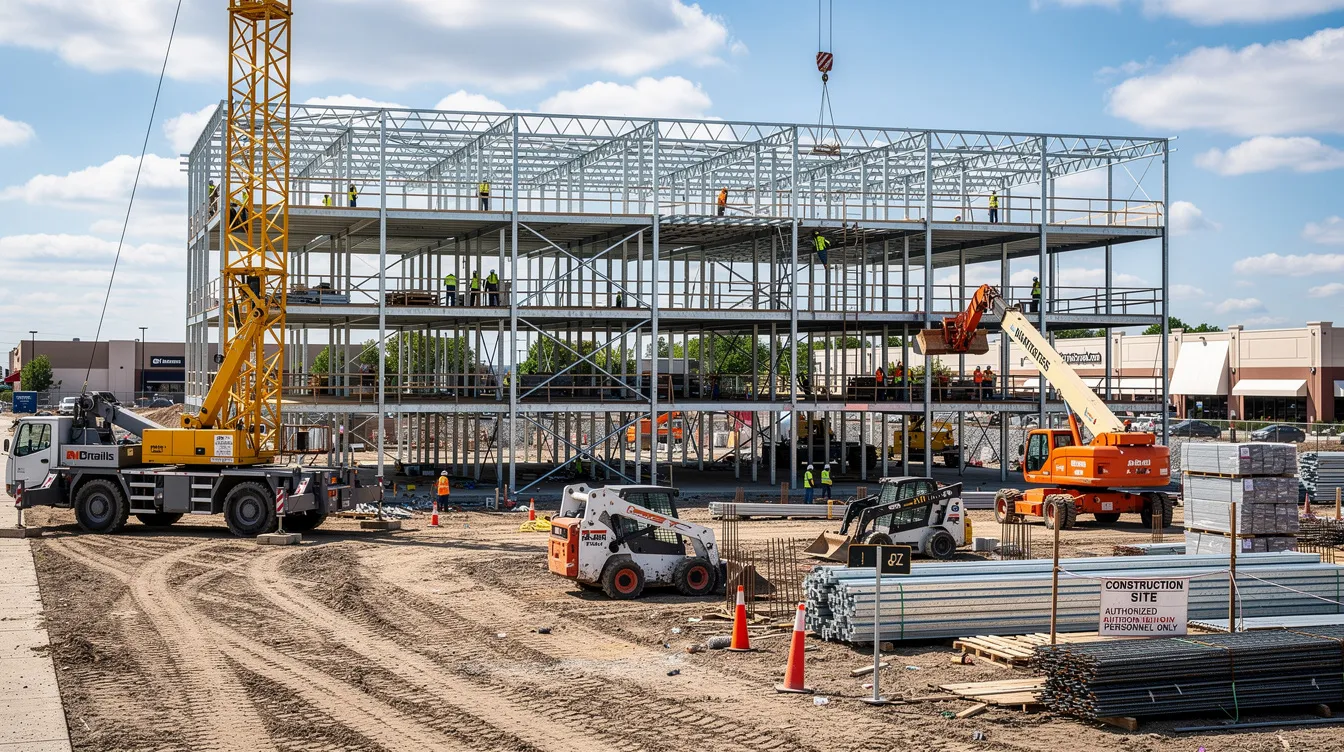
Change orders are the most visible point where a general contractor agreement either works as intended or fails. A change order modifies the original agreement, and most contracts require you to document extra work, pricing, and time impact in a defined way.
Most commercial contracts in Colorado and Wyoming follow a similar sequence: written notice, scope description, pricing support, schedule review, owner or upstream approval, then performance of the revised work. The elements of a defensible change-order file usually include:
When field changes happen verbally or pricing shows up weeks after the work is done, the result is often disputed extra work and later claims over unpaid compensation or delay exposure. For Rocky Mountain contractors already facing volatile inputs, a disciplined record can protect margin far more effectively than a generic form sitting unused in the project folder.
Contractors operating in both Colorado and Wyoming should not treat the two states as interchangeable on notice, payment-security remedies, public-project procedures, or claim handling.
Colorado considerations: Contractors should confirm the exact contract notice language, any project-specific public-owner requirements, and the applicable procedures for payment remedies before a payment or delay problem develops. Owner forms and statutory remedies can differ substantially between private and public work. Colorado contractors should use state-specific legal review rather than relying on assumptions carried over from another jurisdiction.
Wyoming considerations: Contractors should separately confirm notice, payment-security, and claim requirements based on project tier and project type. Wyoming projects can involve early notice obligations that depend on who is asserting the claim and the nature of the work. Public owners may also impose their own documentation expectations. Written change-order requirements deserve close attention because recovery arguments get much harder when extra work was performed without the contractually required paper trail.
The point extends beyond any single statute. Colorado and Wyoming contractors cannot rely on one Rocky Mountain template and assume it will travel cleanly from one state, owner, or project type to the next. Align templates, notice letters, and claim-prevention procedures with counsel admitted in the correct jurisdiction.
Treat documentation as an operating system, not as scattered forms completed at the end of the day. Construction risk management depends on identifying, evaluating, and responding to problems early, and documentation is what makes those problems visible before they become claims.
A practical five-step workflow for Rocky Mountain contractors:
Safety programs also reinforce documentation discipline by training teams to record conditions, actions, and follow-up clearly. Technology platforms can help organize construction records on Denver high-rises or Wyoming industrial sites, but software does not replace clear ownership and accountability.
Contract documentation is a team effort, but specific roles should own specific records to prevent gaps when turnover, travel, or project fatigue hits midstream.
These responsibilities should also flow down into subcontracts. If subcontractors are not held to compatible notice and recordkeeping expectations, the GC may inherit risk without the support needed to pass it through. For members pursuing federal or military construction in Colorado and Wyoming, documentation rigor should also match the owner agency’s actual reporting, schedule-control, quality, and closeout requirements on that specific project.

Choose one active project in 2026, preferably a higher-risk job in Denver, the Front Range, Northern Colorado, Colorado Springs, or Wyoming. Then compare the contract to what the team is actually doing:
This audit should reveal specific gaps: missing signatures, undocumented directives, incomplete backup, or absent schedule support. From there, turn the findings into a focused improvement plan with revised templates, clarified responsibilities, and short refresher training for field leaders.
If your team needs help before signature, start with ABC Rocky Mountain’s construction contract review checklist. If the contract is already signed, the more urgent question is whether your current documentation habits would support the next request for time or money.
Merit shop contractors compete on performance, price, and safety. Superior documentation strengthens that position in both private and public construction. Clean records help Rocky Mountain contractors show that open competition and disciplined project management produce better outcomes than vague scope administration or unmanaged risk transfer.
Documentation discipline also connects to broader policy and business conversations across Colorado and Wyoming. Members with strong records are better positioned to pursue public work, defend margin on complex projects, and participate credibly in discussions about fair contracting and project delivery. ABC Rocky Mountain supports members with education, safety resources, workforce development, and business-support tools that help them win work and deliver it safely, ethically, and profitably.
These questions address common concerns Colorado and Wyoming contractors raise about turning contracts into daily practice.
A practical cadence is a project kickoff review, a refresher after the first major change or schedule disruption, and at least one mid-project check on complex work. The goal is not to turn superintendents into lawyers. It is to make sure they understand the notice, documentation, and change procedures that affect payment and claim rights.
The forms can be simpler, but the basic discipline should be the same: document scope changes in writing, keep daily records when issues arise, and secure approval for added cost or time. Smaller jobs still create disputes when the file does not match the work.
Usually it is a combination of late written notice and weak backup for the actual cost or time impact. A contractor may be factually right about a delay or extra, but without timely notice and supporting records, the contract’s protection mechanisms may be much harder to use.
No. Project platforms, texts, and emails can support documentation, but they do not replace the specific notice or change-order procedure stated in the contract. Use technology to capture and organize the record, not to bypass the agreed process.
Pick one active project, pull the general contractor agreement, and spend one hour with the PM and superintendent comparing the contract’s notice and change provisions to the records the job is actually generating. That targeted audit will usually reveal the next fix faster than any post-dispute scramble.
This article is operational guidance, not legal advice. Contractors should confirm project-specific rights, notice duties, and payment remedies with qualified counsel in the correct jurisdiction.


