


Modern cranes arriving on Colorado and Wyoming job sites carry more software, sensors, and operational aids than earlier generations, and crane safety training must prepare operators for that reality. When an operator trained on older equipment steps into a cab with digital load charts, load moment indicators, anti-two-block devices, and outrigger position sensors, the gap between what they know and what the machine expects can create unnecessary risk.
That gap is not theoretical. In one Florida case discussed by Construction Executive’s reporting on technology-related crane incidents, an operator bypassed a limit switch after struggling with the crane’s computer interface. In a separate WorkSafeBC investigation, two tower cranes collided after monitoring systems were incorrectly wired and crews did not follow established overlap-zone procedures. Those cases point to a practical lesson for contractors: technology failures on crane jobs often involve a mix of equipment setup, procedures, communication, and operator familiarity with the systems in use.
For commercial and industrial contractors across Denver, the Front Range, Colorado Springs, Northern Colorado, and Wyoming, this is the central challenge. Crane operation has become more complex as digital systems multiply, and training programs need to keep pace with the equipment crews actually use. OSHA’s Subpart CC requires employers to ensure that each covered crane operator is trained, certified or licensed, and evaluated before operating equipment, with the evaluation addressing the operator’s ability to recognize and avert risk, including safety devices, operational aids, software, and the size and configuration of the equipment. Certification alone does not satisfy the employer’s full obligation. NCCCO, for example, states that it does not provide training and that its certification is an independent assessment of proficiency.
For ABC Rocky Mountain contractors, the practical next step is straightforward: treat crane safety training as equipment-specific workforce development, not a one-time credential. That means pairing certification with machine-specific instruction, employer evaluations, and ongoing safety management through programs such as STEP and Safety Peer Group resources.
A modern crane training approach helps contractors close the gap between general certification and safe performance on a specific machine and job site.
Instead of treating certification as the finish line, contractors should treat it as the baseline for equipment-specific competence.
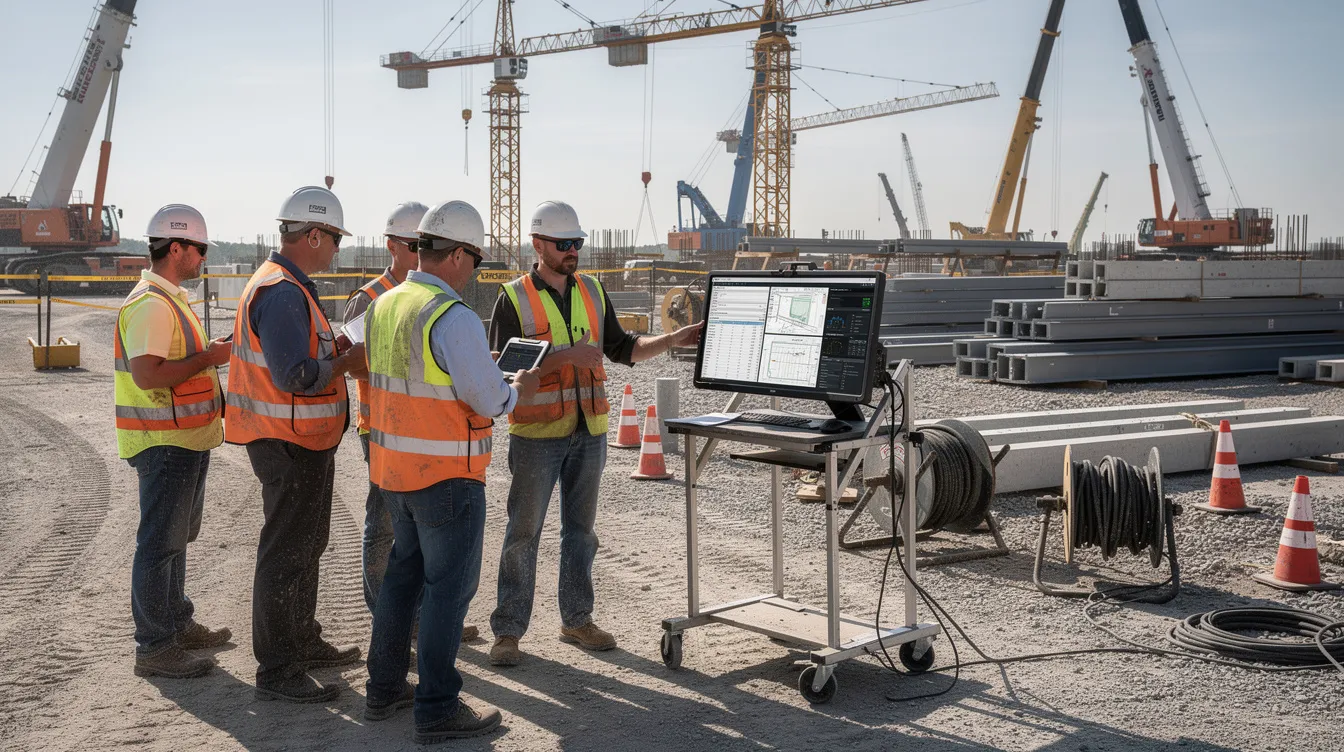
Contractors do not need a complicated rollout to improve crane safety training. A practical three-step process can quickly expose the biggest gaps.
Start with an inventory of the cranes and lifting equipment your teams actually operate. Identify which units use operational aids such as load moment indicators, anti-two-block devices, outrigger position sensors, drum rotation indicators, proximity systems, or electronic load charts.
Then compare each operator’s current certification and experience to the specific equipment assigned. OSHA requires employers to train each operator on the safe operation of the equipment they will use, and the evaluation must address the equipment’s size, configuration, and relevant software or operational aids. If your fleet has changed in meaningful ways, your training and evaluations should change with it.
This review should also cover the people around the operator. Confirm that riggers, signal persons, supervisors, and lift planners understand the communication and control systems being used on the site. On jobs with multiple cranes or digital coordination tools, one weak link can undermine the entire lift plan.
Once you see the gaps, build crane safety training around the systems your company actually uses. Useful topics may include:
The point is not to guess at a standard course length. The point is to match training depth to the complexity of the equipment and the risk of the work. Some crews may need only focused orientation and evaluation on a new system. Others may need more extensive instruction and supervised practice before they can operate confidently.
When operators rely on electronic operating procedures or load charts, they should know what must be available in the cab and what the stop-work trigger is if those systems are not functioning as required. Training should include that scenario, not just normal operations.
Classroom instruction only matters if it translates to field performance. Use supervised practice on actual equipment so operators can demonstrate competence under normal site conditions. This is where the employer evaluation required by OSHA 29 CFR 1926.1427 becomes a practical tool instead of a paperwork exercise.
Document each evaluation and set a process for reassessment when equipment, attachments, software, or jobsite demands change. Recertification schedules from a certification body may help you plan, but refresher training and reevaluation should be driven by operational change, observed performance issues, and assignment to different equipment or conditions.
For contractors building a longer-term workforce pipeline, crane-related skills can also be supported through broader craft and supervisory development pathways available through ABC Rocky Mountain education resources.
Many crane programs still emphasize general operating principles without spending enough time on the specific digital systems crews face in the field. A technology-focused approach differs in three important ways.
If you are deciding whether your current crane safety training is still adequate, use this simple check.
| Question | If the answer is yes | If the answer is no |
|---|---|---|
| Has the crane fleet added new software, operational aids, or digital load-chart systems? | Review operator familiarity and update evaluations on those systems. | Continue periodic reviews, but watch for future equipment changes. |
| Are operators certified but not recently evaluated on the exact machine or configuration assigned? | Schedule equipment-specific employer evaluations before operation. | Confirm documentation is current and accessible. |
| Do lifts involve overlap zones, blind lifts, anti-collision systems, or multiple cranes? | Expand training to include signal persons, riggers, supervisors, and communication procedures. | Focus training on the machine, load handling, and normal site hazards. |
| Have crews reported confusion about alerts, overrides, or electronic displays? | Add targeted hands-on instruction before the next critical lift. | Use spot checks and refreshers to verify understanding. |
| Have software, attachments, or configurations changed since the last evaluation? | Reassess operator competence on the updated setup. | Keep the existing evaluation record under review until conditions change. |
This tool gives safety leaders and operations managers a better decision point than simply asking whether the operator holds a card.
This approach is especially useful for three groups of contractors.
If your crews are lifting with technology they were never trained to interpret, that is the gap to close first.
Below are answers to common questions about this topic.
Yes. OSHA requires employers to train each operator on the safe operation of the equipment the operator will be using, and the employer evaluation must address risks tied to the equipment’s size, configuration, operational aids, and software where relevant.
No. Certification is only part of the requirement. Under OSHA’s crane operator rule, the employer must also ensure the operator is trained and evaluated before operating covered equipment.
Re-evaluation makes sense when equipment changes in a meaningful way, attachments or configurations change, software or operational aids change, or observed performance indicates a gap in knowledge or skill.
Begin with one active crane operation or one upcoming critical lift. Identify the machine’s operational aids, confirm who has been trained on them, and verify that the employer evaluation matches the machine, configuration, and jobsite conditions.
The most useful next step is not to overhaul your entire safety program overnight. Instead, audit one crane, one operator, and one lift plan against the technology installed on the equipment and the evaluation records you currently maintain.
Ask three questions: What software and operational aids are on this crane? Who has been trained on those systems? Is the employer evaluation documented for this machine, this configuration, and this jobsite?
If any answer is unclear, that is the training gap to close first.
ABC Rocky Mountain members can support that work through STEP and other safety resources, as well as broader workforce and education pathways available on the chapter’s Education page. Better crane safety training will not remove every lift risk, but it can reduce preventable confusion, improve compliance, and help crews operate modern equipment with more confidence.


