


ABC estimates the construction industry will need to attract 349,000 additional workers in 2026 just to keep labor supply and demand in balance. For contractors in Colorado and Wyoming, that is not just a national talking point. It shows up in stretched field leadership, tighter staffing decisions, and more pressure on the crews you already rely on. That is why construction workforce development cannot be treated as a long-range idea alone. It also needs near-term steps that help current employees take on more responsibility and keep projects moving.
The labor challenge facing construction is bigger than one hiring cycle. The U.S. Bureau of Labor Statistics projects construction and extraction occupations to grow faster than the average for all occupations from 2025 to 2035. Many workers in these occupations also rely on prior experience and on-the-job training, which increases the value of developing people who are already in the field.
That is where upskilling becomes a practical operating decision. In construction, upskilling means deliberately expanding the technical, safety, digital, or leadership capabilities of existing employees so they can handle more complex tasks, support stronger crew performance, or step into larger roles. For many contractors, that is more controllable than waiting for the outside labor market to provide fully developed talent on demand.
This does not mean recruiting stops mattering. It means workforce strategy has to do more than recruiting. If a dependable crew member already understands your company’s expectations, safety culture, and workflow, helping that person grow into a lead role may be a more realistic near-term move than trying to hire an equivalent replacement from a market where every contractor is competing for the same people.
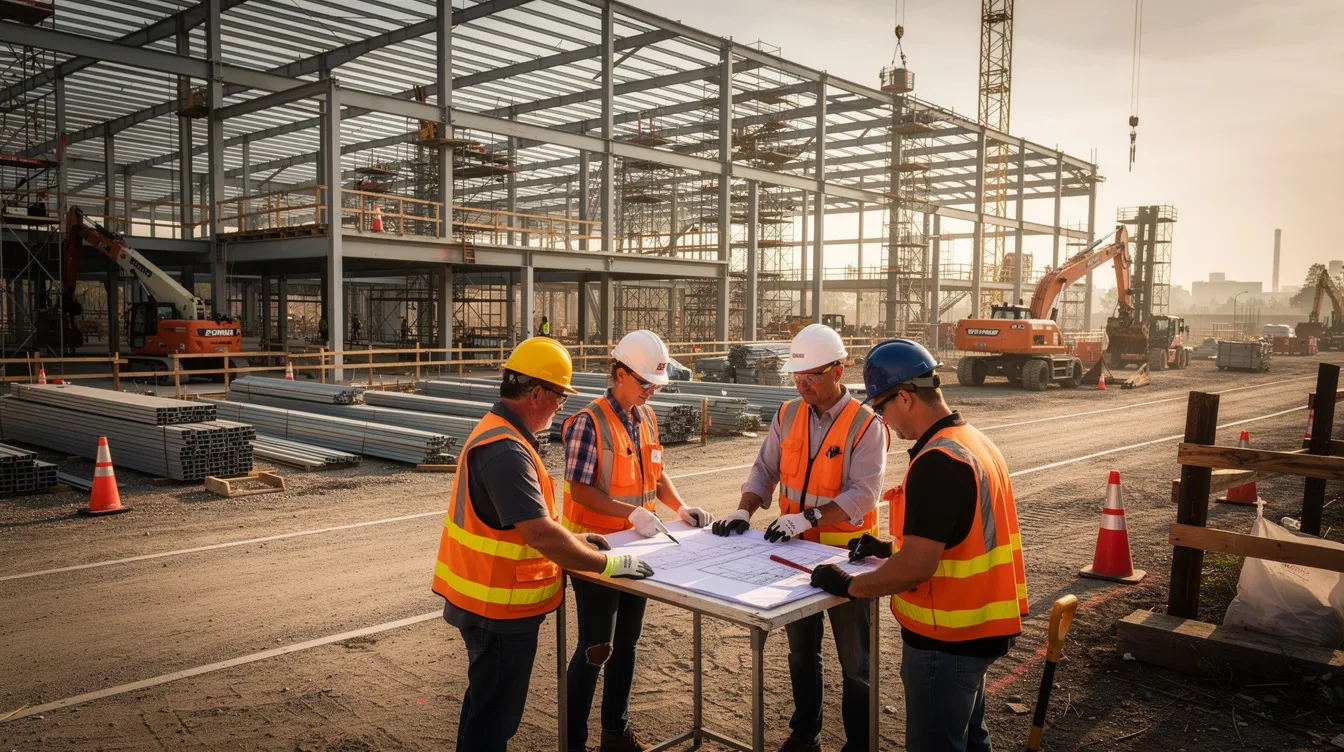
Colorado and Wyoming do not have identical labor markets, but contractors in both states feel the same broad pressure: less room for staffing mistakes, more competition for experienced people, and greater schedule risk when key roles stay thin.
In Colorado, especially across Denver, the Front Range, Northern Colorado, and Colorado Springs, many firms compete for the same field leaders and skilled trades across commercial, industrial, and infrastructure work. In Wyoming, contractors often work with smaller, more dispersed labor pools, which can make it harder to maintain coverage for specialized roles or remote projects.
In both states, labor scarcity quickly becomes an operations issue. It can affect supervision depth, overtime exposure, quality control, and confidence in project schedules. That is part of why upskilling matters: it gives contractors a way to build more capacity within the workforce they already have, instead of relying entirely on outside hiring to fill every gap.
Construction upskilling is not generic professional development. It is targeted training tied to how work gets done in the field.
For craft professionals, upskilling may include:
For field leaders, upskilling may include:
ABC has also emphasized flexible learning models such as just-in-time task training, competency-based progression, and work-based learning as part of its broader workforce-development approach. That aligns well with what many contractors actually need: short, practical learning tied closely to live job responsibilities, not abstract instruction disconnected from the field.
In many companies, the most effective format is simple: brief instruction, immediate on-the-job use, then follow-up coaching from a superintendent, foreman, or other experienced leader.

Not every role will deliver the same return from upskilling. Contractors usually get the most value by starting where one stronger person can improve the output of several others.
| Role | Why It Matters | Upskilling Focus |
|---|---|---|
| Crew leads and foremen | They influence planning, communication, and daily production for an entire crew | Look-ahead planning, crew coordination, digital tools |
| Assistant superintendents and emerging field leaders | They add depth across active projects and help reduce single points of failure | Project coordination, documentation, quality follow-through |
| Skilled trades with recurring bottlenecks | These roles often affect schedule flow across multiple scopes | Task-specific cross-training, code awareness, installation quality |
Safety capability belongs in every role. ABC Rocky Mountain offers safety resources that can support companies that want workforce development and safety improvement to move together.
Digital fluency also deserves attention. As more contractors use tablets, digital plan sets, prefabrication workflows, and coordination software, a worker’s ability to use those tools affects how smoothly crews communicate and execute work.
Upskilling is not a replacement for apprenticeship. It is its near-term companion.
BLS describes apprenticeship programs as usually combining technical instruction with about 2,000 hours of on-the-job training per year over a three- to five-year period. That structure is essential for building future journey-level talent, but it also means apprenticeship is not the only answer to an immediate supervision or productivity gap on a current project.
The strongest workforce strategies usually blend both timelines. Apprenticeship helps build future capacity. Upskilling improves the effectiveness of the people already doing the work. Together, they create a more complete workforce ladder within the company.
That approach fits ABC Rocky Mountain’s education resources. The chapter supports professional development, apprenticeship, and craft-training pathways for contractors in Colorado and Wyoming.
Apprenticeship programs that feed the pipeline are strongest when employers also focus on development between entry-level training and future field leadership.
Upskilling works best when it solves a defined business problem rather than serving as a vague training goal.
Start with clear objectives. Decide what you are trying to improve: stronger foreman planning, better handoffs between trades, more reliable documentation, or broader coverage in a bottleneck trade.
Keep the format practical. Short modules, coaching blocks, and field-based application usually fit construction operations better than long offsite sessions.
Connect training to active work. If someone completes training on planning, documentation, or crew coordination, assign a real responsibility that lets them use that skill immediately.
Review the results. You do not need an elaborate scorecard. A contractor can still ask useful questions after a pilot: Did coordination improve? Did one supervisor gain capacity? Did the crew become easier to schedule or support?
The goal is not to prove that every training effort produces a guaranteed outcome on a fixed timeline. The goal is to build a repeatable process for strengthening the roles that matter most to project delivery.
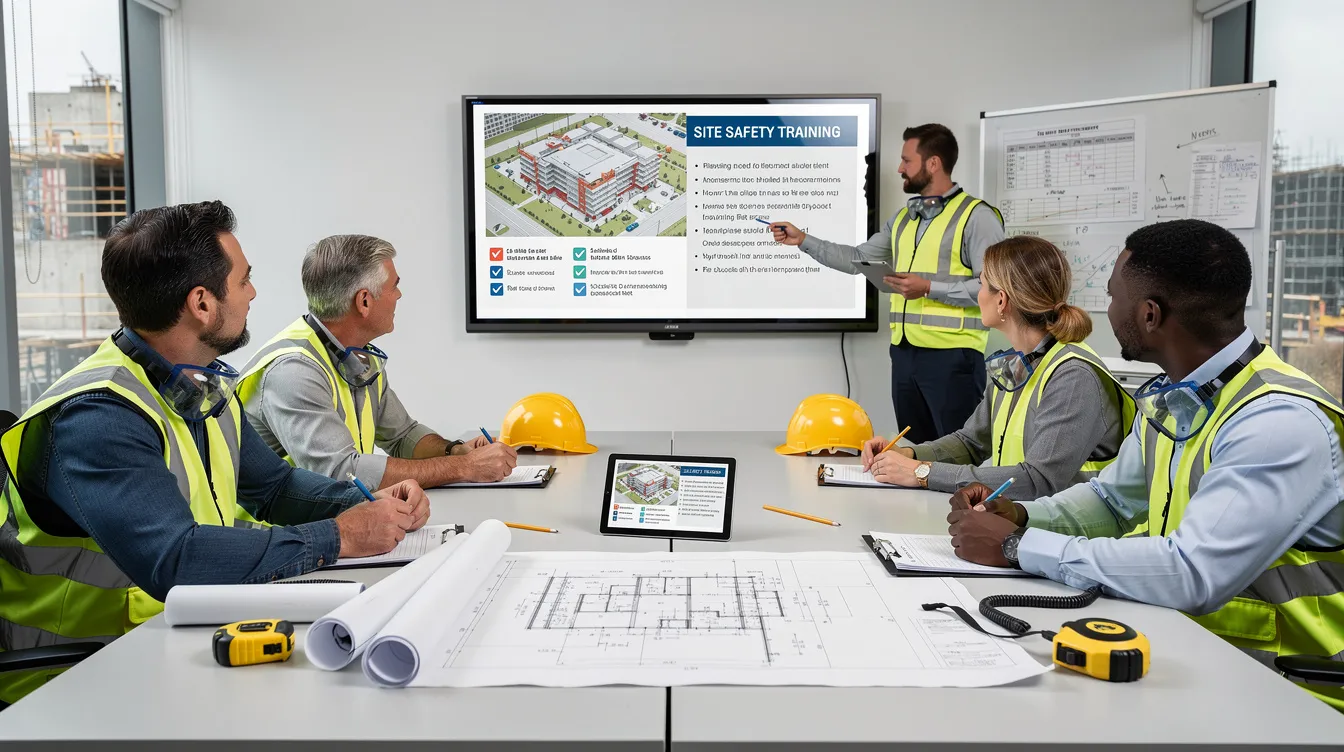
If you are deciding where to invest your next training dollar, start with a simple internal review rather than with a course catalog.
Audit checklist:
This helps shift the conversation from “we should do more training” to “we need stronger capability in these specific places.”
Once the audit identifies a real weakness, build a short pilot around it. That might be a foreman-development push for one division, task-specific cross-training for a recurring bottleneck, or a coaching effort to give an assistant superintendent more project responsibility.
Keep the plan simple:
This makes upskilling easier to manage and easier to evaluate. It also helps avoid a common mistake: launching a broad workforce initiative before the company has tested what works in its own field conditions.
ABC Rocky Mountain can support contractors that want to connect immediate upskilling needs with broader workforce development. The chapter offers education and workforce resources that can help companies strengthen field capability, build craft pathways, and support longer-term development planning.
If your internal audit shows thin supervision depth, a need for stronger craft progression, or a gap between apprenticeship and field leadership, reviewing ABC Rocky Mountain’s education resources is a practical next step.
The case for construction workforce development in Colorado and Wyoming is not only about bringing new people into the industry. It is also about building more capacity inside the teams you already have.
ABC’s 2026 workforce projection makes clear that labor pressure remains real. For many Rocky Mountain contractors, upskilling existing employees is one of the most practical responses because it can strengthen supervision, improve flexibility, and reduce dependence on a still-tight external labor market.
The most useful first move is not a sweeping program. It is a focused skills and capacity audit, followed by one targeted pilot tied to a real project need. Over time, that approach can help turn training from an occasional activity into a more reliable business system.
Below are answers to common questions about this topic.
It depends on the role and the skill being developed. This article avoids promising a fixed outcome window. A better approach is to set a review point after a defined pilot and measure whether the training improved field execution, supervision depth, or crew coordination.
Any contractor that depends on repeat crew performance, thin field leadership, or hard-to-replace trade capability can benefit. The value is often highest where one stronger lead or foreman improves the output of several others.
Treat it as an operating decision, not just a training expense. Start small, tie the effort to a real project need, and review whether it improved capability in a place that affects production, coordination, or schedule reliability.
Upskilling helps with current capacity, but it should complement, not replace, apprenticeship and other long-term pipeline work. Contractors usually need both if they want a stronger workforce over time.
Run a simple internal skills audit, identify one high-value gap, and test one focused pilot. That gives you a clearer basis for future workforce-development decisions than starting with broad assumptions.


