


Drones are no longer a novelty on job sites across Colorado and Wyoming. They are becoming standard construction safety technology-reshaping how contractors inspect, document, and manage risk on every type of project from Denver high-rises to Wyoming wind farms.
A May 2026 Associated Builders and Contractors member survey, reported by Construction Executive, found that roughly 36.1% of responding contractors now fly drones on construction sites. Among those users, 80.8% deploy drones for site progress monitoring and 50% use them for inspections and mapping. That adoption rate is not a tech curiosity-it marks a shift in how the construction industry manages visibility, documentation, and worker safety across active job sites.
Construction safety technology, defined broadly, includes drones, wearable sensors, ai powered systems, augmented reality tools, and digital reporting platforms that reduce exposure to hazards and improve informed decision-making on site. The construction industry accounts for over 340 million annual occupational accidents globally and about 1,100 fatalities per year in the U.S. alone. Against that backdrop, the industry is shifting to a proactive safety model focused on prevention, and investing in safety technology can reduce injuries by 59%.
Drones specifically have evolved from marketing and media tools into safety-critical assets. Construction companies now use them for remote inspections of roofs and façades, documenting excavation site conditions before crews mobilize, verifying scaffold and temporary works without sending workers aloft, and supporting emergency assessments after storms. Drones reduce the need for workers to access hazardous areas-a direct answer to the falls, slips, and trips that drive construction fatalities.
For Colorado and Wyoming, the value is pronounced. Rapid growth along the Denver metro and Front Range corridors produces large or complex projects that demand constant oversight. Northern Colorado’s infrastructure expansion and Wyoming’s remote energy and industrial construction projects create dispersed job sites where safety managers cannot be physically present every day. ABC Rocky Mountain, the two-state merit shop trade association, helps construction companies integrate construction safety technology into their STEP Safety Management System, ConstructionU programming, and broader safety culture.
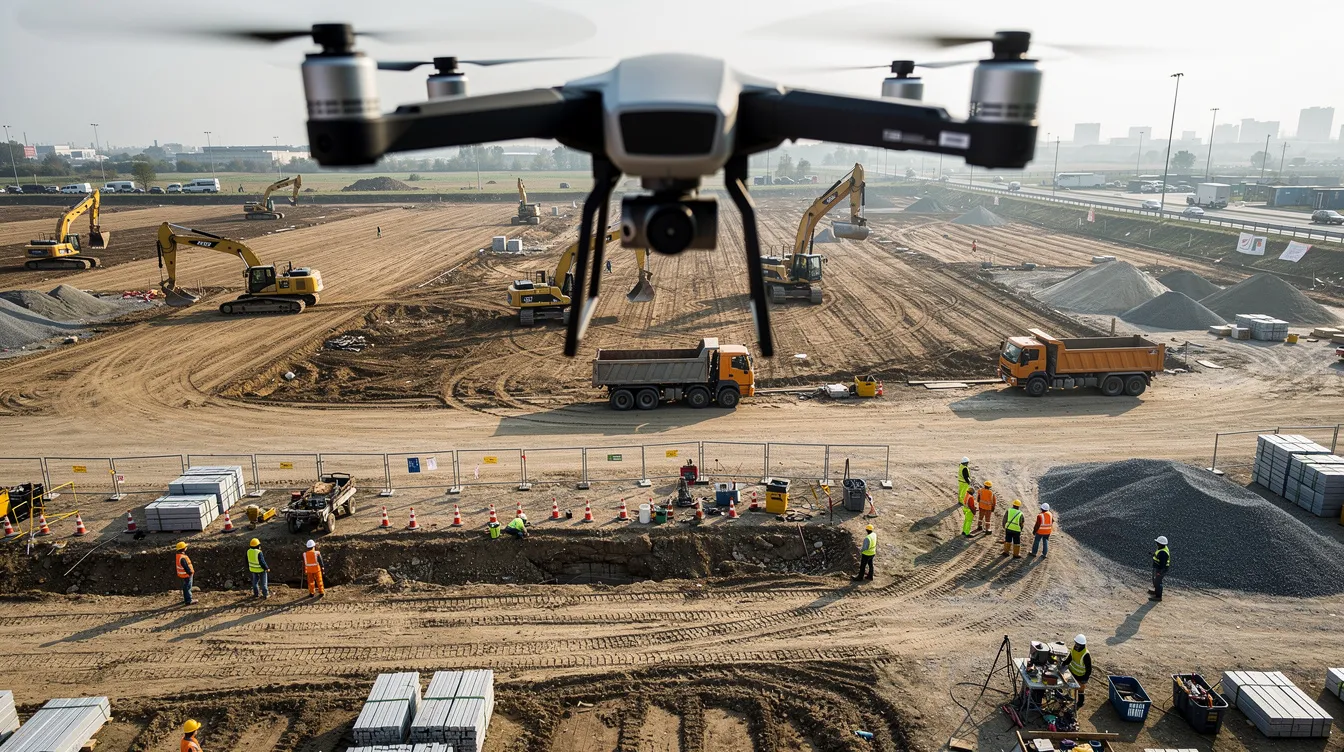
Construction remains one of the most dangerous private-sector industries in the country. Falls from elevation, vehicle and equipment strikes, confined-space incidents, and excavation collapses continue to claim lives. In 2024, Colorado recorded 92 fatal work injuries, with construction and extraction accounting for 22 deaths-the highest of any private industry group in the state. Ten of those construction deaths resulted from falls, slips, and trips. Wyoming recorded 37 total occupational fatalities in 2024 across all industries, with transportation incidents and exposure events dominating.
Regional site conditions compound these real-world risks. Higher-elevation construction sites reduce air density and affect both human performance and equipment reliability. Rapidly changing weather along the Front Range-hail, thunderstorms, sudden wind-creates visible risks that traditional methods of inspection struggle to keep up with. In Wyoming, sparse infrastructure means long travel distances between construction sites, limiting daily on-site oversight by safety professionals.
Traditional safety programs-toolbox talks, personal protective equipment requirements, manual inspections, and scheduled audits-remain essential and establish baseline compliance. But emerging technologies can strengthen them. Wearable technology can detect falls and monitor worker health. Smart PPE can monitor core body temperatures to prevent heat stress and track worker fatigue. IoT sensors track air quality and hazardous gas levels, warning crews of dangerous conditions. Proximity sensors can alert workers about dangerous conditions near heavy equipment. Programs like STEP and Work Zone Safety training provide a framework for these tools.
Many ABC Rocky Mountain members already invest in ConstructionU, United Academy, and CITC craft training. Drones extend that investment by giving construction teams and field leaders better visibility into how safety plans actually perform across the construction lifecycle-on the ground, in real time, across multiple sites.
Early adopters in Colorado and Wyoming gravitate toward a handful of repeatable drone inspections that clearly improve site safety and project control. Drones capture aerial views for construction site inspections, and drones can inspect hard-to-reach areas safely and efficiently-two capabilities that directly address recurring fatality risks.
The highest-value use cases include:
Drones combine high-resolution cameras and AI analysis to identify defects in structures, cladding, and temporary works that human eyes at ground level may miss. Regular drone flights create a visual record of construction progress, producing time-stamped, geo-referenced imagery that supports incident investigations, near-miss analysis, and OSHA compliance. Drones improve safety not by replacing field leaders but by giving them objective visual data to act on.
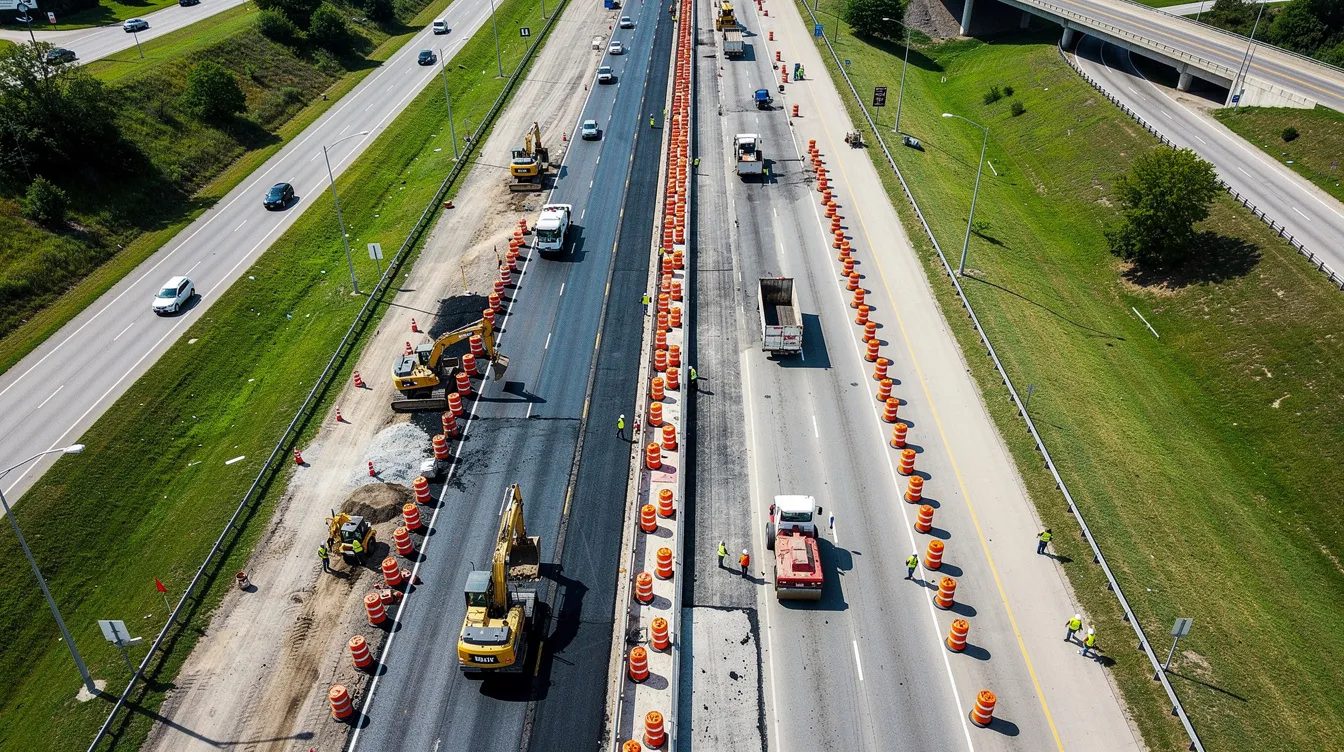
A typical drone flight on an active construction site follows a structured workflow that Rocky Mountain construction teams can standardize quickly. Drones provide real-time visual data for project monitoring, but that value depends on a repeatable process, not ad hoc flights.
The standard workflow includes:
Many Rocky Mountain contractors are moving from ad hoc flights to standardized checklists and repeatable flight plans, making drone inspections a predictable part of weekly safety walks and construction progress meetings. Standardization also creates consistency for progress tracking and ensures drone data is usable across the project’s progress timeline, supporting both quality assurance and safety documentation.
Here is a field playbook for Colorado and Wyoming contractors who want practical examples of drone inspections tied directly to safety outcomes:
Beyond drones, AI-powered video analytics can monitor operations and detect safety violations in real time. AI video monitoring tracks live activity to flag missing safety gear, and AI integrated into site cameras can automatically flag safety violations. AI systems provide real-time alerts for missing personal protective equipment, increasing productivity and ensuring compliance across multiple sites simultaneously. These tools complement drones by providing continuous security surveillance and monitoring between scheduled flights, keeping construction workers safe even when no pilot is airborne.
Drones are aircraft, not toys. Rocky Mountain contractors must meet FAA, insurance, and internal safety expectations before flying over any construction site. Autonomous equipment can introduce new hazards that require safeguards, and drones are no exception.
Key compliance checkpoints:
Rocky Mountain-specific environmental factors matter. High winds on the plains, sudden storms in the mountains, cold temperatures slashing battery life by 30–50%, and reduced air density at elevations above 5,000 feet all affect drone performance and flight safety. Privacy expectations also apply when flying near occupied buildings or public roads-coordinate with owners and neighboring properties.
When evaluating third-party drone vendors or including drone scopes in subcontracts, apply the same rigor you would to any procurement decision. Verify Part 107 status, insurance, data security practices, and documented Rocky Mountain jobsite experience through your Procurement Risk Management framework.
Treat drone inspections as a durable part of your construction safety program, not a one-off experiment. Investing in safety training can reduce injuries by 59%, and layering drone-based visibility into your training and inspection cadence multiplies that return. Safety training improves compliance with safety standards on job sites, and effective safety training reduces operational costs from insurance claims.
Phase 1 (30–60 days):
Phase 2 (scaling):
Drones generate high-value visual and measurement data, but the real benefit comes when those outputs flow into existing construction technology platforms rather than becoming a new silo. Building Information Modeling creates digital twins to simulate construction phases before work begins, and drone-captured orthomosaics can overlay onto BIM models for design-to-field comparison on complex projects.
Drone imagery and models plug into:
AI-driven predictive safety analytics allow for intervention before incidents occur. Predictive analytics can forecast which tasks or areas carry a high probability of serious injury or fatality. AI can identify patterns in site data to flag risks before incidents occur, and predictive analytics forecasts future incidents using historical safety data. It analyzes current trends and potential risk factors for accidents so construction managers can prioritize high-risk areas using predictive analytics insights. Predictive analytics helps develop better safety programs and resource allocation, and it considers environmental factors like temperature and humidity for safety planning. Companies can use these insights alongside thermal imaging and drone feeds to forecast future incidents more accurately.
When updating your firm’s tech roadmap, consider drones alongside AI, robotics, smart glasses, and other advanced technology. Many Colorado and Wyoming construction firms start with simple integrations-linking weekly drone inspections to PDF reports or cloud folders-before moving to more advanced AI-powered systems and augmented reality overlays. The goal is informed decision-making at every level, from field supervisor to general contractors’ executive teams.
Drone adoption connects directly to contractual risk, insurance, and procurement-areas that Colorado and Wyoming construction leaders must manage proactively.
Key considerations:
Wearable devices send alerts about hazardous environments, and wearables improve on-site communication and access to real-time data-pairing naturally with drone programs for a layered safety approach. There are also workforce development opportunities: existing field staff can upskill as drone pilots, connecting to CITC or broader technology literacy programs and reinforcing merit shop career progression.
Drones fit into a broader evolution of construction safety technology that pairs aerial visibility with wearable devices, artificial intelligence, and immersive training experiences. Augmented-reality systems can provide real-time instructions and warnings to construction workers on site. Telematics allow heavy machinery to operate remotely and reduce vehicular strikes. Wearable technology includes smart hard hats that detect fatigue, and smart vests can register falls and monitor worker health in real time.
Virtual reality simulates high-risk scenarios for training in a risk-free environment, and immersive training lets workers practice handling emergencies in virtual simulations where they navigate realistic scenarios without real-world risk. These technologies help construction teams anticipate problems across the full construction lifecycle and support project planning from preconstruction through closeout.
Near-term developments relevant to Colorado and Wyoming include more automated drone inspections via docking stations for construction progress tracking on large distribution and infrastructure projects, closer integration between drone feeds and AI-powered systems that flag potential hazards or deviations from work plans, and potential policy shifts as regulators and owners grow accustomed to drone-based documentation as a standard for ensuring compliance.
Merit shop contractors who move early-standardizing drone inspections, documenting safety practices, and training field leaders-will be better positioned to compete for complex public and private projects in this region. Connect with ABC Rocky Mountain to align drone adoption with your safety, training, and technology strategies. Explore programs including STEP, Work Zone Safety courses, and ConstructionU to build the foundation for increasing productivity, project transparency, and site safety across your organization.
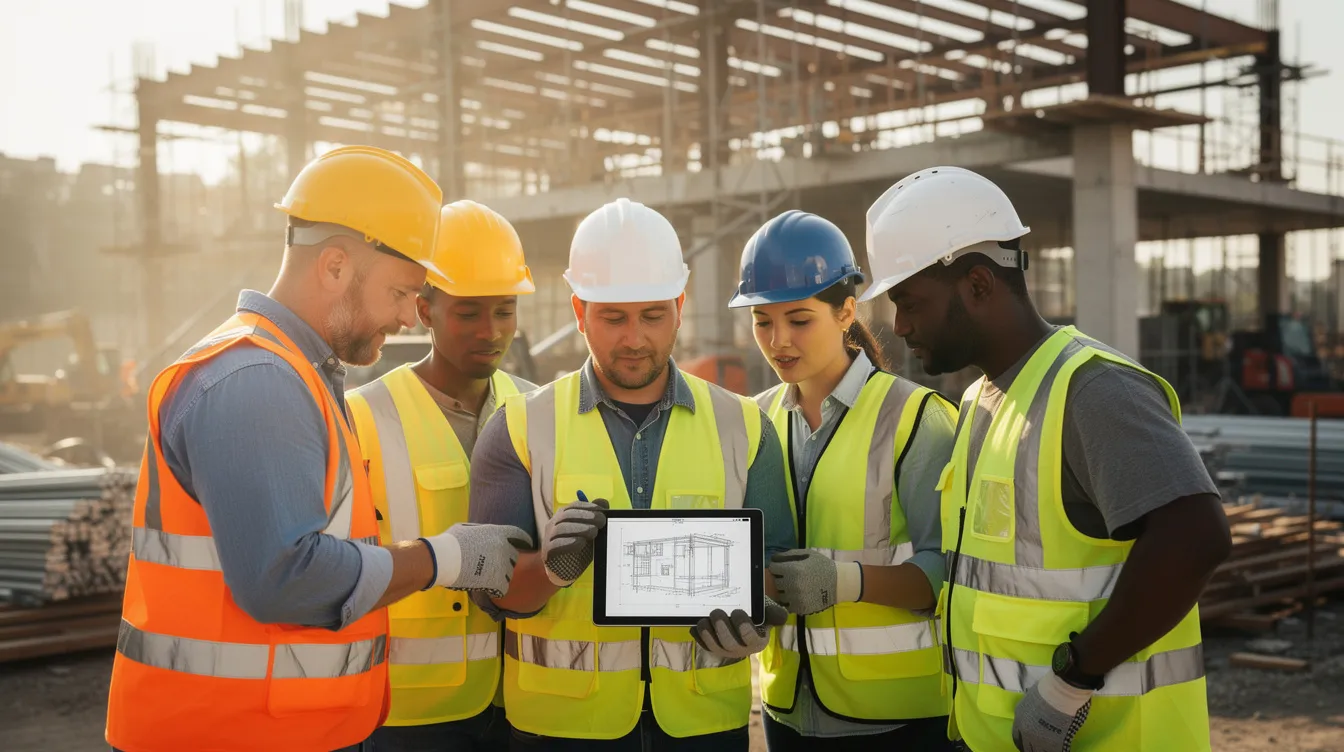
The following questions address practical concerns Rocky Mountain contractors frequently raise about drone technology adoption that extend beyond the topics covered above.
Under FAA Part 107, each remote pilot in command must hold a current certification, but a single trained pilot can often support multiple construction sites if flights are scheduled and standardized. In practice, travel distances across Colorado and Wyoming create realistic constraints-a pilot based in Denver can cover Front Range projects efficiently but may need separate scheduling for Wyoming or mountain sites. Many construction companies start with one certified pilot managing two to three projects on a rotating weekly schedule and expand from there based on workload.
Weekly or biweekly flights work well for progress tracking on major commercial construction projects, giving project stakeholders consistent visual updates and helping document the project’s progress against schedule. For safety-critical checks-roofs, façades, heavy earthwork, or post-storm assessments-more frequent flights tied to critical milestones or weather events are appropriate. Cadence should align with project risk, owner expectations, and your STEP review cycle rather than following a one-size-fits-all rule.
Time-stamped, geo-referenced drone imagery often strengthens documentation for change orders, delay claims, and safety investigations. It provides objective visual data that supports or challenges narratives about site conditions at a given point in time. However, contractors should coordinate with legal counsel and insurers on data retention policies, chain of custody, access controls, and how footage may be introduced in disputes or litigation to avoid unintended exposure.
Large horizontal work-earthwork, utilities, highway projects-along with big-box and industrial developments along the Front Range tend to realize early ROI due to scale, reduced travel for inspections, and high-risk areas requiring frequent monitoring. Complex healthcare or higher-education campuses in Denver and Colorado Springs also benefit, as do remote energy or industrial projects in Wyoming where travel time and safety complexity make aerial documentation especially cost-effective. Smaller, low-rise, or simple projects typically see a lower return.
ABC Rocky Mountain connects members to STEP Safety Management System resources, Work Zone Safety training, and ConstructionU and United Academy courses that build technology and safety leadership skills. The chapter also provides thought-leadership resources on Data Science in Construction and Technology in Construction to help construction firms design a practical, risk-aware adoption plan. Whether you are evaluating vendors, training internal pilots, or aligning drone programs with your safety and Procurement Risk Management framework, the chapter’s programs and peer networks give you a running start.


