


For Colorado and Wyoming contractors, construction risk management is not just about contracts, insurance, or incident response. It also includes field decisions that affect schedule reliability, supervision, quality, and labor flexibility.
That is where multiskilling can help—if it is used narrowly. ABC’s multiskilling research reports that multiskilled crews spent 39% more time directly advancing work and 68% less time idle or waiting. For Rocky Mountain contractors, the useful takeaway is not “everyone should do everything.” It is that targeted cross-training for adjacent support tasks may reduce workflow friction on the right projects.
If you are running commercial or industrial work in Denver, the Front Range, Northern Colorado, Colorado Springs, or Wyoming, the better question is this: which tasks are safe, visible, and simple enough to pilot first?
Some jobsite delays are true labor shortages. Others come from repeated small handoff problems: a crew waiting on staging, cleanup, spotting, layout help, or closeout support. Those delays can spread into overtime, resequencing, and margin pressure.
That is why multiskilling belongs inside construction risk management. Used carefully, it can reduce the chance that minor workflow gaps turn into larger schedule or quality problems.
The regional backdrop helps explain why contractors are looking for practical flexibility. According to the U.S. Bureau of Labor Statistics, Colorado had about 189.5 thousand construction jobs in June 2026, and the state unemployment rate was 3.9% in July 2026. In Wyoming, construction employment totaled about 24.1 thousand in June 2026, up 6.2% over 12 months. ABC Rocky Mountain’s 2026 Rocky Mountain construction outlook also describes the regional market as stable but expensive, with uneven growth by sector.
None of that proves every contractor needs a multiskilling program. It does support a narrower point: when labor and execution pressure remain high, carefully structured crew flexibility may be worth testing.
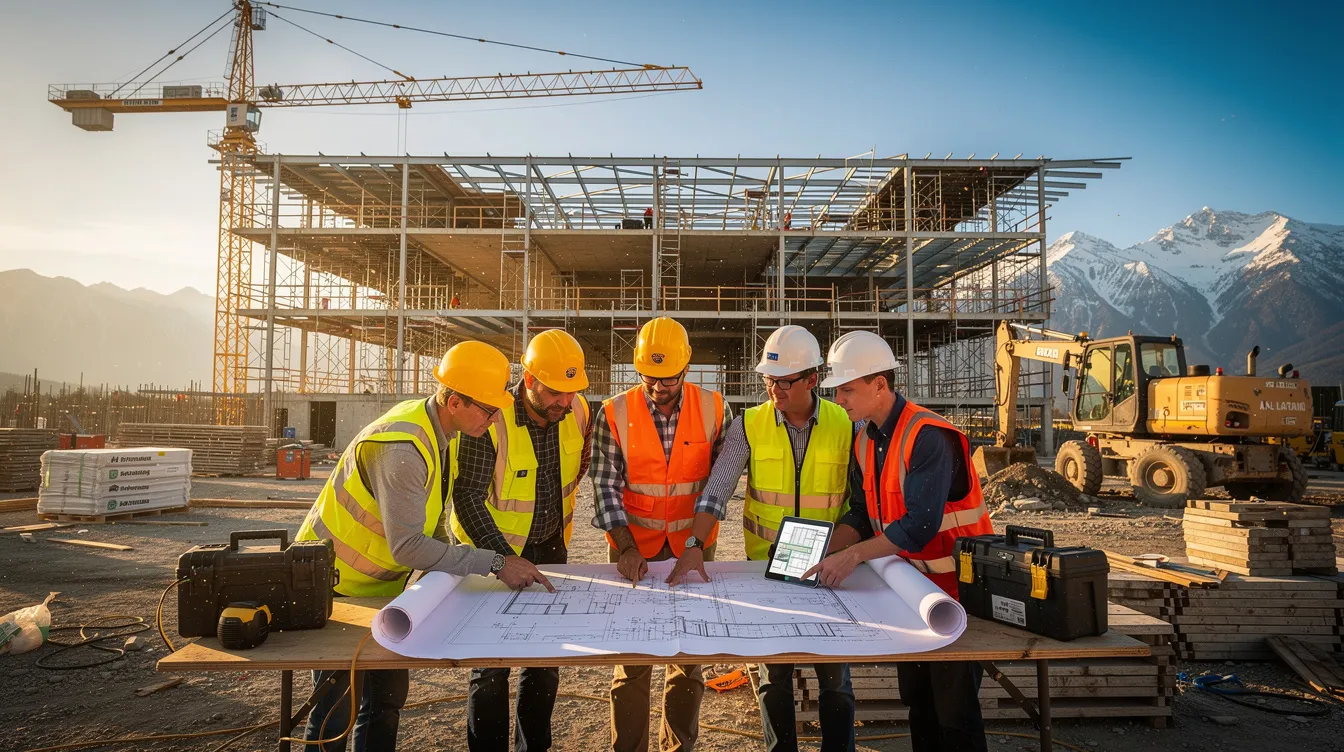
Here, multiskilling means planned cross-training for defined adjacent tasks, with clear limits, supervision, and documentation. It does not mean asking any available worker to take on any task.
Examples may include:
The boundary is the whole point. Specialized, licensed, code-critical, and high-hazard work should stay with properly qualified personnel. Multiskilling is most useful when it removes small, repeated interruptions that do not justify waiting for a separate person every time.
Instead of debating the concept in general terms, screen tasks one by one. Start with this question: Which recurring delays come from adjacent support tasks that can be cross-trained safely and clearly?
| Good Early Pilot Candidates | Why They Fit | Hold for Later or Avoid First | Why to Hold Back |
|---|---|---|---|
| Material staging and movement support | Frequent and often a visible source of waiting | Energized electrical work | Requires specialized qualifications and tighter hazard controls |
| Jobsite housekeeping and cleanup coordination | Low complexity and supports production flow | Structural steel erection | High-consequence work with little room for error |
| Basic layout assistance under supervision | Can reduce recurring handoff delays | Deep excavation activities | Hazard-control and competent-person demands are too high for an early pilot |
| Bounded spotting or support functions around equipment work, when properly trained and supervised | Useful on active sites with repeated coordination needs | Independent licensed or code-critical installation | Quality, inspection, and legal exposure rise quickly |
| Punch-list and closeout support tasks | Clearly bounded and easy to observe | Any task with unclear subcontract scope ownership | Rework and backcharge risk can outweigh the benefit |
If a task is adjacent, repeatable, visible, and easy to supervise, it is a stronger pilot candidate. If it is hazardous, licensed, inspection-sensitive, or contractually blurry, it is a weak starting point.
If the answer is no on visibility, safety, quality sensitivity, or scope clarity, it probably should not be in the first pilot.
The most useful supported finding is straightforward: ABC reports that multiskilled crews spent more time directly advancing work and less time idle or waiting. That is where the 39% and 68% figures come from.
Construction Executive’s coverage can still serve as background reading on the study. But for this article’s practical decision, the main point is simpler: if repeated support tasks are slowing crews down, a bounded multiskilling pilot may be worth testing.
Those findings do not guarantee the same result on every Denver, Front Range, Colorado Springs, or Wyoming project. They support trying a narrow, observable pilot rather than making a companywide assumption.
Multiskilling helps only when the limits stay clear. When they drift, risk rises quickly.
OSHA’s construction eTool highlights major construction hazards including falls, struck-by incidents, electrical incidents, and trenching and excavation risks. Cross-training should never be used to justify putting undertrained workers into those exposures.
Quality matters just as much. A worker may be able to support a task safely without being the right person to perform a finish-critical or inspection-sensitive scope independently.
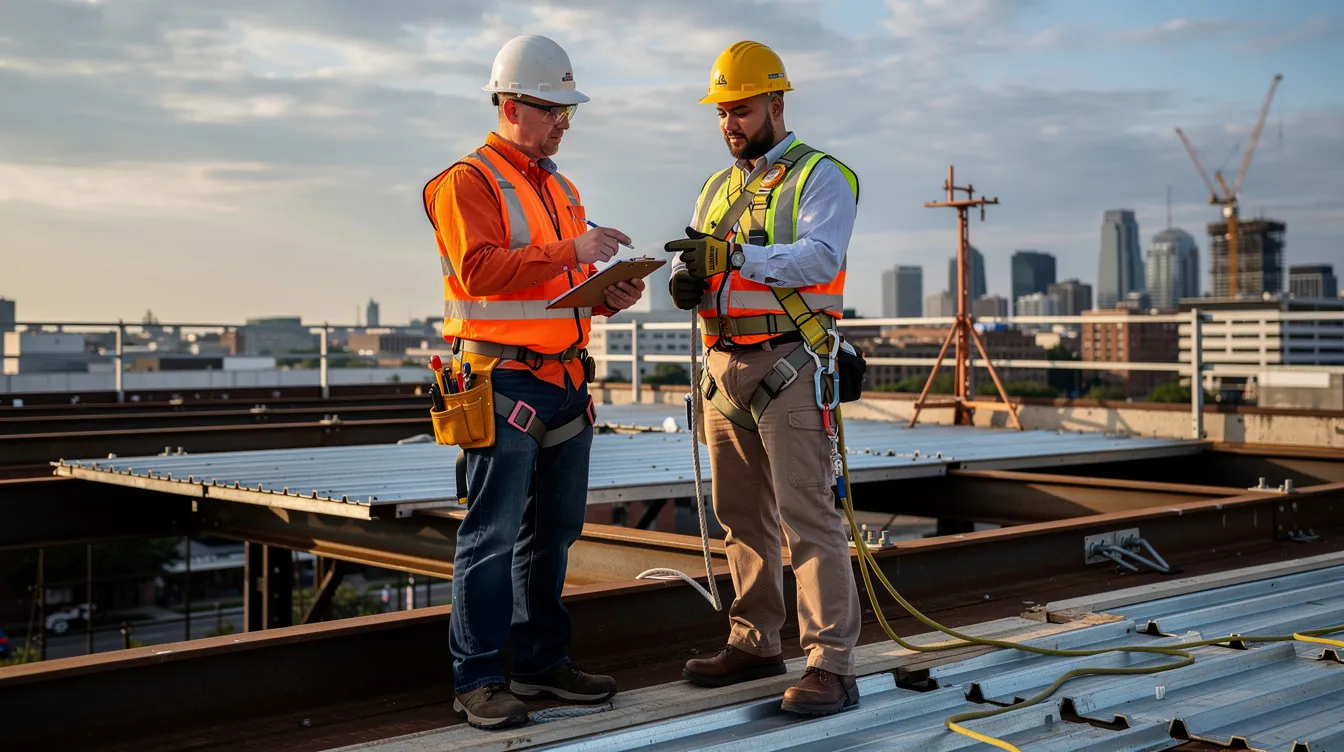
If you want to test multiskilling as part of your construction risk management process, keep the pilot small.
Track practical outcomes such as:
If waiting falls without more rework or safety concerns, you may have a basis to expand carefully. If the pilot creates confusion, that is useful information too.
The principle may be similar in both states, but the field conditions are not identical.
Colorado projects—especially in Denver, the Front Range, Northern Colorado, and Colorado Springs—often involve denser job teams and tighter sequencing. That can create more opportunities for multiskilling at coordination points, but it also raises the risk of scope confusion if task boundaries are not well documented.
Wyoming projects may involve smaller labor pools, remote locations, and longer delays when the right person is unavailable. In that setting, bounded cross-training on support tasks may be especially useful, but thinner supervision layers can become a problem faster if the pilot is loose.
In both states, keep project-specific compliance, labor rules, and licensing questions separate by jurisdiction. Do not assume a process that works on a Colorado project should move unchanged to a Wyoming site, or vice versa.
Multiskilling works better when it sits on top of real craft development. It works worse when it is improvised in response to schedule pressure.
That is one reason apprenticeship and field leadership still matter. ABC Rocky Mountain already points contractors toward regional workforce pathways, including the Construction Industry Training Council and the Wyoming Electrical Apprenticeship Education Program, as part of a broader workforce strategy.
For many firms, the best next step is not a broad multiskilling initiative. It is choosing one low-risk task group, testing it under strong supervision, and keeping the pilot inside a real construction risk management process.


