


Data center construction spending surged 46% year-over-year nationally in June 2026, even as private nonresidential spending overall fell nearly 5%. For Colorado and Wyoming contractors, that number is not just a backlog signal-it is a quality management and workforce readiness question that demands honest internal assessment right now.
On August 3, 2026, Construction Executive reported Associated Builders and Contractors’ analysis of U.S. Census data showing nonresidential construction spending rose just 0.1% in June to a seasonally adjusted annual rate of roughly $1.277 trillion. Private nonresidential spending is down nearly 5% year-over-year. Yet data center construction climbed approximately 7% in June alone and 46% year-over-year-one of the only categories still accelerating.
The reason is structural. Cloud computing, AI workloads, and high-density storage are long-cycle demand drivers. Unlike speculative office or retail construction projects that stall when financing tightens, data centers are often backed by hyperscaler capital or institutional investors with multi-decade time horizons. Firms with data center work under contract report a backlog of roughly 11.0 months, compared to 8.5 months for those without, according to the same ABC analysis.
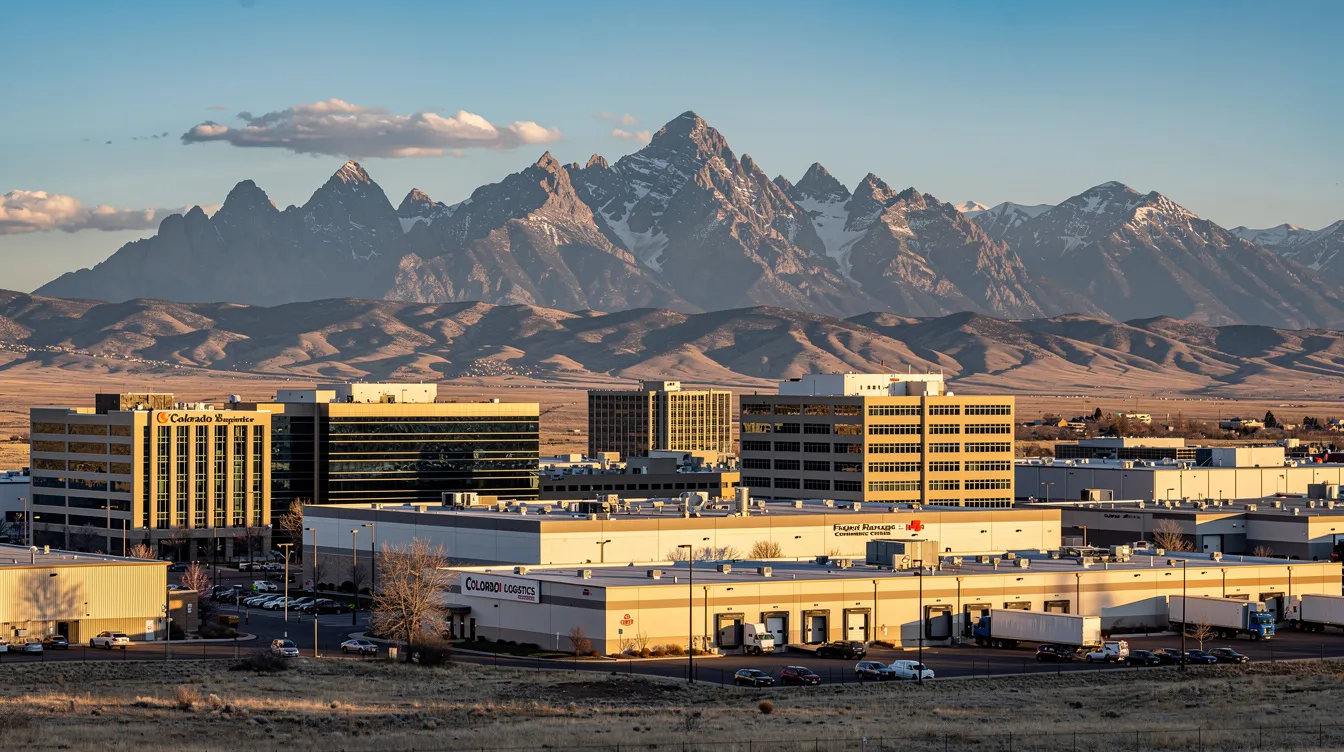
For Rocky Mountain contractors, these numbers translate into real pursuit decisions. Colorado has at least 80 data centers operating or in development, with 173 megawatts of operating capacity and over 1,200 MW planned. Large tech firms and colocation providers look to markets like Denver and the Front Range for power access, fiber connectivity, and geographic risk diversification. ABC Rocky Mountain is tracking this trend closely for commercial and industrial construction professionals across both Colorado and Wyoming-because demand alone does not determine who benefits. Quality management and execution will.
Construction quality management is the integrated discipline of quality planning, quality control, and quality assurance applied across all phases of complex construction projects-not a final punch-list exercise. Quality Assurance focuses on defect prevention through processes and systems, while Quality Control involves inspecting and verifying physical work against established standards. On data center work, these disciplines face pressures that standard commercial projects simply do not create.
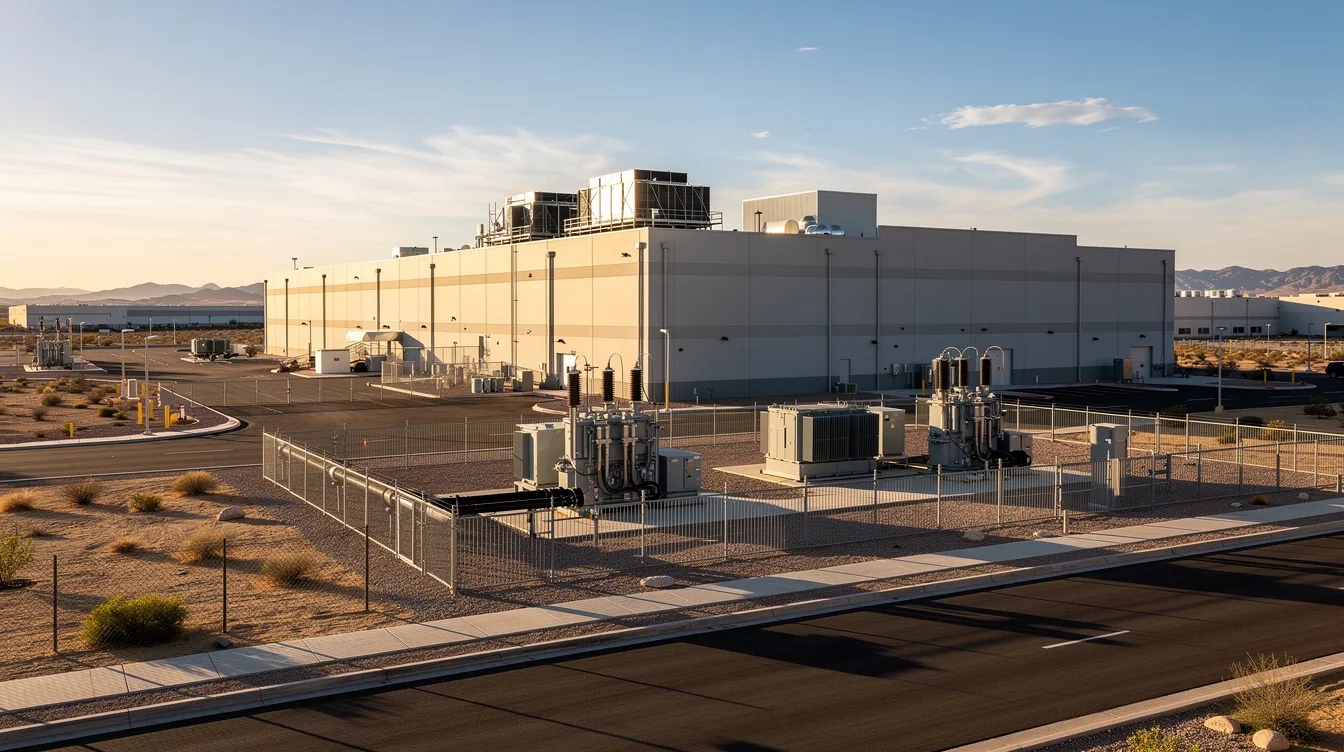
Data centers concentrate dense MEP systems-redundant power feeds, UPS arrays, generator backup, precision cooling with hot-aisle and cold-aisle separation, and fire suppression-into tight footprints where every tolerance matters. Slab flatness must meet specifications far tighter than typical commercial floors. Airflow design errors discovered late cause hotspots that degrade equipment and void warranties. Miswired electrical panels or grounding faults found during commissioning can erase weeks of schedule and thousands in margin. Quality failures often create safety risks in construction, particularly when workers return to areas assumed completed for unplanned rework in energized or confined environments.
Proactive construction quality management prevents costly rework and schedule delays by catching issues during preparatory and initial phases rather than during final commissioning. CQM supports risk reduction for every stakeholder in a project: the project owner, general contractor, subcontractor, and end user. Clear accountability for quality should be assigned across all project tiers, and construction activities should follow approved methods and clearly defined procedures so that defects are corrected before they compound.
This is where quality excellence becomes a differentiator. Owners building repeat data center programs in the Rockies notice which contractors deliver clean turnovers with minimal punch lists. Client satisfaction can improve business reputation and lead to repeat business-and in a market with 1,200+ MW of planned capacity in Colorado alone, that repeat pipeline is worth protecting. The relationship between commercial construction management in a tight labor market and quality management is direct: schedule control, trade coordination, and labor productivity all depend on disciplined QA/QC.
Denver and the broader Front Range remain the center of gravity. Strong tech presence, existing fiber routes, and proximity to power infrastructure make this corridor attractive. But competition for electricians, low-voltage integrators, HVAC specialists, and controls technicians is fierce. The same workers needed for data center mechanical and electrical packages are being pulled from other commercial and industrial projects across the metro area. Xcel Energy reports pending applications from data centers seeking 5.8 gigawatts of electricity, nearly equivalent to its entire current generating capacity. Regulatory compliance involves navigating local zoning laws and building codes-Denver imposed a one-year moratorium on new data centers in May 2026 to study zoning, noise, and energy impacts, which means permitting timelines are uncertain.
Northern Colorado and Colorado Springs are seeing industrial growth and military-adjacent work that creates overlapping demand for high-reliability power, cooling, and security systems. These regions may lack the local trade specialist density of Denver, increasing travel costs and supervision gaps for quality-focused contractors.
Colorado construction leaders should ask hard questions before bidding: Do we have enough certified foremen and superintendents to run concurrent shifts? Is our QA/QC documentation robust enough to withstand owner audits and insurer scrutiny? Can we maintain OSHA and STEP-level safety performance while compressing schedules? Long-term durability of buildings depends on high standards in material selection, and volatile pricing for copper, steel, and switchgear makes quality-related rework or warranty claims particularly dangerous. Contingency funds help manage unexpected costs while maintaining quality, but they disappear fast on mission-critical rework. Firms should review construction material costs in 2026 and 2027 and approach procurement risk management for 2026 bids with these stakes in mind.
Wyoming’s contractor base is more dispersed than Colorado’s dense Front Range market. But statewide firms still see data-center-adjacent opportunities-grid upgrades, substations, industrial facilities with high power density, and federal or military infrastructure that demands the same quality discipline as a hyperscaler campus.
Operational realities for Wyoming contractors are distinct. Travel time to remote sites increases cost and makes supervision harder to sustain across shifts. Smaller core crews mean cross-trained field leaders who can oversee both safety and quality control are not optional-they are essential. Seasonal weather windows can compress schedules further, amplifying risk. Because CQM certification affects project staffing decisions on federal contracts, Wyoming firms that lack certified QC managers may find themselves disqualified before they even price the work. CQM is a contractual requirement for federal government construction projects, and absence of certified key personnel can exclude firms from prequalification on both USACE projects and NAVFAC projects.
Wyoming executives should evaluate concrete bid/no-bid criteria: distance from home base, access to commissioning and controls specialists, availability of QC documentation systems, and comfort level with complex owner technical standards. ABC Rocky Mountain’s support of the Wyoming Electrical Apprenticeship Education Program and broader workforce development gives local firms a pathway to build the craft and supervision depth needed for higher-risk mission-critical scopes-but that investment must start before the RFP arrives.
A project-specific quality control plan is the foundation of construction quality management on any mission-critical job. CQM requires a written quality control plan for each project, and data center owners expect that document to be far more detailed than a generic commercial QCP. Quality Control Plans are essential for federal construction projects, and sophisticated private owners apply similar expectations. A quality control plan must address project-specific requirements, not recycle boilerplate language from prior jobs.
A data center–ready QCP should include:
CQM ensures compliance with UFC, ASTM, and ACI standards on federal work, and those same benchmarks serve private data center owners well. Subcontractors must comply with the prime contractor’s quality control plan, and government QA representatives verify the contractor’s quality control system on public sector construction. Owners set quality expectations and standards for construction projects, and effective quality control plans reduce disputes by approximately 40%. Colorado and Wyoming contractors can adapt USACE- and NAVFAC-inspired practices-like preparatory meetings, phased inspections, and hold points-even on private work to strengthen total quality outcomes.
Align the QCP with the firm’s broader safety program-for example, STEP Safety Management System-so quality, safety, and schedule controls reinforce one another instead of competing for field attention.
This is a capability story, not just a capacity story. Shortages in very specific roles-commissioning leads, system integrators, experienced superintendents, and QA/QC managers-can cause cascading delays and quality failures on data center work, even when overall headcount looks adequate. Labor shortages in the construction industry are real, but for mission-critical work the bottleneck is often in the specialized roles that enforce standards under schedule pressure.
Common workforce-related quality issues include inexperienced crews misinterpreting NAVFAC construction contract specifications or NAVFAC design-build specifications, insufficient supervision across multiple shifts, burnout driving mistakes, and loss of tacit knowledge as seasoned workers retire. Training workers is essential for understanding proper methods and spotting flaws early. Effective quality control requires meticulous project management and planning at the field leadership level, not just in the project office.
ABC Rocky Mountain’s apprenticeship and craft training partners-including CITC and the Wyoming Electrical Apprenticeship Education Program-offer structured apprenticeship in trades such as electrical, sheet metal, and pipefitting that is central to building reliable quality performance over the next three to five years. Continuous improvement is integral to effective construction quality management, and effective quality management systems can improve customer satisfaction and reduce inefficiency when applied consistently across crews.
Field leadership development through ConstructionU and similar professional-development tracks matters because data center construction quality depends heavily on how project managers, construction managers, and superintendents lead coordination and enforce standards. Companies should model scenario plans for 2026–2027: what happens to quality excellence if one or two key design qc managers or commissioning specialists are unavailable? Cross-training and succession planning mitigate that risk before it becomes a crisis.

Construction Quality Management for Contractors-the CQM-C course-prepares both construction QC managers and quality control personnel for federal work under the US Army Corps of Engineers and Navy projects governed by NAVFAC. CQM certification is mandatory for Quality Control managers on federal projects, including data-heavy and mission-critical facilities. CQM training is required for Quality Control Managers on federal projects, making the CQM-C certificate a gating requirement before mobilization on USACE projects and both USACE and NAVFAC scopes.
The CQM-C course is typically a multi-day instructor-led program covering the three-phase control system (preparatory, initial, follow-up), quality control responsibilities, QC documentation standards, shop drawings review, test results management, and the role of the contracting officer. CQM certification requires passing a test with a minimum score of 70%. CQM certificates are valid for five years after completion.
The CQM framework and its principles-three-phase control, rigorous documentation, clear lines of QC authority-translate directly to higher reliability on private-sector data center construction projects in Colorado and Wyoming. Both construction QC managers and project executives benefit from the systematic approach the CQM C course instills, regardless of whether the immediate project is federal or private. CQM reduces disputes by approximately 40% compared to weak quality systems, which directly protects margin and owner relationships.
Leaders should inventory current CQM-C status: how many QC managers hold valid cqm c certificates, whether those individuals are stretched across too many jobs, and what the renewal timeline looks like between now and the 2026–2027 bid cycle. Enrolling key staff in CQM certification preparation through ABC Rocky Mountain is both a compliance tool and a competitive edge for any firm pursuing mission-critical work in the region. Engineers, project managers, and field supervisors who understand principles of quality management for contractors contribute to a proactive approach that reduces rework and strengthens the firm’s position on both federal government construction projects and demanding private scopes.
As data centers concentrate complex systems in tight spaces, digital coordination and monitoring tools move from optional to essential infrastructure for effective construction quality management. Building information modeling enables clash detection and 4D sequencing that preempts mechanical and electrical conflicts before they become field rework. Cloud-based inspection and punch-list platforms allow real-time tracking, photo documentation, and accountability across trades. Drone documentation supports progress verification and as-built records, while AI-enabled photo analysis can flag installation issues-incorrect conduit bends, missing supports, mislabeled panels-before they reach commissioning.
ABC Rocky Mountain’s technology in construction resources and construction technology adoption playbook offer practical guidance for firms evaluating these tools. But digital tools are only as effective as the field leadership using them. Start with a pilot on a smaller MEP-intensive project, involve superintendents and foremen in tool selection, invest in training, and standardize data structures so QA/QC information modeling is consistent across Denver, Front Range, and Wyoming projects.
An emerging dimension: data center owners increasingly expect secure handling of as-built models and network diagrams. Cyber and data-governance expectations are becoming an integral component of quality and risk management on these scopes, and contractors who ignore them risk disqualification.
On data center construction, quality management, safety, and schedule performance are interdependent. Cutting corners in one area undermines the others. Quality control is intrinsically linked to safety and risk mitigation-better planning of energized work, fewer unplanned rework tasks in cramped spaces, and fewer out-of-sequence changes that force workers back into areas assumed completed all reduce safety risks and protect the schedule.
Safety programs like STEP Safety Management System, safety peer groups, and drug- and alcohol-free workplace initiatives create a baseline culture where workers are more likely to follow both safety and quality procedures under pressure. CQM typically lowers total project costs despite initial investments because it eliminates the rework, warranty claims, and schedule penalties that erode margin on fast-track work.
Practical integration tools include combined safety and quality pre-task planning, co-owned checklists for high-risk work such as hot work near live equipment or critical lifts for large HVAC units, and daily huddles that address both safety and QA/QC issues. Executives should measure integration with a few simple indicators in 2026-rework rate, recordable incident rate, and turnover at the foreman and superintendent level-rather than tracking quality and safety in isolation. These common challenges are manageable when leaders treat integration as a discipline, not an afterthought.
Not every firm should chase data center work right now. Saying “no for now” can sometimes be the most profitable and reputation-protecting choice for general contractors and specialty contractors alike.
Decision factors Colorado and Wyoming leaders should evaluate in narrative form:
Assemble operations, estimating, safety, and HR for a one-hour session to score each factor and set clear bid/no-bid criteria. Firms evaluating contract terms, liquidated damages, performance guarantees, and warranty risk should review procurement risk management for 2026 bids as a complementary resource. The firms that invest now in stronger construction quality management, training, and digital tools will be positioned to say “yes” confidently to the next wave of Rocky Mountain data center opportunities. The successful completion of that investment is what separates contractors who grow from those who overextend.
In the next 30 to 90 days, leaders should conduct a quality management gap assessment across active projects, map which upcoming bids involve mission-critical scopes, and align internal training, hiring, and certification plans accordingly.
Form or refresh an internal quality leadership group that includes project executives, senior superintendents, and QC managers to standardize construction quality practices for data center–scale projects across Denver, Northern Colorado, Colorado Springs, and Wyoming. This group should own the firm’s quality control plan templates, checklists, and nonconforming work procedures.
Clear pathways are available through ABC Rocky Mountain: explore membership resources, enroll key staff in CQM certification for federal work, connect with apprenticeship and ConstructionU programs, and engage with STEP or Safety Peer Groups to reinforce safe, high-quality delivery. Related chapter resources on commercial construction management in a tight labor market, construction material costs in 2026 and 2027, and the construction technology adoption playbook are complementary tools for a broader 2026–2027 strategy.
High-performing Rocky Mountain contractors will treat construction quality management as a board-level priority-not a jobsite afterthought-if they want to own the region’s mission-critical and data center work. The environment is creating real opportunity, but only for firms that have developed the systems, the people, and the discipline to deliver it. A significant role belongs to the leaders who act now rather than react later.

Data centers compress far more power, cooling, and IT infrastructure into each square foot than standard commercial buildings. Quality tolerances are tighter, and the cost of defects is exponentially higher because downtime can cost owners millions per hour. QA/QC on data center work must cover dense MEP integration, redundancy validation, and sophisticated commissioning sequences that go well beyond what is common in office or retail construction. The structured process required for a successfully completed data center turnover reflects a total quality mindset across every phase.
Yes. Smaller firms can play specialized roles-concrete, structural steel, electrical, low-voltage, or mechanical packages-if they demonstrate disciplined quality control, solid safety performance, and reliable supervision. They often serve as trusted subcontractors to larger general contractors leading the overall project. Demonstrating a proactive approach to quality and safety, maintaining proper QC documentation, and holding relevant certifications all strengthen a smaller firm’s position.
CQM-C is a formal requirement on many Army Corps of Engineers and NAVFAC projects, making it mandatory for construction QC managers on those scopes. But the same principles-three-phase control, clear QC authority, and rigorous documentation-translate directly to higher performance on private-sector data centers. Many private owners now expect federal-style rigor from their contractors. Certified managers are valuable across both markets, and CQM certification has become a competitive differentiator for firms pursuing any mission-critical project types.
Watch for frequent last-minute RFIs on basic details, missing inspection records, repeated punch-list items in the same system such as labeling or terminations, growing coordination tension between trades, and safety incidents tied to rushed rework or out-of-sequence work. A rising rework rate combined with schedule compression is the clearest leading indicator that construction quality is deteriorating and intervention is needed before the problem compounds.
Begin with a simple written quality control plan on one pilot project. Designate a clear QC lead with defined authority. Implement basic checklists and preparatory meetings before each phase of work. Track rework and defects as measurable data points. Then layer in training, technology tools, and CQM certification support from ABC Rocky Mountain as the program matures. The knowledge developed on that first disciplined project becomes the foundation for pursuing more demanding scopes with confidence.


