Key Takeaways
- Construction labor shortages Colorado and Wyoming contractors face are intensifying after nearly 200,000 U.S. construction workers quit their jobs in September 2026, up from roughly 152,000 in August, while approximately 298,000 construction job openings remained unfilled nationwide.
- For Colorado and Wyoming contractors, this national quits surge raises staffing risk across the Front Range, Northern Colorado, Colorado Springs, and Wyoming, particularly for electrical trades, mechanical trades, and field leadership roles.
- Construction labor shortages Colorado firms are experiencing should immediately shape bidding assumptions, schedule expectations, and project-scale decisions for late 2026 and early 2027 work.
- The construction industry requires an estimated 349,000 new workers in 2026 to meet demand, yet 92% of construction firms struggle to find workers to hire, compounding the pressure from rising quits.
- This briefing closes with a specific one-week action plan and connects quits data with ABC Rocky Mountain’s Rocky Mountain construction outlook resources for deeper regional context.
Why September’s Quits Surge Matters Now
Construction labor shortages Colorado and Wyoming contractors face just became harder to ignore. The Bureau of Labor Statistics September 2026 JOLTS release showed that U.S. construction quits jumped from roughly 152,000 in August to 198,000 in September, seasonally adjusted. That is the highest monthly quits total since the first half of 2023 and a clear signal that the construction labor force is tightening again.
Quits track how many construction workers voluntarily leave their jobs. This is not a layoff story. It is an early warning that workers see better opportunities elsewhere and are acting on that confidence. When quits spike, it means your crews, your foremen, and your specialty trades are all more likely to walk.
This national surge arrives as contractors across Colorado and Wyoming finalize late 2026 and early 2027 bids, lock in manpower plans, and decide which projects to pursue. Approximately 190,000 workers are active in Colorado’s construction sector, and the state currently needs over 30,000 additional construction workers. The timing could not be worse for firms already stretched thin.
This briefing is not broad workforce theory. It is practical guidance for commercial and industrial construction companies adjusting staffing, bidding, and schedules today based on a concrete labor market signal.
What the September Labor Data Actually Says About the Construction Industry
Understanding what these numbers mean requires knowing what the Bureau of Labor Statistics actually measures.
- “Quits” in the JOLTS report represent voluntary separations: workers leaving their jobs either to take another position or to exit the labor force entirely. This category excludes layoffs and discharges, making it a direct measure of workers choosing to leave.
- “Job openings” count unfilled positions on the last business day of the month where employers are actively recruiting from outside the organization, and the position could start within 30 days. Openings do not include internal transfers or positions filled through temporary agencies.
- The September 2026 JOLTS release showed about 198,000 construction quits and approximately 298,000 construction job openings nationwide, both up markedly from August. The quits rate rose to about 2.4% from 1.9% in August, while the job openings rate stood at about 3.4%.
- Rising quits paired with nearly 300,000 open positions mean construction workers are more confident they can find better opportunities. Employers must compete harder, and faster, for skilled workers.
- This pattern signals renewed wage pressure across the construction industry. Reemerging worker shortages will put upward pressure on labor costs, compounding the effects of high borrowing costs and ongoing materials price escalation.
- Construction occupations are projected to see 587,000 openings annually by 2035, and construction laborers are expected to grow 6% from 2025 to 2035, meaning replacement needs will remain intense for years.
Why Colorado and Wyoming Should Care About National Quits Data
- While JOLTS reports are national, they shape wage expectations, mobility patterns, and recruiting pressure that directly affect construction labor shortages Colorado and Wyoming contractors feel on the ground. Demand for skilled labor often outpaces the available workforce in Colorado, and construction job openings in the state remain near multi-year highs due to unfilled positions.
- Denver, the Front Range, Northern Colorado, and Colorado Springs sit in a fast-growing corridor where data centers, healthcare, industrial, and infrastructure work all compete for the same electricians, mechanical trades, and superintendents. Competition from specialized projects like data centers increases demand for skilled trades, and 58% of surveyed firms say data center projects have intensified labor competition.
- Wyoming’s smaller construction workforce (roughly 24,000 jobs) means just one or two large industrial or federal projects can quickly absorb available skilled trades and supervision, magnifying the effect of higher quits nationally. Wyoming construction payrolls grew about 8.4% year over year through September 2026, reflecting active demand.
- Rising quits nationally give mobile skilled construction workers more confidence to leave jobs in one state for opportunities in another, feeding cross-border competition between Colorado and Wyoming for scarce talent. Colorado’s high cost of living affects construction-worker recruitment, pushing some tradespeople toward Wyoming or out-of-state opportunities. Immigrant workers constitute a significant portion of Colorado’s construction workforce, and 28% of firms are affected by immigration enforcement issues, adding further complexity.
- Colorado’s construction industry faces significant labor constraints. Readers should use the Rocky Mountain construction outlook as a companion resource for broader demand and backlog context.

Where Staffing Assumptions Break First
When voluntary turnover accelerates, the assumptions baked into your manpower spreadsheets start to crack. Here is where the breaks show up first.
- Assumptions that current crews will stay intact through project duration become unreliable when quits rise. An aging workforce and retirements contribute to construction labor shortages, and one in five construction workers is 55 or older. Over half of the workers needed in 2026 are to replace retirements, not to fill new positions.
- Foremen, superintendents, project engineers, and key craft leads (especially in electrical, mechanical, and civil structures) often become single points of failure for schedules and safety. Losing one experienced superintendent in Northern Colorado or Wyoming can disrupt multiple active projects at once.
- Higher quits mean more last-minute backfills, higher overtime to cover gaps, and greater risk that safety or quality suffers if replacements are rushed onto job sites. Currently, 45% of firms report project delays due to worker shortages, and the Colorado construction industry faces similar challenges.
- Large multi-phase projects in Denver or Northern Colorado rely on stable leadership benches, while distributed work in Wyoming depends heavily on a small number of traveling crews. Project scale decisions should account for this structural vulnerability.
- Escalating housing costs and delayed project timelines directly stem from labor shortages. Demographic shifts and changing career preferences among younger workers drive the shortage: only 7% of potential job seekers consider a career in construction.
- Ask yourself whether your current 2027 manpower spreadsheets still reflect realistic turnover and replacement timelines in light of the September spike.
Roles and Trades Most Exposed When Quits Rise
Not all headcount losses hit equally. These roles create the most risk when quits rise.
- Electricians top the list. Across the construction industry, 81% of firms seeking electricians report difficulty filling those positions. These electrical trades are in demand across data centers, healthcare, industrial, and infrastructure work along the Front Range.
- HVAC, plumbing, controls technicians, and instrumentation specialists carry similar exposure. Their skills are specialized, licensing and credentialing pipelines are slow, and substitutes are difficult to find.
- Field supervisors, general foremen, and superintendents in Colorado Springs, Northern Colorado, and Wyoming often oversee multiple crews. One departure can influence several active construction projects. Nationally, about 75% of firms recruiting superintendents report difficulty filling those roles.
- Estimators and project managers who understand complex MEP scopes create a different bottleneck. Their exit can slow bidding and project handoff even if field crews remain intact. Roughly 74% of firms report difficulty filling project manager and supervisor positions.
- Apprentice-level workers are mobile as well. Losing a few strong second- or third-year apprentices to a competitor can thin the future leadership bench in 2027 and beyond, undermining long-term workforce development.
- Contractors should prioritize retention and backup plans for these high-leverage positions rather than treating all headcount as interchangeable. Retaining skilled tradespeople is a priority for contractors facing competition for labor.
How Quits Change Bidding, Pricing, and Schedule Risk
Rising quits do not just affect HR. They ripple directly into your bids, your margins, and your schedule confidence.
- Increased voluntary turnover raises the odds that crews will change mid-project, driving rework, extending learning curves, and eroding productivity on complex scopes. Workers leaving mid-project force costly transitions.
- As construction labor shortages in Colorado tighten further, competitors quickly raise wages or bonuses. Over 80% of construction companies in Colorado increased hourly pay because of workforce shortages, and construction wages have increased more than 4% year over year. Bids written on old wage assumptions risk eroding margins. Employers need 349,000 net new workers in 2026 to meet demand, yet only 7% of potential job seekers consider construction careers, keeping the gap wide.
- Construction spending fell 3.2% year over year in June 2026, meaning some firms are chasing tighter revenue with rising labor costs. Denver and Front Range contractors might respond by being more selective about project scale and timing, favoring work that aligns with available crews and leadership.
- For Wyoming firms, factoring travel, per diem, and housing competition into bids is essential when local labor cannot fill gaps created by quits. These hidden costs add up fast in rural or remote locations.
- Contractors should build more explicit labor-risk language into schedules and owner conversations, especially for critical-path scopes dependent on scarce skilled trades. The state is emphasizing retention strategies and collaboration with project owners to mitigate labor shortages.
- Review your forecasts against the Rocky Mountain construction outlook to align backlog and schedule expectations with actual labor reality. Many firms are carrying backlogs that assume a labor market that no longer exists.
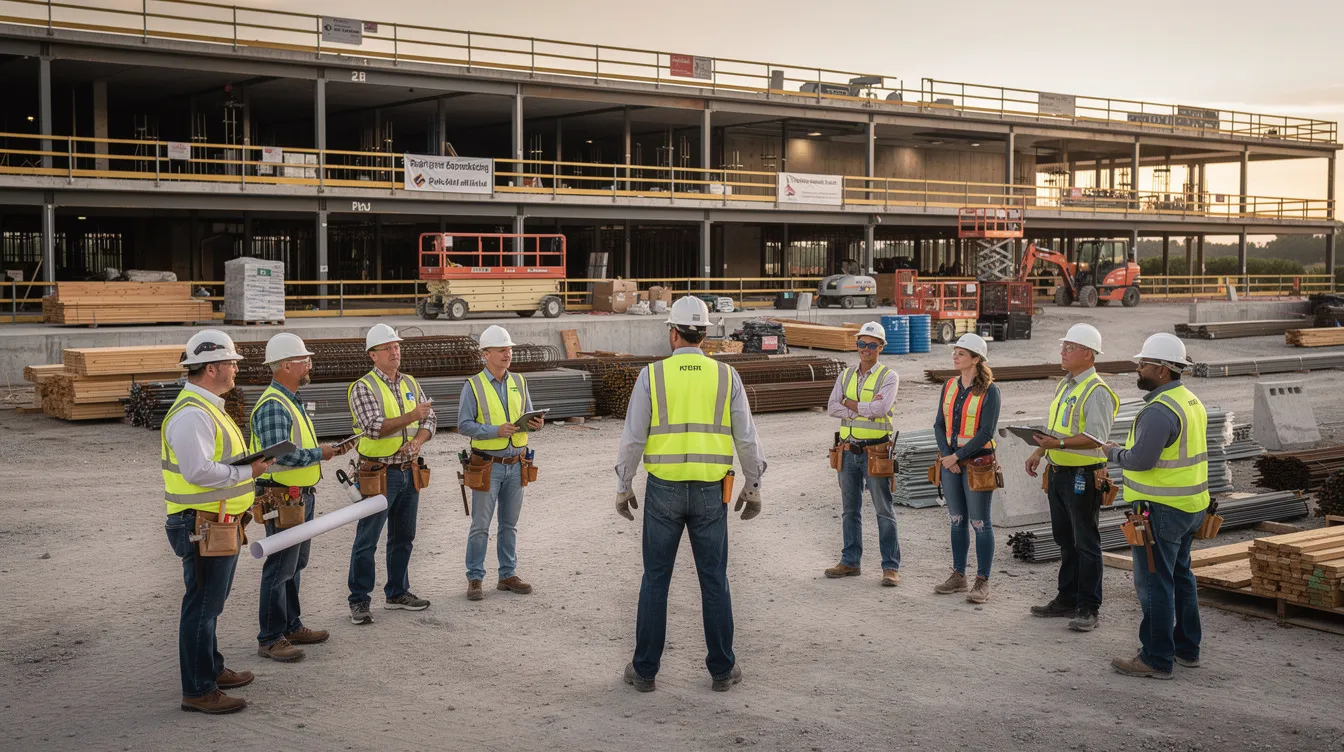
What Contractors Should Do This Week
This is a focused one-week response plan for executives, operations leaders, and HR teams.
- Run a quick joint review between operations, HR, and estimating of current bids, near-term awards, and ongoing construction projects to identify where thin labor depth meets complex scopes. If a full portfolio review is too broad, start with one project. Pay special attention to hiring plans that assumed steady crew availability.
- Conduct a foreman and superintendent capacity check across Denver, Front Range, Northern Colorado, Colorado Springs, and Wyoming business units. Find roles without ready backups and document the gap.
- Flag any project where the schedule assumes overtime or aggressive crew ramp-ups that would be hard to support if turnover rises further. Adjust schedule expectations accordingly.
- Have a direct conversation with field leaders about their top retention risks. Identify which existing workers and crew members are most likely to be recruited away in the next three to six months, and what it would take to keep them.
- Tighten bid discipline today. Walk away from pursuits that require critical trades your company cannot confidently staff even if awarded. Include advancement opportunities and pay adjustments in the retention conversation, not as an afterthought.
- Use insights from this exercise alongside the Rocky Mountain construction outlook and the construction magazines archive for deeper trend context as you calibrate your pipeline of upcoming work.
Medium-Term Moves: Strengthening the Construction Workforce Pipeline
The one-week actions above address immediate risk. But September’s quits spike is part of a recurring pattern, and the construction labor force will not rebuild itself.
- Evaluate your current apprenticeship and craft training participation. Apprenticeship programs are crucial for workforce stability in construction. Determine how many apprentices you need across the construction trades to offset likely quits and retirements by 2028. Construction education and training pipelines must be sized to match replacement needs, not just growth.
- ABC Rocky Mountain members can explore CITC apprenticeship connections and the Wyoming Electrical Apprenticeship Education Program as part of a longer-range response to recurring labor shortage cycles. ConstructionU offers apprenticeship training in various trades and supports new hires entering the skilled trades. Legislation supports establishing regional action committees for localized construction training.
- Apprenticeships create pathways for new entrants into construction, and Project SCALE simplifies transitions from apprenticeships to degrees, expanding career pathways and encouraging higher education among craft workers. Project SCALE simplifies these transitions so apprentices can see a long-term future in the industry.
- Build clearer internal career paths so high-potential craft workers see leadership and advancement opportunities on the Front Range and in Wyoming rather than leaving for short-term pay spikes elsewhere. Employer-led campaigns and outreach are being used to attract underrepresented groups and young people into construction careers. Technology helps recruit future generations into construction careers.
- Align recruitment, training, and succession planning so field leaders understand how today’s apprentice throughput supports tomorrow’s superintendent and project manager needs. Educational initiatives aim to strengthen Colorado’s construction workforce pipeline.
- Colorado’s construction industry seeks to improve productivity through better project management and technology adoption. AI improves construction efficiency and safety on job sites, and robots complete repetitive tasks faster, enhancing job site productivity. These tools will not replace the need for experienced workers, but they help your existing workforce deliver more.
- These steps will not change September’s quits numbers, but they will reduce vulnerability when the next turnover spike arrives.
How ABC Rocky Mountain Supports Contractors in a Tight Labor Market
- ABC Rocky Mountain tracks labor market signals like the September 2026 quits surge and interprets them through its Rocky Mountain construction outlook content for Colorado and Wyoming contractors, helping firms connect national data to regional operations and business decisions.
- Chapter education and workforce development programs, including apprenticeship partnerships and leadership development through ConstructionU, help members build more resilient construction labor forces and strengthen training pipelines over time.
- Safety-focused initiatives such as the STEP Safety Management System support stable, high-performing crews, which is especially valuable when reemerging labor shortages increase turnover risk. Public partners and industry leaders collaborate through the chapter to address shared challenges.
- Readers who want a deeper understanding of chapter resources and advocacy can review the ABC Rocky Mountain About Us page after using this quick brief to adjust their immediate staffing and bidding decisions.
Conclusion: Treat the September Quits Spike as a Staffing and Bidding Signal
The September 2026 rise to 198,000 U.S. construction quits and roughly 298,000 job openings confirms that labor supply in the construction industry is tightening again. This is not a theoretical concern. It is a margin, schedule, and growth signal that demands a response from every contractor operating in Colorado and Wyoming.
Construction labor shortages Colorado and Wyoming contractors experience will not resolve on their own. The gap between demand and the available construction workforce is structural: 92% of construction firms struggle to find workers, the industry’s projected need for new workers remains enormous, and demographic pressures (aging workforce, low interest among young people, housing costs, immigration enforcement) show no sign of easing soon.
Schedule a focused internal staffing and bid risk review within the next week. Use the checklist from the action plan above. Identify the roles, trades, and projects where your firm is most exposed, and make decisions before your next bid goes out the door.
ABC Rocky Mountain remains an ongoing source of regional labor market intelligence and practical resources that help construction firms navigate recurring labor tightness while protecting safety, schedule, and margin.

FAQs: Construction Quits, Construction Labor Shortages, and Rocky Mountain Contractors
These FAQs address related questions not fully covered in the main sections and focus on practical implications for Colorado and Wyoming contractors navigating construction labor shortages.
How often do quits spikes like September 2026 happen in construction?
Quits move with worker confidence and broader economic conditions. Spikes tend to appear when workers believe they have multiple job options, which often happens late in an expansion or during sector-specific booms like the current data center wave. The September 2026 level was the highest since early 2023, but similar surges occurred during the post-pandemic recovery. Contractors should not wait for monthly data to react. Watch your own voluntary turnover trend, and treat a sustained increase over several months as a local warning sign that your market is tightening.
Should small contractors respond differently to rising quits than large firms?
Small firms in Denver, Colorado Springs, or Wyoming often rely on a few key leaders. Losing one superintendent or lead electrician can stall an entire operation. These firms can start by reviewing staffing vulnerability on one project, then scale that exercise across the backlog. These firms should emphasize retention, cross-training, and careful project selection more than rapid growth. Larger firms may have more capacity to reassign staff across projects, but still need discipline about project scale and the mix of high labor-intensity work in their backlog. Both should be realistic about how many open positions they can support simultaneously.
How can I discuss labor-related risk with owners without sounding uncertain?
Be transparent about labor assumptions. Share how many crews and leadership roles the schedule requires and what contingencies exist for turnover. Frame the conversation around protecting quality and safety, not making excuses. Realistic labor planning benefits both the contractor and the owner’s project outcomes. Owners increasingly understand that the construction labor shortage is an industry challenge, not a single company’s weakness.
Does technology remove the need to worry about construction labor shortages?
Digital tools, prefabrication, and automation can increase productivity and reduce rework, but they do not eliminate the need for skilled craft labor and experienced field supervision. View technology as a way to create more value from each crew member rather than as a substitute for building a strong construction workforce. The most effective firms combine technology adoption with active investment in apprenticeship programs and retention of their best people.
What is the single most valuable metric to watch inside my own company after a quits spike?
Track voluntary turnover in your highest-impact roles: foremen, superintendents, and specialist trades. Pair that with the average time it takes to backfill those positions. When backfill times lengthen, or turnover rises in these categories, it is a clear sign that staffing assumptions and bids should be revisited, even if headline unemployment in construction remains low. This internal metric will tell you more about your exposure than any national report.


