


Construction fall prevention is not a problem the industry has finished solving. The latest national data still show a high death toll in construction, and they also show that safety progress is moving at different speeds depending on the type of work a contractor performs. That matters for contractors deciding where to focus supervision, training, and budget right now.
CPWR’s June 2026 Data Bulletin, using Bureau of Labor Statistics data through 2024, found that long-term injury trends improved across all three major construction subsectors, but not equally. Heavy and civil engineering posted the greatest long-term improvement. Construction of buildings, by contrast, saw its nonfatal injury rate rise in the most recent two-year comparison and its fatal injury rate rise over the longer study period. BLS also reported that private industry construction had 1,034 fatal work injuries in 2024, the highest total of any private-sector industry.
This briefing is for commercial construction leaders in Colorado and Wyoming, including Denver, the Front Range, Northern Colorado, Colorado Springs, and across Wyoming. It translates national subsector data into operating questions: where the risk picture is worsening, where it is improving, and what to verify in the next 30 days if your company wants a more reliable fall-prevention response.
CPWR’s June 2026 Data Bulletin analyzed U.S. injury trends across the three major construction subsectors using BLS data through 2024. The topline message is clear: the industry has made progress, but it’s uneven enough that contractors should avoid treating “construction safety” as one uniform trend.
From 2011-2012 to 2023-2024, nonfatal injury rates involving days away from work declined across all three major subsectors:
That long view is encouraging, but it does not erase the recent reversal in building work. CPWR found a 13.1% increase in the nonfatal injury rate for construction of buildings from 2021-2022 to 2023-2024. CPWR also reported that the fatal injury rate for construction of buildings rose 4.4% from 2012 to 2024, while heavy and civil engineering saw a 35.6% drop and specialty trade contractors saw a 12.7% drop.
BLS adds important context for why these trends still deserve executive attention. In 2024, private industry construction recorded 1,034 fatal work injuries, the highest count among private-sector industries. Put differently, construction represented about 20.4% of all fatal work injuries in 2024 when compared with the national total of 5,070.
Different construction subsectors face different dominant fatal events, which helps explain why safety gains do not move in lockstep.
At the all-industry level, BLS reported that transportation incidents were the leading fatal event category in 2024, while falls, slips, and trips were second. Inside construction, the pattern shifts. CPWR’s June 2026 Data Bulletin reported that for fatal injuries in 2024, falls, slips, and trips were the most common event or exposure in construction of buildings and in specialty trade contractors, while transportation incidents were the most common in heavy and civil engineering.
That distinction matters operationally. Building construction often concentrates elevated work exposures such as leading edges, roofs, decks, structural framing, shafts, scaffolds, and aerial-lift access. Heavy and civil work may demand stronger attention to equipment movement, traffic control, and roadway exposure, even though significant fall hazards can still exist on bridges, walls, piers, and large structures. Specialty trades frequently face both: some crews work at height all day, while others combine fall exposure with electrical, struck-by, or caught-in risks on multi-employer sites.
One safety playbook will not fit every project type. Contractors need prevention priorities that reflect the work being performed, not broad industry averages.
Building construction is the subsector where recent data most clearly supports a renewed fall-prevention reset.
On commercial projects along the Denver metro corridor, the Front Range, Northern Colorado, Colorado Springs, and in growing Wyoming markets, everyday elevated tasks create recurring fall exposure: structural steel work, roofing, deck work, facade installation, MEP rough-in from lifts, and work near floor openings or unprotected edges. That is exactly why the building-construction trendline matters. When the subsector shows a recent increase in nonfatal injury rates and a long-term increase in fatal injury rates, leadership should assume that routine work deserves another hard look.
For building projects, high-value checks include:
Contractors that want a more structured pre-mobilization review can pair this subsector analysis with ABC Rocky Mountain’s article on fall protection training so supervisors can compare training records, equipment readiness, and actual jobsite conditions before the next high-risk phase starts.
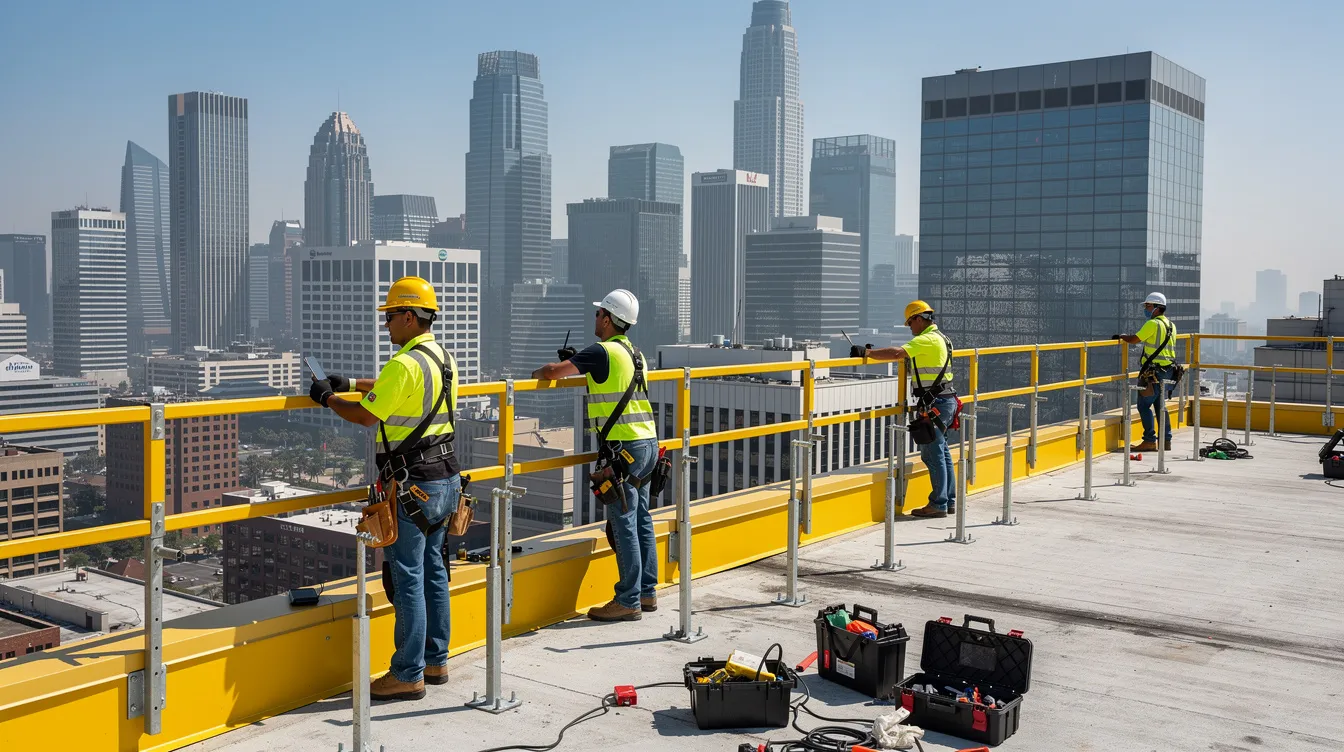
Heavy and civil engineering shows the greatest long-term improvement in the CPWR analysis, but that does not mean fall prevention becomes optional.
Across Colorado and Wyoming, highway, bridge, utility, water, transmission, and energy work often places transportation and equipment hazards at the center of the risk picture. CPWR’s 2024 fatal-event breakdown supports that emphasis: transportation incidents were the most common fatal event in this subsector.
Even so, contractors should not let that reality crowd out elevated-work planning. Bridge decks, formwork, falsework, retaining structures, equipment access points, and elevated maintenance tasks can still produce severe fall outcomes when crews focus only on traffic control and heavy equipment movement.
Useful heavy-civil priorities include:
For Rocky Mountain contractors, the lesson is simple: better subsector performance is not a reason to flatten the hazard review. It is a reason to keep tailoring controls to the actual work mix.
Specialty trade contractors sit close to the center of this issue because many of the trades most exposed to falls work within the specialty-trade subsector. CPWR also reported that falls, slips, and trips were the most common fatal event for specialty trade contractors in 2024.
That has practical implications for roofing, steel erection, framing, mechanical, electrical, glazing, and other specialty contractors working across Denver, the Front Range, Northern Colorado, Colorado Springs, and Wyoming. These firms often mobilize onto a site where access systems, opening protection, anchor options, or scaffold responsibilities are shared or divided among multiple employers.
High-yield practices for specialty contractors include:
Specialty trades that want a broader management lens can also connect this issue to construction safety leadership, especially when the real failure point is not equipment availability but inconsistent supervisor follow-through on multi-employer jobs.
This article’s value is not just the statistics. It is the decision that should follow.
Segment your work. Break active and upcoming projects into construction of buildings, heavy and civil engineering, and specialty-trade scopes. If your company does work across categories, identify which active jobs involve the highest mix of elevated work, changing access conditions, and compressed schedules.
Compare your own pattern to the national trend. Are your building projects producing more near misses, access problems, or correction notices than utility or roadway work? Are your specialty-trade crews repeatedly entering spaces where protection responsibilities are blurred?
Audit for field reality, not just paperwork. Review written fall-protection procedures, but spend equal time validating how ladders, lifts, openings, leading edges, and temporary access are actually being managed on site.
Key field checks to verify:
For most firms, one cross-functional review in the next month is a realistic starting point. Bring together operations, safety, and field leadership, then decide where fall prevention needs more budget, better sequencing, tighter supervision, or a simpler control strategy before the next high-risk phase begins.
Lower injury rates tend to hold only when training, supervision, and day-to-day expectations reinforce each other. The CPWR data does not suggest that contractors need one more generic awareness campaign. It suggests they need better alignment between hazard type and field execution.
For Rocky Mountain contractors, a stronger approach usually includes:
That leadership layer matters because many fall-prevention failures are not caused by a total lack of equipment. They come from drift: standards vary by superintendent, crews improvise during schedule pressure, or site conditions change faster than the plan.
Readers who want a broader field-leadership framework can review ABC Rocky Mountain’s resources on construction safety leadership alongside the chapter’s wider Safety Programs.
Contractors in Colorado and Wyoming can turn national statistics into an operational advantage by using the data to make better project-level decisions. The point is not to react to every headline. It is to ask whether current supervision, planning, and access controls match the hazards most likely to injure people on the work your company actually performs.
Owners and upstream contractors increasingly evaluate safety performance as part of contractor selection, especially on larger commercial, infrastructure, federal, and military work. That makes disciplined fall prevention more than a compliance issue. It becomes part of how a firm protects labor continuity, schedule confidence, and overall project execution.
For building contractors, that may mean budgeting temporary edge protection earlier and tightening lift and opening-control reviews before mobilization. For heavy civil firms, it may mean pairing strong traffic controls with a more deliberate review of bridge or formwork fall exposure. For specialty trades, it may mean refusing to leave anchor strategy and protection responsibilities undefined at startup.
Companies that act on these trends now are better positioned to protect workers and reduce avoidable disruption before the next incident tests the system.
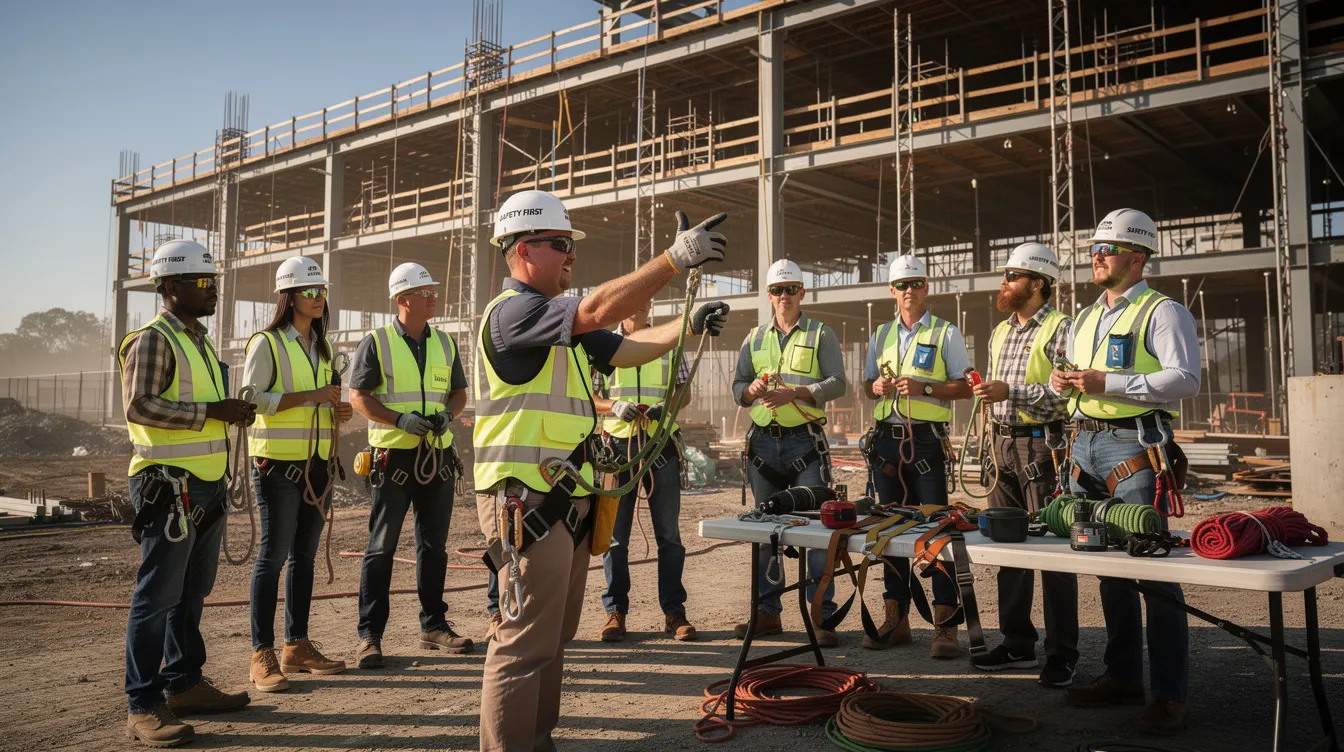
ABC Rocky Mountain can help members turn this subsector data into a practical reset. The chapter’s Safety Programs page is the clearest hub for safety training, peer-group engagement, and STEP participation. Those resources fit this article naturally because the need here is not abstract awareness. It is a better process for translating a national trend into a company-level response.
Members can also use the chapter’s fall-protection and field-leadership content to support pre-mobilization reviews, supervisor development, and discussions about where standards are drifting between projects.
If your company is reassessing where fall exposure is highest, start with one active project category, run a focused 30-day review, and use chapter safety resources to close the most obvious gaps before the next high-risk phase begins.
CPWR and BLS data show real progress in construction safety, but not even progress. Heavy and civil engineering has improved more sharply over time, while building construction shows a more troubling recent and long-term pattern. Falls remain a leading cause of construction fatalities, especially in building and specialty-trade work.
That means construction fall prevention still deserves a reset in 2026, particularly for contractors whose backlog leans toward elevated building work or specialty-trade scopes on multi-employer sites. Colorado and Wyoming firms should not rely on national averages alone. They should compare those trends with their own job mix, supervision habits, and recurring field failures.
The practical next step is straightforward: use the next 30 days to decide where falls are most likely to produce the next serious event on your projects, then tighten planning, training, and supervision there first.
Below are answers to common questions about this topic.
Formal reviews should occur at least annually and whenever project type, access methods, or major work phases change. In practice, shorter check-ins tied to mobilization and upcoming elevated-work phases are often more useful than relying on a single annual review.
Fall prevention focuses on avoiding exposure in the first place, such as using guardrails, covers, better sequencing, or other methods that reduce the chance of placing a worker at risk. Fall protection often refers to systems used when exposure remains, such as personal fall-arrest or other task-specific protective systems. Good planning usually starts by reducing exposure before relying on worker-worn systems.
On multi-employer sites, confusion over who installs, maintains, inspects, or replaces protection can become a major operational problem. Contractors should define those responsibilities early, revisit them when site conditions change, and avoid assuming that another employer is handling a critical protection step.
Smaller firms usually benefit most from a few consistent habits: phase-by-phase hazard reviews, better supervisor follow-through, dependable ladder and access checks, and straightforward planning for the specific elevated tasks the crew is about to perform. The goal is not to create a large safety bureaucracy. It is to make sure the highest-risk tasks receive disciplined attention every time.
Pick one active or upcoming project with meaningful elevated work, classify its main fall exposures, confirm who owns each control, and compare that field reality with your written process. If they don’t match, close the gap before the next high-risk phase starts.


